N.T. Wright on Simply Christian (Video)

One of my favorite New Testament biblical scholars is N.T. Wright.  Wright is an Anglican priest and the former Bishop of Durham in the Church of England (2003-2010).  He is now serving as the chair of New Testament and Early Christianity at the School of Divinity at the University of St. Andrews.  Wright is a prolific author, publishing dozens of books for both academic and general audiences.  I like Wright because he combines a rigorous academic and historical analysis with adherence to the core Catholic-Anglican theology (not to mention his having a great sense of humor).  As such, Wright is often criticized by liberals for too “conservative” and by conservatives for being too “liberal”.

For those not familiar with N.T. Wright, I would recommend the books “Simply Christian“, “Simply Jesus” and the free materials available here.  For those familiar with N.T. Wright and looking for more in-depth academic readings that will strengthen your faith, I highly recommend Wright’s three-book series on Christian Origins and the Question of God.

Below is a video lecture of N.T. Wright from the Veritas Forum at Georgetown, 2006 in which Wright as he walks us through the major sections of his book “Simply Christian.”

Posted in Reason and Faith | Tagged , , , , , | 2 Comments

Feast of Pope Pius X (August 21): Christ, Modernism and Teilhard de Chardin

Pope Pius X

Pope Pius X

Teilhard de Chardin

Teilhard de Chardin

____________________________________
____________________________________

A missed opportunity for unity amid the echos of St. Paul:

“The goal is to ‘restore all things in Christ’ so that ‘Christ may be all and in all’.  We need ‘to renew all things in Christ‘.  — St. Pope Pius X (citing St. Paul in setting forth the goals of his pontificate in his initial encyclical E Supremi ) (emphasis added)

“The universal Christ . . . is none other than the authentic expression of the Christ of the gospel. Christ renewed, it is true, by contact with the modern world, but at the same time Christ become even greater in order still to remain the same Christ. I have been reproached for being an innovator. In truth, the more I have thought about the magnificent cosmic attributes lavished by St. Paul on the risen Christ, and the more I have considered the masterful significance of the Christian virtues, the more clearly I have realized that Christianity takes on its full value only when extended . . . to cosmic dimensions” — Pierre Teilhard de Chardin (emphasis added).

Today is the feast day of St. Pope Pius X, who died 99 years ago yesterday.  Pope Pius X was a very influential pope whose effects are still being felt today.  We will have a brief biography and then discuss his attacks on modernism and how his writings have been misinterpreted by both his current defenders and opponents.

Biography

The future Pope Pius X was born Giuseppe Melchiorre Sarto at Riese, near Venice, on 2 June 1835. He was the second of 10 children in a poor family, his father being the village postman.  He was elected the 257th pope in August 1903. He was at first reluctant to accept the post but, after urging from fellow-cardinals and deep prayer, accepted the nomination. He took the name Pius out of respect for his predecessors with this name, especially Pius IX whom he admired.

Pope Pius instituted many reforms that encouraged a deeper spiritual life within the Church. He encouraged more frequent reception of Holy Communion and the admission of children to the Sacrament from the age of seven (an age at which it was felt children could understand the meaning of the Sacrament).  Pius also worked for the reform of Church music, encouraging the revival of Gregorian chant.  He also began the reform of the catechism and Canon Law, as well as the reorganization of the Curia administration of the Vatican.

In 1913 Pope Pius suffered a heart attack from which he never fully recovered.  The outbreak of World War I only worsened his condition and the 79-year-old pope became deeply depressed. He died on August 20, 1914.  In his will he wrote: “I was born poor, I have lived poor, and I wish to die poor.”  In May 1954, he became the first pope to be canonized since Pope Pius V in the 17th century.

Attacks on Modernism

“The church will always be more traditional than the traditionalist, and more modern than the modernist.” — Stephen from the Domestic Monk blog.

No blog devoted to the life of Teilhard de Chardin would be complete without a discussion of Pope Pius X’s decrees against modernism and the effects it had on the Church in the early 20th century that still reverberate today.  I had read about Pope Pius X and his attacks on modernism but until recently I actually have never read any of his encyclicals and other writings of Pope Pius X. Like most areas, the current interpretation of those writings, stacked upon decades of interpretation and seismic changes within the Church, are often very different than the primary texts themselves.

A couple of preliminary items are worth noting.  First, in his initial papal encyclical, E Supremi (On High), Pope Pius stated that the goal of his pontificate was “To renew all things in Christ.”  All of his other actions should be interpreted in light of that purpose.  As stated above, he undertook a number of significant reforms with the goal of orienting intellectual and liturgical life of the Church towards Christ.

Second, there was a strong current in early 20th century philosophy, academia and politics that was hostile to Catholicism. For example, during Pope Pius’ reign, France expelled the Jesuits and broke off diplomatic relations with the Vatican.  Rome was operating within an environment where broad culture was hostile to it (a factor which was not helped by some of the appointments of Pope Pius, such as Secretary of State Rafael Merry del Val).

With that context, let us turn to the anti-modernist encyclical Pascendi Dominici Gregis (On the Doctrines of the Modernists) issued in September 1907.  As an aside, I found the style of the encyclical very different than the recent encyclicals of Pope Benedict XVI.  Pope Benedict had a unique gift that stems from his extreme intelligence.  His encyclicals and papal writings and sermons had an academic quality to them but his logic and reasoning were exceptionally sharp and precise, like a fine-tuned knife slicing through tomatoes.  In contrast, Pascendi Dominci Gregis felt more like Pope Pius was smashing tomatoes with a sledgehammer.

Pascendi Dominici Gregis consists of three parts: (i) analysis of modernist teaching; (ii) causes of modernism (which I will not address for purposes of brevity); and (iii) remedies.  The first and by far the longest part was an attempt to articulate a coherent belief system of the disparate aspects of modernism in the areas of philosophy, history, science, theology, politics, biblical interpretations and other areas.  While the attacks take up more than 20 pages, they can be summarized as an attack on any intellectual foundation that strips away the divinity of Jesus and the role of the Church.  Specifically, Pope Pius attacks those who:

  • “assail all that is most sacred in the work of Christ . . . whom, with sacrilegious daring, they reduce to a simple, mere man.” (Section 2)
  • “starting from ignorance as to whether God has in fact intervened in the history of the human race or not, . . . proceed, in their explanation of this history, to ignore God altogether.” (Section 6)
  • “in the person of Christ. . . say science and history encounter nothing that is not human.” (Section 9)
  • “when they write history they make no mention of the divinity of Christ.” (Section 18)
  • “sees in Christ nothing more than a man whose religious consciousness has been, like that of all men, formed by degrees.” (Section 20)
  • “have a double Christ: a real Christ, and a Christ, the one of faith, who never really existed; a Christ who has lived at a given time and in a given place, and a Christ who has never lived outside the pious meditations of the believer – the Christ, for instance, whom we find in the Gospel of St. John, which is pure contemplation from beginning to end.” (Section 31)

Read in light of the goal of Pope Pius to “renew all things in Christ” as set forth in E Supremi, and the general hostility of many European governments and intellectuals towards the Church, is not surprising that he would harshly attack any trend that diminishes the stature of Christ.  The diminishment of the divinity of Christ, as set forth in the criticisms that Pope Pius levels above, is absolutely contrary to the core of Catholic faith.

However, it is in the third part of Pascendi Dominici Gregisthe remedies section, that I believe Pope Pius X went too far and ultimately harmed the Church.  This section established two items.  First, it mandated that scholastic philosophy, as taught by St. Thomas Aquinas, be the exclusive form of theology taught at seminaries.  Now, I certainly believe that St. Thomas Aquinas should be mandatory reading at seminaries (and undergraduate colleges as well, but that is off-topic), but Thomas Aquinas does not have a monopoly on theological insights.  It is worth remembering that the brilliance of St. Thomas Aquinas stems from his ability to “Christianize” Aristotle, which was the secular (to the extent secularism existed in the 13th century) philosophy of Aquinas’ time.  Indeed, St. Thomas Aquinas was criticized during his life for being too “modern”.

Second, the last section of Pascendi Dominici Gregis led to the creation of the Sodalitium Pianum (or League of Pius V), an anti-modernist network of informants that censored many theological writings.  Although the motives of the creation of the Sodalitium Pianum may have been noble (promoting the primary of Christ), the imperfection of human beings (e.g. the frequently overzealous and clandestine methods of the Sodalitium Pianum, including opening and photographing private letters, and checking out the records of the local bookshop to see who was buying what), hindered rather than helped the Church’s cause.  This led to the stifling of strong Christocentric theologians (such as Teilhard de Chardin) who could have assisted in the evangelizing against a broad current of intellectual agnosticism in Europe.  It also led to the orthodoxy of many outstanding Catholic scholars being questioned for many years afterwards.

Teilhard de Chardin was a victim of the overzealousness of the Sodalitium Pianum.  The initial quote at the beginning of this blogpost indicates how Teilhard’s theology emphasizes Pope Pius X’s motto to “renew all things in Christ”.  Unfortunately the censors after the death of Pope Pius X focused too much on internal divisions at the great cost of harming the overall mission of the Church.  As Robert Speaight said in his biography of Teilhard de Chardin:

“The tendency of Modernism is to diminish the transcendent stature of Christ: Teilhard’s concern was to enlarge it to cosmic proportions.  So far from inventing a Christ to fit his own ideas, Teilhard had already found him in St. Paul.  It was ‘He in whom all things consist’, ‘He who fills all things’, ‘the Christ who is all in all’, and ‘has ascended high above all the heavens to fill all things with his presence’.  it was the Christus pantocrator of Byzantium, and more particularly the Christ of the Sacred Heart, freed from its popular iconography. Where the Modernist tends to imprison Christ in history at the same time as he questions the historicity of the Gospels which gave him to us, Teilhard adores him when he is transfigured on the mountain, rises from the tomb or is lost in the clouds above the heads of the Apostles. Whatever certain neo-modernists may pretend to the contrary, the opposition could not be more clear.”

Fortunately, Teilhard de Chardin and others have been rehabilitated in recent decades. Unfortunately, some of the same issues of Catholics focusing on minor internal divisions rather than spreading the Gospel message still exist today.

Addendum

I note with more than a bit of irony, that the schismatic group originally led by excommunicated former Archbishop Marcel Lefebvre, has adopted the name Society of Pope Paul X (SSPX).  Despite the valiant attempts of Pope Benedict XVI to bring the SSPX in union with the Catholic Church, the SSPX still refuses the accept the authority of the Pope.  Pope Pius X was a strong defender of the primacy of the papacy and the unity of the Church.

In a bit of Orwellian doublethink, Teilhard and many others who remained loyal to the Church and the Pope are dubbed “modernists” while the schismatic Archbishop Lefebvre and his disciples who followed the footsteps of Martin Luther and broke away from Rome are being called “traditionalists”.  What Pope Pius X said in Pascendi Dominici Gregis to those who substitute their will for that of the Church, I am confident he would say to the SSPX:

“Finally, and this almost destroys all hope of cure, their very doctrines have given such a bent to their minds, that they disdain all authority and brook no restraint; and relying upon a false conscience, they attempt to ascribe to a love of truth that which is in reality the result of pride and obstinacy.” (Pascendi Dominici Gregis, Section 3).

Perhaps it is best to focus on Catholic and Christian unity and avoid labels that are not only unhelpful but are divisive to the Gospel message.

Posted in Uncategorized | Tagged , , , , , , , , , | 7 Comments

Everyday Mysticism: New Wood Blog

Pathway to Everyday Mysticism

Pathway to Everyday Mysticism

One of the “virtual” mentors on my spiritual journey has been David Backes who runs the outstanding blog New Wood.  Dr. Backes is a university professor and Roman Catholic deacon.  New Wood is a blog that focuses on everyday spirituality, spiritual ecology, Thomas Merton and prayer.  From the blog’s About page:

This blog gets its name from an old Si Kahn song, a song about connectedness to the land and to family, about relationships and living simply, a song about a well-nurtured hope that lasts through the difficult times. In 2010 I had found similar signs of hope in a little grove of pines planted next to an Iowa church in the 1800s by Irish farmers.  As I wrote in that first post: “Each of us faces storms of life, and the next couple of generations face some very large ones.  Energy, climate, water, poverty, and more.  It’s not hard to get overwhelmed by a sense of futility, to give in to anger and cynicism, when much of the world seems not to care.  But it doesn’t have to be that way.  Opening our hearts to a wounded world does not lead to cynicism as long as there is hope.  And I believe there are signs of hope in all kinds of places and situations.   The storms of life will get us all, eventually, but if we can find within us the vision of the Appalachian farmers in Si Kahn’s song, or the Irish farmers who planted the little grove of pines that brought joy and inspiration to me last summer, we will recognize the new wood springing from the roots underground.  And when that happens, the hope that perhaps was almost gone–it’s gonna rise again.

The categories listed across the top of the page not only display the main topics of the New Wood blog, but provide a kind of outline to my life.  Even as a toddler I was drawn to the kinds of experiences that I later realized had a deep spiritual quality to them.  As I grew into my college years and beyond, Sigurd Olson and Thomas Merton had major impacts on how I began to look at life and my own dreams and purpose.  I ended up as a university professor teaching courses on nature and culture, religion and culture, and climate change; in addition, my sometimes tortuous spiritual journey led me away from religion, then eventually back to it, even to the point of becoming ordained as a Roman Catholic deacon.  I don’t fit very well the kinds of liberal-conservative splits that people often like to impose.  I don’t always know if I fit very well in the university system or in the structure of the church, either.  I think that life can be a whole lot less complicated than most people seem to think, and that joy really isn’t so hard to find, after all.

I discovered New Wood when I was reading an article in America magazine and saw a link to New Wood.  It was a challenging period in my life where I was in the spiritual desert, desperately seeking guidance but not knowing where to turn.  The depth and beauty of New Wood spoke to me at a time when I really needed it.  As a further example of God’s working in the world, it turned out that Dr. Backes and I both lived in Wisconsin USA. Through additional good fortune, Dr. Backes was able to come to my parish in 2012 to provide an outstanding presentation on Catholic theology and climate change.  It was a wonderful presentation and I enjoyed meeting Dr. Backes in person.

There is some overlap in themes between New Wood and this blog but New Wood is more mystical than mine.  One of the best sections of New Wood is the section on Everyday Mysticism which has definitely enhanced my prayer and spiritual life.  Sample blogposts from that section of the New Wood Blog are set forth below.

If Today You Hear His Voice: Everyday Mysticism
Sigurd F. Olson–An Everyday Mystic for Our Time
The Cry of the Gulls
Three Obstacles to Everyday Mysticism

Dr. Backes’ professional and personal obligations prevent him from writing every day but he still regularly posts on Wednesdays and I look forward to reading his thoughts every week.

Posted in Uncategorized | Tagged , , , , , , | 6 Comments

Teilhard de Chardin Quote of the Week (August 19, 2013)

Mother Teresa

Mother Teresa

“Christian faith is not fatal either to the rational method of conquering the world or to man’s confidence in himself (on the contrary, it stimulates and inspires them).  But, in conformity with the law of the integration of the natural in the supernatural, it is superimposed upon them both.  It is erected on the laboriously maintained foundation of human endeavor, to preserve it, direct, organize and transform it.”

Posted in Teilhard Quote of the Week | Tagged , , | 1 Comment

Sunday Reflection, 20th Sunday in Ordinary Time (August 18, 2013): Purifying Fire of God’s Love

Christ: “I have come to set the earth on fire, and how I wish it were already blazing!"

Christ: “I have come to set the earth on fire, and how I wish it were already blazing!”

Today is the 20th Sunday in Ordinary Time.  The weekly readings are here and are extremely challenging.  In Luke’s Gospel Jesus proclaims:

“I have come to set the earth on fire, and how I wish it were already blazing! There is a baptism with which I must be baptized, and how great is my anguish until it is accomplished!”  (Luke 12:49-50).

The image of fire occurs fairly frequently in the Bible, from the burning bush with Moses to the tongues of fire with pentecost.  Fire is also an image frequently used by Teilhard de Chardin to describe the spiritual life. Today’s Gospel describes that this purifying fire of Christ will occasionally cause strife and division as some people will choose not to accept the message of truth, peace of love proclaimed by Christ.  The reflection for this week is from Living Space, the great site run by the Irish Jesuits, which discusses the very challenging words from the Gospel.  I encourage you to read the entire reflection here but set forth below is a summary:

a. “I have come to bring fire on the earth.”

This is not the fire of destruction, the fire that ravages rain forests every year.

It is the fire of heat and light.

It is the fire that cleanses and purifies.

It is the fire of God’s presence

as in the burning bush that Moses saw,

as in the pillar of fire that accompanied the Israelites in the desert,

as in the tongues of fire at Pentecost where the bringing of fire was mandated to the disciples, to the Church, to all of us.

As a purifying fire it can also bring pain and purification but it ultimately leads to conversion and liberation.

b. “There is a baptism I must receive and great is my distress till it is over.”

This does not mean that Jesus is to be re-baptised in the Jordan. The word baptism implies total immersion (the way sacramental baptism was carried out in the early church and in some churches today). There is a close link between the catechumen being “buried” in water and rising with Christ and Jesus being “baptised”, immersed in his suffering and death on the way to resurrection. Jesus does not look forward to his “baptism” for the pain it brings but for the salutary effects it produces for all of us.

* * *

Non-violence

The Christian message is non-violent. It brings love, compassion, harmony, peace.

It brings people together so that there is neither Jew nor Greek, slave or free, male or female… But it also of its nature challenges injustice, corruption, discrimination, abuse, dishonesty and all attacks on human dignity. The role of the evangelizer is “to comfort the afflicted and to afflict the comfortable.”

Vested interests – the rich, the powerful inside and outside the Church – will do anything to keep what they have. When the Church preaches and lives the Gospel, conflict is inevitable – even though in no way wished or intended.

So, in one way, religion should never divide (as in Northern Ireland). It is only a false Christianity and religion that deliberately creates division (“them and us”). It is not Christianity or any other religion as such which has brought so much suffering but certain people who call themselves “Christians” (or Muslims, Hindus or Jews).

At the same time, true Christianity in defending truth, justice, human dignity and freedom will inevitably meet opposition and be attacked. The passage which says that the peacemakers are blessed also says that those who are persecuted in the name of the Gospel are equally blessed. Strangely enough, both go together.

The Christian message has been and will continue to be challenging.  In my own life, I often cling to my selfish pride and ego.  I pray for the grace of God’s purifying fire to strip me of my self-centeredness that prevents me from truly living the Gospel message.  May God help all of us pursue the vision of Teilhard de Chardin that humanity can rediscover God’s fire of love:

“The day will come when, after harnessing space, the winds, the tides, and gravitation, we shall harness for God the energies of love. And on that day, for the second time in the history of the world, we shall have discovered fire.” — Pierre Teilhard de Chardin, “The Evolution of Chastity,” in Toward the Future, 1936, XI, 86-87.

Posted in Sunday Reflections | Tagged , , , , , , , , | 6 Comments

Laura Keynes and Why New Atheists are Good for Christianity

Laura Keynes: scholar, philosopher, writer, Catholic

Laura Keynes: scholar, philosopher, writer, Catholic

One of the most interesting phenomenon of the last decade is the popularity of the so-called New Atheists, led by Richard Dawkins, Sam Harris, Christopher Hitchens and Daniel Dennett.  The New Atheists are “new” in the sense that they have recycled old arguments against the existence of God but marketed them in a pseudo-scientific package as part of an aggressively antagonistic view towards religion.

I have read books from each of them and there are two significant problems with their arguments.  First, they attack a “strawman” view of religion (i.e. a literalistic, fundamentalist, narrow minded view of God).  It is hard to engage with this type of argument as the “God” they attack bears no resemblance to the God I believe in.  I would not believe in their “God” either. Second, New Atheists couch their philosophical arguments under the guise of scientific methodology.  I have discussed before how this is a misleading use of science and does a disservice to both science and philosophy.

I happen to believe that the popularity of the New Atheists create an excellent opportunity for Christianity.  As New Atheists are part of western popular culture it presents an opening to discuss religion and philosophy in an otherwise agnostic society.  I believe that anyone who closely examines the arguments and vision of the New Atheists will find them to be contrary to reason and human experience.  The materialistic, nihilistic vision of the New Atheists do not answer the questions that are deeply embedded in the human consciousness.  Authentic Christianity is uniquely positioned to step into this gap, especially for intellectually-minded people in their teens and 20s who are in their formative years.

An outstanding current example of this opportunity is Laura Keynes (pictured above). Keynes is a descendent of Charles Darwin and John Maynard Keynes, famous British intellectuals who were at the forefront of the “enlightened agnosticism”.  Dr. Keynes has a very unique story due to her background and education which she wrote about in an excellent article in the fantastic website Strange Notions.  I strongly encourage you to read the entire article describing her intellectual and spiritual journey but here is an extended excerpt:

“Are you related to the economist?” people sometimes ask when they see my surname. I explain that, yes, John Maynard Keynes is my great-great-uncle—his brother Geoffrey married Margaret Darwin, my great-grandmother. “So you’re related to Darwin too?” Yes, he’s my great-great-great grandfather. Eyes might fall on the cross around my neck: “And you’re a Christian?” Yes, a Catholic. “How does a Darwin end up Catholic?”

The question genuinely seems to puzzle people. After all, Darwin ushered in a new era of doubt with his theory of evolution, and the Bloomsbury Group, of which Keynes was a part, influenced modern attitudes to feminism and sexuality. How can I be a product of this culture, and yet Catholic? The implication is that simple exposure to my ancestors’ life work should have shaken me out of my backwards error.

I’m a product of what Noel Annan called “the intellectual aristocracy”, the web of kinship uniting British intellectuals over the 18th to 20th centuries. In effect, a few families—united by location, shared values, and shared academic interests—enjoyed each others’ company and found spouses within a network of extended family and friends. That in itself creates a culture, and the culture of the “intellectual aristocracy” reflects its origins in freethinking dissent during the British Enlightenment: rational, scientific, academic, agnostic. Certainly this describes my immediate family circle, numbering several Fellows of the Royal Society, a Nobel Prize-winning physiologist, some notable academics, and one “Distinguished Supporter” of the British Humanist Association.

The BHA likes to play up the intellectual credentials of its supporters: it implies intelligent people reject religion. My family represents, in microcosm, the kind of society we should be heading towards, according to the general narrative of Enlightenment philosophy: as we all become more educated, more enlightened by the power of reason, religion should decline. Among my family members religion is seen as an anachronism at best, a pernicious form of tyranny at worst. So where do I get it from? (emphasis in original)

Keynes goes on to describe her religious background as a child.  Her parents’ marriage was annulled shortly after Laura was born and her mother converted from Anglicanism to Catholicism.  Her father was non-religious but not hostile to religion.  Laura’s mother had become a Buddhist when Laura was in her teens and her brother rejected organized religion.  Laura drifted into agnosticism during this period.  Dr. Keynes then discusses how a deep questioning over the meaning of life led her back to Christianity:

“It wasn’t until my mid to late 20s, while studying for a doctorate in philosophy at Oxford University, that life gave me cause to reassess those values. Relationships, feminism, moral relativism, the sanctity and dignity of human life: experience put them all under my scrutiny.

By this point Dawkins had sparked “the God debate” with The God Delusion, and my great-great-great grandfather’s theory of evolution by natural selection was being used to support the New Atheism. Aware that Darwin himself said, “Agnostic would be the most correct description of my state of mind” and “It seems to me absurd to doubt that a man may be an ardent theist and an evolutionist”, I followed the debate carefully. Did evidence for evolution necessarily imply atheism?

I was raised to know the evidence. In my grandparents’ home, scientific books and journals sit alongside fossils and family photos. Darwin scholarship is an ever-present topic of conversation at the dinner table. Visiting scholars point out the physical similarity between various family members and the man himself; one observed that Darwin and I share an identical mole on the upper left side of our noses, the exact same spot. Did this mean I had to be, in the words of Richard Dawkins, “dancing to the music of my DNA”?

I read central texts on both sides of the debate and found more to convince me in the thoughtful and measured responses of Alister McGrath and John Cornwell, among others, than in the impassioned prose of Hitchens et al. New Atheism seemed to harbor a germ of intolerance and contempt for people of faith that could only undermine secular Humanist claims to liberalism. Moreover, it could not adequately account for the problem of morality, discussed by C.S. Lewis in Mere Christianity, without recourse to an inherently contradictory argument.

Conflicts, tensions, irresolutions, contradictions: such inconsistencies can be enormously productive for a philosophical mind seeking to understand how and why arguments are undermined. They lead us to truth. If atheism’s claim to the intellectual high ground is bolstered by my ancestor’s characteristic ability to explore and analyse inconsistencies in the evidence, that same family characteristic led me towards a skeptical assessment of what can and can’t be known absolutely. My doctoral thesis concerned epistemology, a branch of philosophy relating to the nature and scope of knowledge, and empiricism, which emphasizes the role of evidence and experience in the formation of ideas. In its concern with how we “make sense” of things—how abstract reasoning is based in bodily sense experience necessarily shaped by physical laws of nature—I apprehended an echo of the Catholic imagination.” (emphasis in original)

Dr. Keynes’ story highlights the opportunities that Christianity has during the early 21st century.  We live in a post-modern era where the naive optimism from the Enlightenment and Modernism faded into the cynicism and relativism of the postmodern era.  Cynics may claim that God is dead and that the young are disillusioned with organized religion.  The latter may be true but there is a longing deep within each of us that can not be satisfied by a materialistic lifestyle or an individualistic outlook.  Christianity has survived 2,000 years, often despite of its institutional manifestations, because it is based upon eternal Truths that address the deep intellectual and spiritual questions that all humans have.  I would gladly have an honest skeptic read both Pope Benedict’s “Introduction to Christianity” and Richard Dawkins’ “The God Delusion” as there is no comparison on the intellectual arguments and eternal optimism contained in the former vs. the latter.

Proudly proclaiming these ideals, in the context of an open respectful debate with non-believers and the broader society, presents a tremendous opportunity for Christianity as Dr. Keynes’ example indicates.  However, this engagement must be done in a way that speaks to the authentic questions, both intellectual and spiritual, of seekers.  As I stated in an earlier article, this consists of four aspects:

1.  Have a thorough knowledge of Christian faith.
2.  Have a solid knowledge of science that is often a common language of seekers.
3.  Respect the legitimate concerns of non-believers.
4.  Most importantly, live the Gospel by loving God and neighbor.

In many ways, Dr. Keynes’ journey mirrored my own (OK, other than the famous heritage, Oxford philosophy education, gender and generational differences and that my “reconversion” happened a decade later than hers :-).  However, I do not believe our story is unique.  There are many other seekers out there that need to be engaged intellectually and spiritually by Christians.  Even if they ultimately do not become Christians, the engagement will have a positive effect on decreasing the antagonism in current society and increasing our awareness that we are part of a common human community.

As Dr. Keynes concluded in her article:  “My journey back to faith was as much a movement of the heart as a thoroughgoing intellectual inquiry. It had to be both.”

Full article by Laura Keynes at Strange Notions

Posted in Reason and Faith | Tagged , , , , , , , , , , , , | 13 Comments

The Noosphere (Part III): Future Evolution of the Noosphere

global_consciousness

Today is the final installment of a three part series discussing the noosphere:

Part I:  Teilhard de Chardin’s Vision
Part II: Christian Concepts of the Noosphere
Part III: Future Evolution of the Noosphere

The concept of the noosphere as an intensification of human interconnectiveness and consciousness has certainly been evidenced in the last couple of decades with the development of the internet.  Individuals are able to connect with others and share information instantaneously.  This has the potential to lead to a breakdown of cultural and geographic barriers that have separated us and lead to greater understanding of our collective consciousness.  The fact that this humble blog has allowed me to connect with people in over 65 countries in a couple of months is evidence of this fact.

Princeton University has created a Global Consciousness Project (GCP) which has been in existence since 1998.  The goal is the GCP is to test whether there is a collective consciousness that could be experimentally verified.  The results over the last 15 years have been stunning.  I encourage you to check out the GCP for the details but set forth below is an extended summary of the conclusions from the GCP:

“The behavior of our network of random sources is correlated with interconnected human consciousness on a global scale. There is a highly significant overall effect on the GCP instrument (more on that below) during special times we identify as “global events” which bring great numbers of people to share consciousness and emotions. The effect is a tiny deviation from what’s expected, but the patient replication of tests has gradually created very strong statistical support for the reality of this subtle correlation of human consciousness with deviations in random data.

The probability that the effect could be just a chance fluctuation is less than 1 in a billion, an impressive bottom line statistic that is composed of small effects accumulated in more than 350 tests. The correlation is subtle, so much so that individual event results are too weak to be reliably interpreted. Yet because we are able to combine results across many replications, we overcome a very small signal to noise ratio — real effects gradually accumulate, while the unstructured noise is self-canceling.

The GCP instrument is a network of random number generators (RNGs, sometimes called REGs) spread around the world. There are currently about 65 or 70 nodes in the network, and at each one, random data trials are recorded continuously, one trial per second, day after day over the past 13 years. The result is a database of synchronized parallel sequences of random numbers. The data are archived on a server in Princeton, and subjected to formal analysis testing whether there are departures from expected randomness corresponding to global events.

The GCP effects are not seen primarily as deviations of the individual RNGs (which we often call “eggs”), but can be seen as an increase in the average correlation between pairs of eggs separated by distances up to thousands of kilometers. This means that although the direct effects are too small for us to detect, they occur in synchrony and this leads to detectable changes in the network as a whole. By definition the eggs are independent and should not show any relationship at all. But during moments of importance to humans, the devices show slight correlations with each other. This is a fact that does not fit readily into scientific models, so understandably it is a fact that remains to be accepted. It presents a challenge to status quo physics and psychology. When and as the data are brought into perspective, they may help place mind and consciousness in more broadly competent models of the world.

There are other measures of structure in the data. Independent analysts have been able to identify a significant effect of distance, though not in the measure of distance between event and the REGs. Rather, analysis shows that the pairwise correlations — links between pairs of REGs — are weaker for large distances, dropping to zero at about 12,000 kilometers, roughly the earth diameter. There is also a characteristic temporal structure. The effects, on average, only become significant when we have data sequences of half an hour or more, and the effect persists for only a few hours, up to about 3 or 4 hours. This suggests that a “moment” in global consciousness is somewhat like a moment in individual consciousness, but with a time scale that is vastly different. A perception takes less than a second in my mind. For an effect of global consciousness to show up in our data as detectable structure it appears to require at least half an hour. The difference is a factor of at least 1,000, maybe as much as 10,000.

Another, possibly more profound and directly important finding is that the effects we see influenced by factors that are familiar from human psychology. For example, the effects are larger in proportion to the importance of the events we examine, and they are larger if the level of emotional involvement is high. We see stronger effects when events embody or evoke deep feelings of compassion, but smaller effects when the level of fear is high. That last point seems counterintuitive to many, but upon consideration, the relationships make sense and they bear strong implications for us. Compassion is an interpersonal, connecting emotion, while fear drives us toward personal survival; it separates us.

There are many details, but this outlines the major findings. The bottom line is that something associated with mass consciousness is changing the physical world — our network of physical random number generators. We don’t have full-fledged explanations yet, but the database accumulated over years is rich. It holds information that should lead to understanding, not only of the GCP effects, but to a richer, more comprehensive view of consciousness.” (emphasis added).

How will the noosphere evolve in the future?  I do not know for certain but I believe humanity is on the verge of something very special.  The internet has only been widespread for two decades but we are already starting to see an increase in the collective consciousness.  While there may be setbacks along the way, I am optimistic that in the next 1,000 years that humanity, being drawn to the Cosmic Christ, will be able to make significant strides in helping bring the Kingdom of God to Earth.

Posted in Uncategorized | Tagged , , , , , , | 12 Comments

The Power Of Science And The Danger Of Scientism


I have previously written on the power of science and the dangers of scientism.  Adam Frank, Astrophysicist and Professor at University of Rochester has an outstanding blogpost at NPR’s 13.7 blog titled “The Power of Science and the Danger of Scientism”.

I will not do an analysis of the article as it hits on many of the same points I made in the two posts linked above.  I encourage you to read the entire article here but a summary of the key quotes is informative:

“Can you be a strident defender of science and still be suspicious of the way it is appropriated within culture? Can you be passionate about the practice and promise of science, yet still remain troubled by the way other beliefs and assumptions are heralded in its name? If such a thing is possible, you may be pro-science but anti-scientism

* * *

The efficacy of science generates a powerful attraction for advocates of (often unspoken) philosophical assumptions. These are people who seek to cloak their beliefs in the legitimacy of the scientific enterprise. This is where scientism raises its ugly head.

* * *

[A dismissal of attackers of scientism] misses the point that science gets used within culture for more than just legitimate purposes. In fact it’s the very efficacy of its tools that allows cultural misappropriations of science to go unnoticed.

Part of this misappropriation comes from thinking that, since science is so good at providing explanations, explanations are all that matter. It’s an approach that levels human experience in ways that are both dangerous and sad. In discussions of human spirituality and science, for example, it leads to cartoon arguments between Richard Dawkins and fundamentalists about who started the universe.

* * *

Scientism is an unfortunate consequence of the success science has had explaining the natural world. It would, in fact, be useful to clarify how scientism manifests itself. That would help us understand the damage it does to the real project that lies ahead of us: building space for the full spectrum of human being in a culture fully shaped by science.”

Posted in Reason and Faith | Tagged , , | 4 Comments

The Noosphere (Part II): Christian Concepts of the Noosphere


Pope Benedict XVI: The Noosphere is a central component of the Catholic Mass

Pope Benedict XVI: The Noosphere is a central component of the Catholic Mass

Today, is part two of a three part series discussing the noosphere:

Part I:  Teilhard de Chardin’s Vision
Part II: Christian Concepts of the Noosphere
Part III: Future Evolution of the Noosphere

One of the challenges of Teilhard de Chardin’s description of the noosphere is that he never clearly defined the term.  Moreover, Teilhard often used the term noosphere to describe both in a physical sense and in a metaphysical / spiritual sense to describe the interconnectiveness of humanity.  This post will focus on the Christian understanding of the latter metaphysical / spiritual connection among humanity.

Although early Christians did not use the term noosphere, nor were they aware of modern evolutionary science, they were certainly aware of the great interconnection of all humanity and the ultimate evolution towards Christ, or the Omega Point, which is centered on mutual love (See, e.g. John 1:1-5, Acts 17:28, Rom. 8:22-30, 1 Cor. 15:28, Eph. 4:12-16, Col. 1:15-20).  From its beginnings Christianity had a belief in the mystical bond that united all of humanity, both living and dead.  Over the years, this bond has been referred to as the “Communion of Saints” or “the Body of Christ”.  As St. Paul said:  “[F]or building up the body of Christ, until we all attain the unity of faith and knowledge of the Son of God, to mature to adulthood, to the extent of the full stature of Christ . . . Living the truth in love, we should grow in every way into him who is the head, Christ, from whom the whole body, joined and held together by every supporting ligament, with the proper functioning of each part, brings about the body’s growth and builds itself up in love”. (Eph. 4:12-16).

Jesuit theologian Emile Mersch, S.J. gave perhaps the best account of the Christian concept of the noosphere in his Theology of the Mystical Body.   As James Arraj summarizes:

“One of the most distinctive and valuable insights of our modern age is our hard-won sense of our own personalities. It is a sense of subjectivity that allows us to uphold the rights of the individual in the face of any larger community. Yet if we are not careful, it can obscure an equally profound truth of how much we are part of the human community without which we cannot properly develop. It was Emile Mersch who pursued the natural, or metaphysical unity of the human race the farthest. The universe, itself, culminated in human beings, and we would need to take into account the entire universe, he felt, in order to get some idea of what it truly means to be human. But it was necessary to go farther, still. The human soul, in virtue of its very nature, indeed, of its very self-consciousness which makes us most distinctly who we are as individuals, at the very same time is our deepest bond with other people. The human spirit has inscribed within it a dynamism that drives it to embrace the universe around it and all other human beings. If we were to try to sum up all this in one image we could say that if we were to take the entire universe that we see spread out across billions of miles of space and billions of years of time, and if we were to take all the human beings that ever existed, and will ever exist, and concentrate them both into one point, this would give us a sense of what it means to be truly human. This is the kind of humanity that we carry in the depths of our souls.

Mersch took this profound sense of human unity, and saw it as the cosmic human nature, as it were, that was elevated, transformed and intensified by its assumption by the Word. This gave him an organic way of understanding just how and why the universe can be said to be summed up in Christ. Christ is not added from without, but emerges from within, and becomes the very way in whom the universe comes together and in whom we find our union with God and with each other.”

[Editor’s note:  I have two comments here.  First, I highly recommend James Arraj’s fantastic blog, Inner Explorations.  It has a wealth of information on Christian theology, Christian mysticism, East-West dialogue, Jungian psychology and sustainable living. Second, it is possible that there was some cross-fertilization of ideas between Teilhard de Chardin and Emile Mersch.  Teilhard and Mersch were contemporaries and both were European Jesuits.  Although there are some significant differences (Mersch gave up his early interest in natural sciences to become a brilliant systematic theologian whereas Teilhard was prevented from pursuing systematic theology and pursued his career in paleontology), both arrived at the deeply profound Christocentric nature of human consciousness.]

Teilhard de Chardin used different language than Mersch and other conventional Christian theologians but this traditional Christian understanding deeply informed Teilhard’s description of the noosphere:

“[I]t is the Consistence of the Universe, in the form of Omega Point, that I now hold, concentrated (whether above me or, rather, in the depths of my being, I cannot say) into one single indestructible center, which I can love.” . . .

“The fact is, fortunately for me, I was born right into the Catholic ‘phylum’; and that means into the very center of the privileged zone in which the ascending cosmic force of ‘Complexity-Consciousness’ joins the descending (and so drawing up to itself) hood of personal and personalizing attraction which is introduced between Heaven and Earth by the influence of Hominization.” (emphasis added).

Teilhard de Chardin, Pierre (1980-07-23). Heart Of Matter (Kindle Locations 535, 547-550). Houghton Mifflin Harcourt. Kindle Edition.

Teilhard also said that even if he were not born a Christian, his understanding of the noosphere would likely have led to his conversion to Christianity:

“Had I been an unbeliever and left entirely to the promptings of my sense of plenitude, I think that my inner exploration would have led me to the same spiritual peak; and it is even possible that a close rational study of the cosmic properties of Omega (‘the complex unit in which the organic sum of the reflective elements of the World becomes irreversible within a transcendent super-ego’) would belatedly have led me, in a final stage, to recognize in an incarnate God the true Reflection, on our Noosphere, of the ultimate nucleus of totalization and consolidation that is bio-psychologically demanded by the evolution of a reflective living Mass.

To be completely Man, it may well be that I would have been obliged to become Christian.”

Teilhard de Chardin, Pierre (1980-07-23). Heart Of Matter (Kindle Locations 541-546). Houghton Mifflin Harcourt. Kindle Edition.

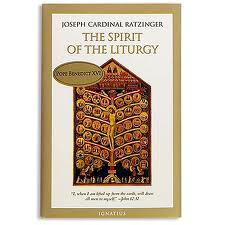
Leading theologians of the last fifty years have affirmed that Teilhard’s description of the noosphere is consistent with 2,000 years of Christian theology and have incorporated Teilhard’s language noosphere into Christian theology and liturgy.  For example, Pope Benedict XVI, invoked the noosphere as a central component of the worship and celebration of the Catholic Mass:

“And so we can now say that the goal of worship and the goal of creation as a whole are one and the same—divinization, a world of freedom and love. But this means that the historical makes its appearance in the cosmic. The cosmos is not a kind of closed building, a stationary container in which history may by chance take place. It is itself movement, from its one beginning to its one end. In a sense, creation is history. Against the background of the modern evolutionary world view, Teilhard de Chardin depicted the cosmos as a process of ascent, a series of unions. From very simple beginnings the path leads to ever greater and more complex unities, in which multiplicity is not abolished but merged into a growing synthesis, leading to the “Noosphere”, in which spirit and its understanding embrace the whole and are blended into a kind of living organism. Invoking the epistles to the Ephesians and Colossians, Teilhard looks on Christ as the energy that strives toward the Noosphere and finally incorporates everything in its “fullness’. From here Teilhard went on to give a new meaning to Christian worship: the transubstantiated Host is the anticipation of the transformation and divinization of matter in the christological “fullness”. In his view, the Eucharist provides the movement of the cosmos with its direction; it anticipates its goal and at the same time urges it on.” (emphasis added)

– Ratzinger, Joseph Cardinal; Pope Benedict XVI (2009-06-11). The Spirit of the Liturgy (Kindle Locations 260-270). Ignatius Press. Kindle Edition.

In Part III, we will discuss the internet, the Princeton University’s Global Consciousness Project and the future evolution of the noosphere.

Posted in Uncategorized | Tagged , , , , , , , , , , , , , | 6 Comments

The Noosphere (Part I): Teilhard de Chardin’s Vision

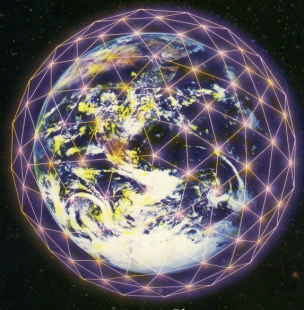
A depiction of the Noosphere

A depiction of the Noosphere

One of the key concepts of Teilhard de Chardin’s philosophy is the noosphere, which Teilhard believes is the next phase of human evolution.  Today is the first of a three part series discussing the noosphere:

Part I:  Teilhard de Chardin’s Vision
Part II: Christian Concepts of the Noosphere
Part III: Future Evolution of the Noosphere

The term noosphere derives from the Greek νοῦς (nous “mind”) and σφαῖρα (sphaira “sphere”), and is related to the terms geosphere (inanimate matter) and biosphere (biological life).  Under Teilhard’s vision, God created the Big Bang, which created an evolutionary process starting with the energy of the Big Bang leading to increasing “complexification” to matter, to initial life forms, to human consciousness, to a collective human consciousness (the noophere).  The noosphere emerges through and is constituted by the interaction of human minds. The noosphere has grown in step with the organization of the human mass in relation to itself as it populates the Earth.  As humanity organizes itself in more complex social networks, the higher the noosphere will grow in awareness. Teilhard argued the noosphere is growing towards an even greater integration and unification, culminating in the Omega Point (or the Cosmic Christ, the second person of the Trinity).  

Ever since the Big Bang, our universe has gradually grown in complexity.  From an initial point of intensely concentrated and homogeneous matter, we see the formation and evolution of stars, galaxies, and planets as the primordial ball of plasma expanded, cooled, and formed structures of ever-increasing complexity. In the case of Earth, we also see the development of biological life with its even more complex forms of matter. These organic structures are actually containers of sorts-densely packed with information. The more information an object carries in a given volume, the more complex it is. A strand of DNA is not only smaller than a grain of sand, it is also considerably more complex because it contains more information than the silicon in the grain of sand.

The densest collection of complex information we know of thus far is the human being, and human activity gives rise to even greater complexity. Teilhard states that this reflective consciousness is “the specific effect of organized complexity,” and that it follows that some sort of intensification of human consciousness is the next step of human evolution.  In other words, a massive amount of information is building up within the relatively small confines of the planet Earth. This, Teilhard believed, will result in the blossoming of the noosphere into some form of super-consciousness, once the amount of information it contains reaches a critical density.

Teihard de Chardin first used the term noosphere in approximately 1927, but the intellectual concept was first developed during Teilhard’s service in the trenches of World War I.

The atmosphere of ‘the Front’: it was, I am quite sure, from having plunged into that atmosphere—from having been soaked in it for months and months on end—and precisely where it was at its most dense and heavily charged, that I ceased to notice any break (if not any difference) between ‘physical’ and ‘moral’, between natural’ and ‘artificial’. The ‘Human-million’, with its psychic temperature and its internal energy, became for me a magnitude as evolutionary, and therefore as biologically, real as a giant molecule of protein. I was later to be astonished on many occasions to find in my own circle that those who could not agree with me suffered from a complete inability to understand that precisely because the individual human being represents a corpuscular magnitude he must be subject to the same development as every other species of corpuscles in the World: that means that he must coalesce into physical relationships and groupings that belong to a higher order than his. It is, of course, quite impossible for him to apprehend these groupings directly as such . . . but there are many indications that enable him to recognize perfectly well their existence and the influences they exercise. . .  I have no doubt at all (as I said earlier) that it was the experience of the War that brought me this awareness and developed it in me as a sixth sense.

Teilhard de Chardin, Pierre (1980-07-23). Heart Of Matter (Kindle Locations 412-419). Houghton Mifflin Harcourt. Kindle Edition.

As we shall see in Part II, the concept of a universal connection of human consciousness is very old and forms the heart of the Christian tradition.  Teilhard’s contribution was to take this concept put place in within the scope of recent knowledge of the universe being a work in progress from the Big Bang, through the development of individual human consciousness, through the future convergence of collective human consciousness and unification with the Cosmic Christ or Omega Point.  As Teilhard described our current evolutionary state:

“[H]ow can we fail to see that the process of convergence from which we emerged, body and soul, is continuing to envelop us more closely than ever, to grip us, in the form of—under the folds of, we might say—a gigantic planetary contraction?

The irresistible ‘setting’ or cementing together of a thinking mass (Mankind) which is continually more compressed upon itself by the simultaneous multiplication and expansion of its individual elements: there is not one of us, surely, who is not almost agonizingly aware of this, in the very fibre of his being. This is one of the things that no one today would even try to deny: we can all see the fantastic anatomical structure of a vast phylum whose branches, instead of diverging as they normally do, are ceaselessly folding in upon one another ever more closely, like some monstrous inflorescence—like, indeed, an enormous flower folding-in upon itself; the literally global physiology of an organism in which production, nutrition, the machine, research, and the legacy of heredity are, beyond any doubt, building up to planetary dimensions; the increasing impossibility of the individual’s attaining economic and intellectual self-sufficiency”

Teilhard de Chardin, Pierre (1980-07-23). Heart Of Matter (Kindle Locations 499-510). Houghton Mifflin Harcourt. Kindle Edition.

In Part II, we will examine how Christianity understands the spiritual Noosphere.

Posted in Uncategorized | Tagged , , , , , , | 42 Comments