Teilhard de Chardin Quote of the Week (August 12, 2013): In the beginning . . . )

big_bang12

“In the beginning was Power, intelligent, loving, energizing. In the beginning was the Word, supremely capable of mastering and molding whatever might come into being in the world of matter. In the beginning there were not coldness and darkness; there was Fire. This is the truth.

So, far from light emerging gradually out of the womb of our darkness, it is the Light, existing before all else was made which, patiently, surely, eliminates our darkness. As for us creatures, of ourselves we are but emptiness and obscurity. But  you, my God, are the inmost depths, the stability of that eternal milieu, without duration or space, in which our cosmos emerges gradually into being and grows gradually to its final completeness, as it loses those boundaries which to our eyes seem immense. Everything is being; everwhere there is being and nothing but being, save in the fragmentation of creatures and the class of their atoms.

Blazing Spirit, Fire, personal, supersubstantial, the consummation of a union so immeasurably more lovely and more desirable that destructive fusion of which all the pantheists dream: be pleased yet once again to come down and breathe a soul into the newly formed, fragile film of matter with which this day the world is to be freshly clothed. ”

— Pierre Teilhard de Chardin, The Mass on the World

Posted in Teilhard Quote of the Week, Uncategorized | Tagged , , , , , , , , , | 3 Comments

Sunday Reflection, 19th Sunday in Ordinary Time (August 11, 2013): Examined Faith Leads to a Deeper Faith

An examined faith leads to a deeper faith

An examined faith leads to a deeper faith

Today is the 19th Sunday of Ordinary Time.  The weekly readings can be found here.  For the reflection, I would like to focus on a quote from the Second Reading, a letter to the Hebrews:  “Faith is the realization of what is hoped for and evidence of things not seen”. Faith is the core of the Christian belief system.  However, in order for a deep and rich faith to develop, it has to be an examined faith.

One of the things I like about Christianity and Catholicism in particular is that it challenges and engages the intellect.  From its earliest beginnings with Divine Revelation of the Incarnation and the Resurrection, Christianity adopted philosophy including naming the pre-existent Second Person of the Trinity (the Logos) after a Greek philosophical term. Christianity encourages asking the fundamental questions that come with the human condition:  Who am I?  Where have I come from and where am I going? Is there a God? Why is there evil? What is the purpose of my life? The answers to these questions often lead to a deeper understanding of the Christian faith and ultimately a deeper relationship with God.  I know in my personal life, it was only after I asked the deepest questions regarding the existence of God and the purpose of life that I came to understand my faith and God in a more personal way.

As Blessed John Paul II wrote in his encyclical letter Fides et Ratio (Faith and Reason):  “The Church cannot but set great value upon reason’s drive to attain goals which render people’s lives ever more worthy. She sees in philosophy the way to come to know fundamental truths about human life. . . The Church considers philosophy an indispensable help for a deeper understanding of faith.”  Blessed John Paul II also states:

“Driven by the desire to discover the ultimate truth of existence, human beings seek to acquire those universal elements of knowledge which enable them to understand themselves better and to advance in their own self-realization. These fundamental elements of knowledge spring from the wonder awakened in them by the contemplation of creation: human beings are astonished to discover themselves as part of the world, in a relationship with others like them, all sharing a common destiny. Here begins, then, the journey which will lead them to discover ever new frontiers of knowledge. Without wonder, men and women would lapse into deadening routine and little by little would become incapable of a life which is genuinely personal.”

With that introduction, today’s reflection comes to us from a true world traveler, John Predmore, S.J.  Fr. Predmore is a Jesuit priest of the New England Province who serves as pastor of the English speaking Latin-rite Catholics in Jordan, of the Jerusalem diocese.  Fr. Predmore has also lived in Australia and New Zealand.  Fr. Predmore’s blog is an exceptionally rich resource for Ignatian Spirituality and is on my list of daily visits.

However, as John Predmore, S.J. (more information below) says, in order for the faith to reach its fullness in a deep relationship with God, it has to be an examined faith:

“We sometimes need to pause outside of church and ask ourselves what we truly believe about our faith life and ask ourselves how we come to know what we know. An unexamined faith isn’t much of a faith at all. It might have been given to us culturally or as cradle Catholics, but it serves us well to examine our traditions and uncover what we find. We have to appropriate the faith, make it our own, if it is going to make sense at all.”

Fr. Predmore goes to on say how an examined faith will lead to a deeper prayer life and a deeper relationship with God:

For Catholics, Jesus becomes the personal face of God (editor’s note: remember Jesus is the incarnate logos of Greek philosophy).  At the start of the Gospel, he tells his friends not to be afraid because his father wants to give them the kingdom, but we see that vigilance is needed and we will certainly wait for his return if we become better friends with him. So the question becomes about becoming a better friend to him. If your prayer practices are bringing you closer to a personal, easy-to-talk-to, conversant Jesus, then you are on the right path. If not, stop praying the way you learned and try a different way. Do not spend your time in a type of prayer that does not bring you into closer friendship. Drop it. And if you find yourself working too hard in prayer, stop working.

The simplest type of prayer is simply to ask Jesus to show you where he is in your life today. Let the initiative be his. Let him say to you, “Remember this afternoon when this event happened? I was there and I saw what went on.” Give him a chance to say anything else he wants to tell you about the events. You’ll have your time to respond and ask questions, but make sure you give sufficient amounts of time to listen to how he feels about what goes on with you.

Do not feel pressure to tell Jesus about the big things in your life yet. Just tell him the little things that you notice throughout your day and how you feel about them. Tell him how happy it made you when your employer smiled at you and wished you a happy day. Tell him how refreshed you feel from drinking a hot cup of coffee without interruptions the very first instant this morning. Let him know how happy you feel that you said “no” to dessert and that you made the right choice in choosing your healthy lunch. We really need to have better small talk with Jesus if we are going to have more meaningful ones. The small ones always lead to the more important ones.”

I encourage you to read Fr. Predmore’s entire reflection here.

Here are other resources on developing an examined faith:


Posted in Embracing Doubt and Mature Faith, Ignatian Spirituality, Sunday Reflections | Tagged , , , , , , , , , , | 4 Comments

Scientific Potpourri (August 9, 2013): Exploding Stars, Quantum Gravity and Oatmeal Bubbles

eso1327a

Here are some top stories from astronomy, cosmology and evolutionary biology from the past week:

First 100,000 Years of Our Universe.   From Science Daily:  Mystery fans know that the best way to solve a mystery is to revisit the scene where it began and look for clues. To understand the mysteries of our universe, scientists are trying to go back as far they can to the Big Bang. A new analysis of cosmic microwave background (CMB) radiation data by researchers with the Lawrence Berkeley National Laboratory (Berkeley Lab) has taken the furthest look back through time yet — 100 years to 300,000 years after the Big Bang — and provided tantalizing new hints of clues as to what might have happened.

Exploding Star from 12 Billion Years Ago Sheds Light on Previously Invisible Galaxy.   From Science Daily:  More than 12 billion years ago a star exploded, ripping itself apart and blasting its remains outward in twin jets at nearly the speed of light. At its death it glowed so brightly that it outshone its entire galaxy by a million times. This brilliant flash traveled across space for 12.7 billion years to a planet that hadn’t even existed at the time of the explosion — our Earth. By analyzing this light, astronomers learned about a galaxy that was otherwise too small, faint and far away for even the Hubble Space Telescope to see.

Black Holes + Wormholes = Quantum Answers.  From NPR’s 13.7 Blog: If physicists had a holy grail it would go by the name of Quantum Gravity.  For 60 years researchers have been searching for a way to unite the very large and the very small into a single coherent theory. But for all their efforts, Einstein’s Theory of General Relativity — which describes the Universe at large scales — simply won’t play nice with quantum physics — the all-encompassing vision of the micro-world. But the appearance of a remarkable new idea is raising eyebrows, and hopes, around the world. Maybe, just maybe, a new clue to the most fundamental of fundamental theories has been found.

Genetic Adam and Eve Did Not Live Too Far Apart in Time.  From Nature:  The Book of Genesis puts Adam and Eve together in the Garden of Eden, but geneticists’ version of the duo — the ancestors to whom the Y chromosomes and mitochondrial DNA of today’s humans can be traced — were thought to have lived tens of thousands of years apart. Now, two major studies of modern humans’ Y chromosomes suggest that ‘Y-chromosome Adam’ and ‘mitochondrial Eve’ may have lived around the same time after all.

New Fossil Sheds Light on Evolution of Earliest Mammals.  From Science Daily: A newly discovered fossil reveals the evolutionary adaptations of a 165-million-year-old proto-mammal, providing evidence that traits such as hair and fur originated well before the rise of the first true mammals. The biological features of this ancient mammalian relative, named Megaconus mammaliaformis, are described by scientists from the University of Chicago in the August 8 issue of Nature.

Is Our Understanding of Evolution Wrong?  From Science News Blog:  Our understanding of how animals on the planet evolved may be wrong, according to scientists at the University. In a new paper, recently published in the Proceedings of the National Academy of Sciences, evolutionary biologists from the Department of Biology & Biochemistry looked at nearly one hundred fossil groups to test the notion that it takes groups of animals many millions of years to reach their maximum diversity of form. Contrary to popular belief, not all animal groups continued to evolve fundamentally new morphologies through time. The majority actually achieved their greatest diversity of form (disparity) relatively early in their histories.

Are these craters on the Moon formed by asteroid impact or an internal "oatmeal bubble" process?

Are these craters on the Moon formed by asteroid impact or an internal “oatmeal bubble” process?

Are the the Pockmarks on the Moon Formed by Impact Craters or Internal Pressures?  From Anacephalaeosis Blog:  Scientist, theoretician and friend of this blog Erik Andrulis discusses his theory that the indentations on the Moon, Mercury and other celestial bodies are not formed by the impact of asteroid hits but from internal processes of the celestial body.  Erik uses the analogy to the marks formed by oatmeal bubbles.

Bringing Light to a Halt; Scientists Freeze Motion of Light for a Minute.  From Science News:   Physicists in Darmstadt have been able to stop something that has the greatest possible speed and that never really stops: light. About a decade ago, physicists stopped it very for just a moment. In recent years, this extended towards stop times of a few seconds for simple light pulses in extremely cold gases and special crystals. But now the researchers at Darmstadt extended the possible duration and applications for freezing the motion of light considerably.


Posted in Reason and Faith | Tagged , , , , , , , | 10 Comments

Feast of St. Dominic (August 8): Patron Saint of Scientists and the Symbiotic Relationship between Faith and Science

St. Dominic

St. Dominic

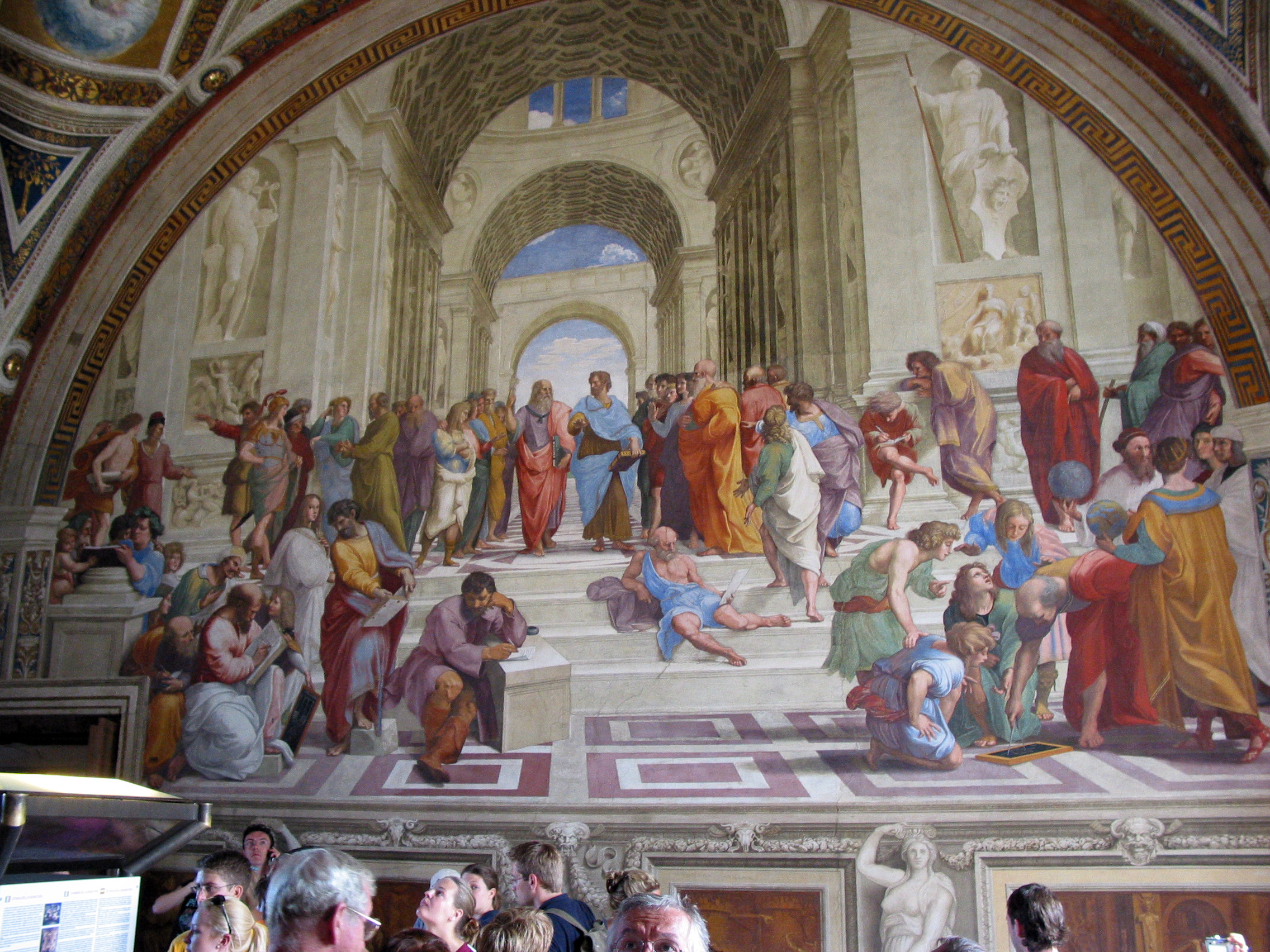
Today is the Feast of St. Dominic, the patron Saint of scientists.  This is a perfect opportunity to correct the false but unfortunately common perception that there is a conflict between science and religion.  Part of the reason for that is the poor state of knowledge of both science and theology in the modern world.  One of the purposes of this blog is to promote the mutually reinforcing methods of finding ultimate Truths through faith and science.

Religion in general and Christianity in particular has long been supportive of science, from the beginnings of the modern scientific method in the Middle Ages to the scientific advancements of the last 100 years.  Set forth below are selective examples of leading scientists who were either clerics or devout lay Christians over the centuries:

Nicolaus Copernicus (1473-1543). A brilliant man and a Catholic monk, Copernicus held important positions in both secular and ecclesiastical government, all the while writing voluminously. A sophisticated economic thinker, Copernicus was the first to propose that increases in the money supply have a tendency to drive price inflation. But what he is remembered for today is his heliocentric theory of the solar system. Through patient observation and calculation, Copernicus displaced the earth from the center of things, reorienting the way we view everything and thereby ushering in the modern world.

Johannes Kepler (1571-1630). Kepler was a brilliant mathematician and astronomer. He did early work on light, and established the laws of planetary motion about the sun. He also came close to reaching the Newtonian concept of universal gravity – well before Newton was born! His introduction of the idea of force in astronomy changed it radically in a modern direction. Kepler was an extremely sincere and pious Lutheran, whose works on astronomy contain writings about how space and the heavenly bodies represent the Trinity.

Blaise Pascal (1623-1662).  Pascal was a Catholic French mathematician, physicist, inventor, writer and theologian. In mathematics, he published a treatise on the subject of projective geometry and established the foundation for probability theory. Pascal invented a mechanical calculator, and established the principles of vacuums and the pressure of air. Pascal also published several theological works beginning with Lettres provinciales, in 1656. His most influential theological work, the Pensées (“Thoughts”), was a defense of Christianity, which was published after his death. The most famous concept from Pensées was Pascal’s Wager. Pascal’s last words were reported to be “May God never abandon me.”

Robert Boyle (1627-1691).  Boyle gave his name to “Boyle’s Law” for gases, and is regarded as the father of modern chemistry.  As a devout Christian, Boyle took a special interest in promoting the Christian religion abroad, giving money to translate and publish the New Testament into Irish and Turkish. In 1690 he developed his theological views in The Christian Virtuoso, which he wrote to show that the study of nature was a central religious duty.” Boyle wrote against atheists in his day (the notion that atheism is a modern invention is a myth), and was clearly much more devoutly Christian than the average in his era.

Michael Faraday (1791-1867).  Michael Faraday was the son of a blacksmith who became one of the greatest scientists of the 19th century. His work on electricity and magnetism not only revolutionized physics, but led to much of our lifestyles today, which depends on them (including computers and telephone lines and, so, web sites). Faraday was a devout Christian which significantly influenced him and strongly affected the way in which he approached and interpreted nature.

Gregor Mendel (1822-1884).  Mendel was an Augustinian monk and professor of natural philosophy and eventually became the abbot of his monastery. And today he is recalled for his path-breaking studies of pea plants which showed the existence of recessive and dominant genes, an essential cornerstone of modern genetics.

Pierre Teilhard de Chardin, S.J.  (1881-1955).   My personal favorite.  Teilhard de Chardin was a Jesuit priest, paleontologist and geologist from the early 20th century.  Teilhard de Chardin’s primary field of study was human evolution.  Teilhard de Chardin was a leader of the team that discovered the Peking Man, now known as Homo Erectus, in 1929.  Teilhard worked hard to integrate his scientific findings into a broad vision of Christianity.  Although Teilhard had some disagreements with the Church during his lifetime on the theological implications of evolution, the Church fully supported and encouraged Teilhard’s scientific research and publications.  Today, Teilhard’s core ideas on the marriage of evolution (both cosmic and biological) and theological evolution (all of natural and spiritual creation is evolving towards a deeper union with God) is accepted as part of mainstream Christian theology.

Georges Lemaître (1894-1966).  Known as the “father of the big bang,” Lemaître was a Belgian priest who first developed the theory of that the Universe originated in an instant flash now known as the Big Bang.  Fr. Lemaître did his graduate work in theoretical physics at Cambridge University and Harvard. In 1927, while still a junior lecturer at the Catholic University of Louvain, he proposed an expansionary theory of the universe at odds with the then-prevailing belief that the universe had always existed in a steady state. Four years later, in 1931, he asserted that the entire universe began with what he called a “cosmic egg” or “primeval atom”.  This theory was ridiculed by leading scientists of the time such as Albert Einstein and Sir Fred Hoyle (the latter derisively dismissed Lemaître’s theory as “the big bang”). Later that same year, Fr. Lemaître argued that not only was the universe expanding, its expansion was accelerating in speed. While it has taken decades, Lemaître’s theories have been confirmed in every major particular.

John Polkinghorne (1930 – Present).  Dr. Polkinghorne is an English theoretical physicist, theologian, writer, and Anglican priest. He was professor of Mathematical physics at the University of Cambridge from 1968 to 1979, when he resigned his chair to study for the priesthood, becoming an ordained Anglican priest in 1982. He served as the president of Queens’ College, Cambridge from 1988 until 1996. Polkinghorne is the author of five books on physics, and 26 on the relationship between science and religion; his publications include The Quantum World (1989), Quantum Physics and Theology: An Unexpected Kinship (2005), Exploring Reality: The Intertwining of Science and Religion (2007), and Questions of Truth (2009).

Francis Collins (1950 – Present).  Dr. Collins is an American physician-geneticist noted for his discoveries of disease genes and his leadership of the Human Genome Project (HGP).  Collins led one of the groups to first sequence the human genome. He currently serves as Director of the National Institutes of Health in Bethesda, Maryland.  Prior to being appointed Director, he was the founder and president of the BioLogos Foundation, an organization which promotes discourse on the relationship between science and religion and advocates the perspective that belief in Christianity can be reconciled with acceptance of evolution and science.  Collins also wrote the New York Times bestseller, The Language of God: A Scientist Presents Evidence for Belief, which discusses Collins’ conversion from atheism to Christianity, evaluates the evidence for Christianity, and argues for theistic evolution. In 2009, Pope Benedict XVI appointed Collins to the Pontifical Academy of Sciences.

Guy Consolmagno, S.J.  (1952 – Present).  Fr. Guy Consolmagno is an astronomer at the Vatican Observatory, where he also serves as curator of the Vatican Meteorite collection, positions he has held since then. In addition to his continuing professional work in planetary science, he has also studied philosophy and theology. His research is centered on the connections between meteorites and asteroids, and the origin and evolution of small bodies in the solar system. In addition to over 40 reviewed scientific papers, he has co-authored several books on astronomy for the popular market, which have been translated into multiple languages. An asteroid was named in his honor by the International Astronomical Union, IAU in 2000: 4597 Consolmagno, also known as “Little Guy”. Fr. Consolmagno believes in the need for science and religion to work alongside one another rather than as competing ideologies. In 2006, he said, “Religion needs science to keep it away from superstition and keep it close to reality, to protect it from creationism, which at the end of the day is a kind of paganism – it’s turning God into a nature god.”

Set forth below are additional resources on the intersection of faith and science:

Magis Center for Reason and Faith
The Catholic Laboratory
BioLogos Foundation
God and Science
Stacy Trasancos Blog
God of Evolution
Quantum Theology Blog
Wikipedia List of Christian Thinkers in Science
Wikipedia List of Jesuit Scientists
Wikipedia List of Quaker Scientists


Posted in Reason and Faith | Tagged , , , , , , , , , , , , | 10 Comments

Life of Teilhard de Chardin: Second Trip to China and The Divine Milieu (1926-1928)

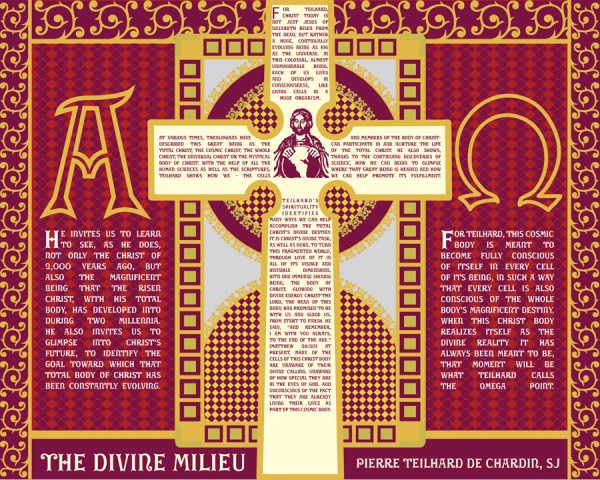
The Divine Milieu

The Divine Milieu

Teilhard de Chardin arrived in China for the second time in 1926.  At first, he was utterly miserable in China.  Teilhard felt he had been exiled to a remote wilderness and that he was going to be unable to achieve his life’s goal of using the knowledge from science to make Christian theology and Christianity itself stronger.

Between June and August 1926, Teilhard traveled with Licent across the provinces of Shansi and Kansu, within the range of Chinese Tibet.  In November 1926, being unable to preach or publish his theology in Paris, Teilhard began writing The Divine Milieu, which, along with The Phenomenon of Man (or The Human Phenomenon, depending on the translation used), is one of his two most comprehensive writings.  As Teilhard wrote to his cousin Marguerite:

“I have finally decided to write my book on the spiritual life. I mean to put down as simply as possible the sort of ascetical or mystical teaching that I have been living and preaching so long. . . I am being careful to include nothing esoteric and the minimum of explicit philosophy . . . I want to write it slowly, quietly – living it and meditating on it like a prayer.”

Unlike some of Teilhard’s other writings such as The Phenomenon of Man which were written for both Christian and non-Christian audiences, The Divine Milieu was clearly intended as a theological work. In it, Teilhard frequently uses Christian terminology such as God, Christ and Our Lord.  It is joyful, hopeful, and full of enthusiasm, as any Christian spirituality should be. It expresses a love for nature, a delight in scientific discoveries, a rejoicing in human progress, and an underlying almost childlike trust in a benevolent universe evolving in the unconditional love of a benevolent and all-loving and all-forgiving God.

Teilhard de Chardin chose the expression “the divine milieu” to describe the diffuse presence and influence of God at all levels of created reality, and in all areas of human existence.  One can think of it as a field of divine energy that has one central focus (God) from which everything flows, is animated and is directed.

Teilhard de Chardin has two goals with The Divine Milieu, both of which were deeply influenced by his Ignatian training.  First, in the 19th and early 20th centuries there was a belief among some Catholics and other Christians that in order to be “holy” one had to devote himself or herself to purely religious activity and that secular work had no lasting value.  Teilhard de Chardin, consistent with the Jesuit motto of “finding God in all things”, wanted to demonstrate that secular work (including his own scientific work) was an integral element of creation and the Incarnation, so that for religious reasons, Christians should be committed to whatever work they were doing and offering it up for the service of God.  Teilhard wants to show how all of our human activities and efforts toward personal growth and human progress can be used to help the growth and development of the Body of Christ. Not only are our efforts useful in this regard, but they are also somehow necessary. Even though we perform these actions as ordinary human beings, and they look like ordinary human actions, they are simultaneously being transformed in the divine milieu and become actions done in, with, and through Christ.

Second, Teilhard de Chardin wanted to capture the universal influence of Christ through God’s Incarnation in the world.  Teilhard used the writings of St. Paul and St. John the Evangelist to capture the full cosmic understanding of the incarnation that transcended beyond the Incarnation in the form of Jesus of Nazareth.  Over the course of a few centuries, human understanding of the universe changed from a geocentric single-planet universe to a universe of hundreds of billions of galaxies and an infinitely large number of planets.  Teilhard wanted our understanding of God to similarly expand from the “Old Man in the Sky” concept of early centuries to the incredible Mind that could create such a large, organized and beautiful universe.  For Teilhard “the great mystery of Christianity is not exactly the appearance, but the transparence, of God in the universe. Yes, Lord, not only the ray that strikes the surface, but the ray that penetrates, not your Epiphany, Jesus, but your disphany”.  As Teilhard stated:

“Across the immensity of time and the disconcerting multiplicity of individuals, one single operation is taking place: the annexation of Christ to His chosen; one single thing is being made: the Mystical Body of Christ, starting from all the sketchy spiritual powers scattered throughout the world. . . Our salvation is not pursued or achieved except in solidarity with the justification of the whole ‘body of the elect’.  In a real sense, only one man will be saved: Christ, the head and living summary of humanity. Each one of the elect is called to see God face to face. . .

Our individual mystical effort awaits an essential completion in its union with the mystical effort of all other men. The divine milieu which will ultimately be one in the Pleroma, must begin to become one during the earthly phase of our existence . . .

To what force is it given to merge and exalt our partial rays into the principal radiance of Christ? To charity, the beginning and the end of all spiritual relationships . . . It is impossible to love Christ without loving others . . . And it is impossible to love others (in a spirit of broad human communion) without moving nearer to Christ.”

Teilhard de Chardin finished his draft of The Divine Milieu in early 1927.  Teilhard sent a copy to his provincial in Lyons, France.  The Jesuit review committee and Teilhard’s provincial approved it for publication.  Teilhard then sent it to Fr. Pierre Charles, a friend and professor in Louvain.  Fr. Charles gave it to two colleagues who reviewed the book for publication in the Jesuit journal Museum Lessianum.  The Jesuits recommended minor revisions to Teilhard, which he agreed to make, and it appeared that The Divine Milieu was going to be published soon.

In October 1927, Teilhard de Chardin’s superiors granted him a one year leave to return to France.  During his return, confident of imminent publication, Teilhard preached retreats based on The Divine Milieu and showed a preliminary manuscript to students.  One of them stayed up all night copying it by hand.  Unfortunately, the anticipated approval never came as the Roman authorities stepped in stopped its publication.

Teilhard would have frequent correspondence with Church authorities and make numerous revisions to The Divine Milieu over the next 25 years.  However, the seminal work would not be published until 1957, two years after Teilhard’s death.

Resources:

Robert Speaight, “The Life of Teilhard de Chardin
John Cowburn, S.J., “Pierre Teilhard de Chardin; A Selective Summary of His Life
Ursula King, “Spirit of Fire; The Life and Vision of Teilhard de Chardin
Louis Savory, “The Divine Milieu Explained: A Spirituality for the 21st Century
Teilhard for Beginners
American Teilhard Association
Wikipedia
Posted in Uncategorized | Tagged , , , , , , , , , | Leave a comment

Feast of the Transfiguration: Teilhard de Chardin and Mass on the World

The Transfiguration

The Transfiguration

Today is the Feast of the Transfiguration.  It was one of those rare instances during Jesus’ lifetime when His divinity was clearly apparent to his closest disciples.  The Transfiguration also had a special place in the life and theology of Teilhard de Chardin.  Teilhard’s grand vision was the Eucharist and the Sacred Heart of Christ being the radiating center of the universe.  For Teilhard, the Transfiguration was a precursor of the Second Coming when Christ would bring the universe home to Himself.

The Transfiguration was very influential in one of Teilhard de Chardin’s most beautiful writings, the mystical “Mass on the World“.  As a follow-up to yesterday’s Teilhard de Chardin “Quote of the Week” and in honor of the Transfiguration, we will have some thoughts on Mass on the World from N. Max Wildiers, a Belgian, Capuchin priest.  Fr. Wildiers received a doctorate from the Gregorian University in Rome and has taught, for example, at the universities of Leuven and San Francisco. Fr. Wildiers was an editor and friend of Teilhard de Chardin.  The following is a modified form of the Introduction to the on-line version of “Mass on the World”.

Although the thoughts in Mass on the World had been crystalizing for several years, the specific meditation suggested itself to Teilhard de Chardin when, in the course of a scientific expedition, he found himself one day out in the Ordos desert in China where it was impossible for him to offer Mass. This happened, it seems, on or around the Feast of the Transfiguration, a feast for which he had a special love. Teilhard’s thoughts therefore turned to the radiation of the Eucharistic presence of Christ through the universe. He did not of course confuse that presence, the effect of transubstantiation in the strict sense, with the omnipresence of the divine Logos. His faith in the mystery of the Eucharist was not only ardent: it was also as exact as it was firm. But his faith was sufficiently strong and realistic to show him its consequences (or, as he put it, the “prolongations” and “extensions”). At a time when individualism was obscuring the fullness of traditional Catholic teaching on this mystery of oneness with the Body of Christ (and unfortunately it still is), Teilhard wrote: “When Christ comes to one of his faithful it is not simply in order to commune with him as an individual; . . . when, through the mouth of the priest, he says Hoc est corpus meum, these words extend beyond the morsel of bread over which they are said: they give birth to the whole mystical body of Christ. The effect of the priestly act extends beyond the consecrated host to the cosmos itself. . .: the entire realm of matter is slowly but irresistibly affected by this great consecration.

Earlier, in 1917, Teilhard de Chardin had written, in Le Pretre:

“When Christ, extending the process of his incarnation, descends into the bread in order to replace it, his action is not limited to the material morsel which his presence will, for a brief moment, volatilize: this transubstantiation is aureoled with a real though attenuated divinizing of the entire universe. From the particular cosmic element into which he has entered, the activity of the Word goes forth to subdue and to draw into himself all the rest.”

Such passages as these not only contain an exact affirmation of the essence of the Eucharistic mystery, but also make an equally exact distinction between the essential mystery and the further effects in which its fecundity is manifested: the growth of Christ’s mystical body, the consecration of the cosmos. They also bear witness to a plenitude of faith in which Teilhard de Chardin’s thought is revealed as being authentically and profoundly in accord with the thought of St Paul. He “shows himself preoccupied above all with giving his daily Mass a cosmic function and planetary dimensions . . This, of course, he considered could be linked up with the most orthodox theology of the holy Eucharist.”

A year after writing Mass on the World, Teilhard de Chardin further defined his thought, in Mon Univers: 

“To interpret adequately the fundamental position of the Eucharist in the economy of the world . . . it is, I think, necessary that Christian thought and Christian prayer should give great importance to the real and physical extensions of the Eucharistic Presence. . . As we properly use the term “our bodies” to signify the localized center of our spiritual radiations . . ., so it must be said that in its initial and primary meaning the term “Body of Christ” is limited, in this context, to the consecrated species of Bread and Wine. But. . .the host is comparable to a blazing fire whose flames spread out like rays all round it.”

The above writings are part of mainstream Catholic theology through the writings of Pope Benedict XVI and other leading theologians.  At each Mass, we celebrate the universal Body of Christ and the divinization of the cosmos.

For further reading on the Mass on the World, I would recommend two resources.  First, is the online version of Mass on the World by Religion Online.  This contains the entire text and is free of charge.

Second, is the outstanding book “Teilhard’s Mass; Approaches to The Mass on the World” by Thomas M. King, S.J.  This excellent book contains additional background on Teilhard de Chardin’s life, detailed commentary on “Mass on the World” and a prayer service based on “Mass on the World”.  Fr. King’s book is an essential resource for praying Mass on the World.


Posted in Ignatian Spirituality | Tagged , , , , , , , | 8 Comments

Teilhard de Chardin Quote of the Week (August 5, 2013): Mass on the World

My view praying "Mass on the World" at Jesuit Retreat House in Oshkosh, WI (June 2012)

My view praying “Mass on the World” at Jesuit Retreat House in Oshkosh, WI (June 2012)

“Since once again, Lord — though this time not in the forests of the Aisne but in the steppes of Asia — I have neither bread, nor wine, nor altar, I will raise myself beyond these symbols, up to the pure majesty of the real itself; I, your priest, will make the whole earth my altar and on it will offer you all the labors and sufferings of the world.

Over there, on the horizon, the sun has just touched with light the outermost fringe of the eastern sky. Once again, beneath this moving sheet of fire, the living surface of the earth wakes and trembles, and once again begins its fearful travail. I will place on my paten, O God, the harvest to be won by this renewal of labour. Into my chalice I shall pour all the sap which is to be pressed out this day from the earth’s fruits.

My paten and my chalice are the depths of a soul laid widely open to all the forces which in a moment will rise up from every corner of the earth and converge upon the Spirit. Grant me the remembrance and the mystic presence of all those whom the light is now awakening to the new day.

One by one, Lord, I see and I love all those whom you have given me to sustain and charm my life. One by one also I number all those who make up that other beloved family which has gradually surrounded me, its unity fashioned out of the most disparate elements, with affinities of the heart, of scientific research and of thought. And again one by one — more vaguely it is true, yet all-inclusively — I call before me the whole vast anonymous army of living humanity; those who surround me and support me though I do not know them; those who come, and those who go; above all, those who in office, laboratory and factory, through their vision of truth or despite their error, truly believe in the progress of earthly reality and who today will take up again their impassioned pursuit of the light.

This restless multitude, confused or orderly, the immensity of which terrifies us; this ocean of humanity whose slow, monotonous wave-flows trouble the hearts even of those whose faith is most firm: it is to this deep that I thus desire all the fibres of my being should respond. All the things in the world to which this day will bring increase; all those that will diminish; all those too that will die: all of them, Lord, I try to gather into my arms, so as to hold them out to you in offering. This is the material of my sacrifice; the only material you desire.

Once upon a time men took into your temple the first fruits of their harvests, the flower of their flocks. But the offering you really want, the offering you mysteriously need every day to appease your hunger, to slake your thirst is nothing less than the growth of the world borne ever onwards in the stream of universal becoming.

Receive, O Lord, this all-embracing host which your whole creation, moved by your magnetism, offers you at this dawn of a new day.

This bread, our toil, is of itself, I know, but an immense fragmentation; this wine, our pain, is no more, I know, than a draught that dissolves. Yet in the very depths of this formless mass you have implanted — and this I am sure of, for I sense it — a desire, irresistible, hallowing, which makes us cry out, believer and unbeliever alike:

‘Lord, make us one.’”

— Teilhard de Chardin, “Mass on the World”

[Editor’s Note: The above is from the beginning of “Mass on the World”, one of Teilhard de Chardin’s most mystical and poetic writings.  You can find background on his writing “Mass on the World”, its relation to the Transfiguration and a link to the complete text of “Mass on the World” here.]

Posted in Ignatian Spirituality, Teilhard Quote of the Week | Tagged , , , , , , , | 11 Comments

Sunday Sabbatical: Go Light Your World

Posted in Uncategorized | Tagged , | 1 Comment

Sunday Reflection, 18th Sunday in Ordinary Time (August 4, 2013): What Possesses Us?

vanities

Today is the 18th Sunday in Ordinary Time.  The readings focus on wealth and material possessions.  They also contain an interesting statement from the Book of Ecclesiastes, which is one of the most interesting quotes from the Hebrew Bible: “Vanity of vanities, says Qoheleth, vanity of vanities! All things are vanity!”  According to the annotations of the New American Bible Revised Edition, the phrase “vanity of vanities” is a Hebrew superlative expressing the supreme degree of futility and emptiness.

This resonates with my personal life story.  I am a man in my mid-40s and for most of my adult life I chased the so-called “American Dream” of a good job, a nice house and material possessions.  Outwardly, I was successful in that I had good health, a great career and financial security.  However, I was having increasing angst as the efforts I was putting into these superficial endeavors were not resulting in an increase in my overall happiness, if anything the pressures of the career treadmill were being ratcheted up the higher I climbed.  I was suffering what St. Ignatius of Loyola would call “disordered attachments” where my attachment to material possessions were precluding me from having meaningful relationships with God and others.

This point of the dangers of disordered attachments is wonderfully illustrated by Larry Gillick, S.J. of Creighton University in his reflection on the weekly readings.  Fr. Gillick has a reflection each Sunday at Creighton University’s Online Ministries and it is a must read for me each week.  I encourage you to read his entire reflection here, but below is an extended excerpt:

“Qoheleth seems to be a collective name rather than a single person. This figure is a representation of the community’s voice expressing its wisdom. The book of Ecclesiastes from which our First Reading is taken is from the larger literary form in the Hebrew Scriptures known as Wisdom Literature from which we get also, Proverbs, Song of Songs and other familiar books.

Vanity for the writer is more like mist or smoke rather than the falseness of glamour. The voice of the people is wondering about what life is really all about. The wise and skilled person has to leave eventually all that knowledge has gained that person.

A person labors, frets and sweats and for what? As with mist and smoke, everything vanishes eventually. Remember, these are words inspired by the communal voices of the human heart which desires solidity, permanence, and security. For all the laboring, holding fast, nothing seems to last. It does sound like the familiar saying, “Don’t sweat the small stuff and everything is the small stuff.” These verses could encourage a selfish passivity, or a negative view of all efforts and relationships. Skillful planning and hard work will eventually create something, but because it is a “some-thing” it will not last.

The Gospel too has words in a similar style. This chapter from which our verses are taken, opens with Jesus’ speaking to his disciples while a large crowd is listening in. Jesus has hard words about their not living the ways of the Pharisees. He tells them not to worry about their futures, that the Holy Spirit will be with them. Right when Jesus is telling them about how they will be mistreated, a voice from the standing-around crowd pipes up with an absolutely self-centered question, opposite to what Jesus is saying. The interrupter wants the Prophet to adjudicate a family situation of inheritance.

Jesus brings the man up short with a few well-aimed words, but takes the opportunity to spin a parable for him, the crowd, the disciples, and for us.

My father, through hard work and skilled abilities, had quite a good amount of money in his advanced years, stocks, and personal possessions. He had grown up during the Great Depression of the ’30’s. His father, who was a doctor, had died in the Spanish Flu epidemic when my father was four years old. He never forgot his roots and reminded us that we all came from those same needy roots.

One evening when my mother and we six adult siblings were in the living room he began talking of families who had become divided in relationships with each other in the dividing of inheritances. We knew that it was his own mother’s family to which he was referring. After much talk, he stood up and went to the end of the room and said he was now ready to make a video recording to be played after his death. There was no camera of course; he was doing what he loved to do. He was teaching us in a parable about greed and what’s important. I wish now there had been a camera.

We all got quiet as he began. “Thank you all for coming to this inheritance presentation. I want to thank you all for being a loving family and treating me in the way to which I had become accustomed. I want to tell you what I have decided is important and is the most precious thing I can leave you. My dear family, I came into this world without anything, and I left it in the exact same way. Thank you and see you all on the other side.” Actually, he left the family not only this good advice, but many material gifts as well. In his real legal Will, he had it stated, that if any of the money or possessions led to any division within the family, the whole inheritance was to be collected and given to charity.

Well after his performance, we all laughed, applauded and learned again something he wanted us to know and which Jesus is teaching in today’s Gospel.

It is not exactly what we possess, but rather what possesses us. We can express our identities by what we drive or the clothes we wear, but they are an expression of and not our true identities. The fellow in today’s Gospel says to himself that now he can take his rest. This is his second big mistake. The first is that he conveniently forgot where his harvest came from. Resting for him means that he will not have to plant again, not have to rely on the lands again, and not have to realize his dependence on God. Rich in the things of this world depends upon how we look at them. Everything has God’s creative fingerprints on them and when we miss that truth we fingerpress them as what makes us rich. As has been said, “What we ultimately take with us is all that we have shared.

I delight to hear the very young children defiantly announce, and often, the second word they learn, “mine!!!!!” All parents know the first defiant word which initiates their active vocabulary. The “fool” of this parable lived those words and apparently suffered the Consequence.”

Posted in Sunday Reflections | Tagged , , , , , , | 4 Comments

Blessed Peter Faber, S.J.: The First Jesuit Priest

Blessed Peter Faber

Blessed Peter Faber

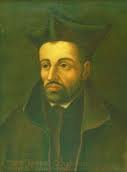
Continuing with the Ignatian-themed week, today is the feast day of Blessed Peter Faber, S.J.  Fr. Faber was one of the founders of the Society of Jesus and the first priest among the Jesuits.  Pope Francis mentioned his admiration for Peter Faber in his first interview with America Magazine.  According to Pope Francis, he looks up to Peter Faber because:

“[His] dialogue with all,” the pope says, “even the most remote and even with his opponents; his simple piety, a certain naïveté perhaps, his being available straightaway, his careful interior discernment, the fact that he was a man capable of great and strong decisions but also capable of being so gentle and loving.”

Attached here is a wonderful document on the Spirituality of Peter Faber by Severin Leitner that was graciously provided by Claire Bangasser, one of my favorite writers.

Below is a summary of Fr. Faber’s life from Living Space, the outstanding prayer site run by the Irish Jesuits:

“Peter Faber (Pierre Favre) was born in 1506 in Villaret, Savoy in the south of France. As a boy, he looked after his father’s sheep in the French Alps. While tending sheep during the week, he taught cathechism to children on Sundays. Aware of his call to be a priest, he longed to study. At first, he was entrusted to the care of a priest at Thones and later to a neighbouring school at La Roche-sur-Foron. With the consent of his parents, in 1525 he went to the University of Paris. It was here that he discovered his real vocation. He was admitted to the College of Sainte-Barbe where he shared lodgings with a student from Navarre called Francis Xavier. They became close friends and graduated on the same day in 1530 with a master of arts degree. Peter also met Ignatius Loyola at the university and both Peter and Francis came under his influence. While Peter taught Ignatius the philosophy of Aristotle, Ignatius directed him in the spiritual life.

Peter was ordained priest in 1534, the first priest in Ignatius’ group, and was celebrant of the Mass on 15 August of the same year at which Ignatius and his companions made their vows of poverty, chastity and obedience with the intention of going to the Holy Land. Soon three more became members of the group. After Ignatius, Peter Faber was the one for whom the companions had the deepest respect because of his knowledge, his holiness and his influence on people.

Leaving Paris on 15 November 1536, Peter and the companions met up with Ignatius in Venice in January 1537. They planned to evanglise in the Holy Land but the instability of the region made it impossible. So they now decided to form a religious congregation and went to Rome where the Society of Jesus was approved by Pope Paul III in 1540. After some time preaching and teaching in Rome, the pope sent Peter to Parma and Piacenza in Italy where he preached the Gospel with success. He was then sent to Germany to defend the Catholic faith against the Reformers at the Diet of Worms in 1540. From Worms, Peter was called to another Diet at Ratisbon in the following year. He was disturbed by the unrest caused by Protestantism but even more by the decadence of Catholic life. He saw that what was needed was not discussion with the Protestants but the reform of the Catholic Church, in particular, the clergy. He spent a successful 10 months at Speyer, Ratisbon and Mainz. He influenced princes, prelates, and priests who opened themselves to him and amazed people by the effectiveness of his outreach.

Recalled to Spain by St. Ignatius, Faber left the field where he had been so successful and on his way won over his native region of Savoy, which never ceased to venerate him as a saint. He had hardly been in Spain six months when the pope ordered him back to Germany. He spent the next 19 months working for reform in Speyer, Mainz, and Cologne. Gradually he won over the clergy and discovered many vocations among the young. Among these was a young Dutchman, Peter Canisius who, as a Jesuit, would earn the title of Apostle of Germany. After spending some time in Leuven (Louvain) in 1543, he was called in the following year to go to Portugal and then to Spain. He was instrumental in establishing the Jesuits in Portugal.

He was called to the principal cities of Spain where he did much good. Among the vocations he nurtured was that of Francis Borgia, Duke of Gandia, who, following the death of his wife, would become a Jesuit and later the third General of the Jesuits. Faber, still only 40 years old, was now worn out by his constant labours and long journeys, always made on foot. Pope Paul III wanted to send him to the coming Council of Trent as theologian of the Holy See and King John III of Portugal wanted to make him Patriarch of Ethiopia. However, he only got as far as Rome on his way to the Council. Suffering from a fever after his journey, he died in the arms of Ignatius in Rome on 1 August 1546. Peter Faber was beatified by Pope Pius IX in 1872. He is remembered for his travels through Europe promoting Catholic renewal and his great skill in directing the Spiritual Exercises.”

Posted in Ignatian Spirituality | Tagged , , , , | 4 Comments