Scientific Potpourri (August 2, 2013)

Omega_point

Attached are top stories from the past week in cosmology and evolutionary biology (with an Omega Point reflection thrown in:-).  Please click on the heading to see the article.

Reflections on the Omega Point.  From Metanexus:  The Omega Point is a term coined by Teilhard de Chardin to describe the maximum level of complexity and consciousness towards which he believed the universe was evolving.  In Jason Silva’s latest short video, he explores this concept along with contemporary theories.

Climate Change Occurring Ten Times Faster Than at Any Time in the Past 65 Million Years.   From Science Daily:  The planet is undergoing one of the largest changes in climate since the dinosaurs went extinct. But what might be even more troubling for humans, plants and animals is the speed of the change. Stanford climate scientists warn that the likely rate of change over the next century will be at least 10 times quicker than any climate shift in the past 65 million years.  If the trend continues at its current rapid pace, it will place significant stress on terrestrial ecosystems around the world, and many species will need to make behavioral, evolutionary or geographic adaptations to survive.

Big Bang Light Reveals Minimum Lifetime of Photons.  From Scientific American: The notion of the speed of light as the cosmic speed limit is based on the assumption that particles of light, called photons, have no mass. But astrophysical observations cannot rule out the slim chance that photons do have a tiny bit of mass—a prospect with wide ramifications in physics. For instance, if photons weigh nothing at all, they would be completely stable and could theoretically last forever. But if they do have a little mass, they could eventually decay into lighter particles.

Seeking the Cosmic Dawn: Evidence of Inflation?.  From Sky and Telescope:  In a tiny fraction of a second, an outburst of energy propelled our universe from a hot, dense point to cosmic size. This theoretical outburst, called inflation, provides a fantastically accurate explanation of why the cosmos is the way it is. Among other things, it predicts the pattern of temperature blotches astronomers observe in their earliest view of the cosmos, the cosmic microwave background (CMB). But there’s still no conclusive evidence that inflation happened.   Now, a team of astronomers using the South Pole Telescope (SPT) in Antarctica has detected a pattern in the CMB that might help reveal inflation’s signature

Evolution Will Punish You if You are Selfish and Mean.  From Science Daily:  Two Michigan State University evolutionary biologists offer new evidence that evolution doesn’t favor the selfish, disproving a theory popularized in 2012.  “We found evolution will punish you if you’re selfish and mean,” said lead author Christoph Adami, MSU professor of microbiology and molecular genetics. “For a short time and against a specific set of opponents, some selfish organisms may come out ahead. But selfishness isn’t evolutionarily sustainable.”

 Oxygen Brought Earliest Carnivores to Life.  From Scientific American:  Without oxygen, there would be no carnivores. Without carnivores, there would be no Cambrian explosion, the stunning evolutionary burst of diversity in species and body forms that began 540 million years ago. Those are the findings of a new study that stitches together competing models for why meat-eating appeared simultaneously with the Cambrian explosion. Previously, one camp of scientists had proposed that rising oxygen levels gave animals the extra power to evolve complex body forms. Another school of thought said that competition among animals drove the sudden appearance of new species, such as the weird and wild life forms found in the Burgess Shale, a rock formation in Canada that has been an amazing source of fossils.

When Galaxies Switch Off: Hubble’s COSMOS Survey Solves “Quenched” Galaxy Mystery.  From Science Daily:  Some galaxies hit a point in their lives when their star formation is snuffed out, and they become “quenched.” Quenched galaxies in the distant past appear to be much smaller than the quenched galaxies in the Universe today. This has always puzzled astronomers — how can these galaxies grow if they are no longer forming stars? A team of astronomers has now used a huge set of Hubble observations to give a surprisingly simple answer to this long-standing cosmic riddle.


Posted in Uncategorized | Tagged , , , , , , , , , | Leave a comment

Teilhard de Chardin Quote of the Week (July 29, 2013): God as Poet

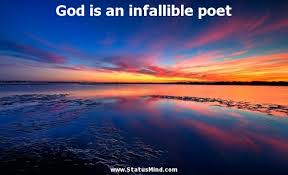
god_poet

“From beneath the most secular experience of love (provided it be deep), from beneath the most coldly reasoned construction of the universe (provided it seek to embrace the whole of the real) there always shines through some divine emotion, and over it there passes a breath of worship. How, indeed, could it be otherwise? With its attributes of (at least relative) universality, unity, and infallibility, the Whole cannot reveal itself to us without our recognizing in it God, or the shadow of God.”

Teilhard de Chardin, Pierre (2002-11-18). Christianity and Evolution (Harvest Book, Hb 276) (Kindle Locations 725-729). Houghton Mifflin Harcourt. Kindle Edition.
Posted in Teilhard Quote of the Week | Tagged , | 5 Comments

Feast of St. Ignatius of Loyola, Ignatian Spirituality and the Controversial Jesuits

St. Ignatius of Loyola

St. Ignatius of Loyola

Today is the Feast of St. Ignatius of Loyola, founder of the Society of Jesus (also known as the Jesuits).  This is a very special day for me as I attended a Jesuit university as an undergraduate and my prayer life is deeply influenced by Ignatian Spirituality.

The theme of this blog is “Exploring Ignatian Spirituality and the intersection of faith, science and reason through the life and writings of Pierre Teilhard de Chardin”.  Teilhard de Chardin exemplifies the values of the Jesuits, in his deep prayer life, in his engagement with the world, in his intellectual synthesis of science and religion, in his obedience to the Church and his Order and ultimately in his deep love of Christ.

Ignatian Spirituality: Contemplatives in Action

There are several hallmarks of Ignatian Spirituality in general and the Jesuits in particular. First, there is belief that we should “find God in all things.”  God is not only found in the Alter or at Church.  God is found in our everyday lives; our work, our play, our leisure, nature and most importantly, the people we interact with.  Second, there is an emphasis on each of us developing as a whole person (physically, intellectually, emotionally, spiritually and psychologically) in the way God intended.  Third, as gratitude for the gifts that God has given us, we are to offer these gifts to build God’s Kingdom on Earth to honor the greater glory of God.  These hallmarks result in individuals who have a deep spiritual life who are also actively engaged in shaping the world towards God’s image.

St. Ignatius and the Jesuits are in the spotlight with the selection of the first Jesuit Bishop of Rome (something I never thought would happen in my lifetime) in Pope Francis.  The Society of Jesus is the largest religious order in the world and Jesuits are engaged in evangelization and apostolic ministry in 112 nations on six continents. Jesuits work in education (founding schools, colleges, universities and seminaries), intellectual research, and cultural pursuits. Jesuits also give retreats, minister in hospitals and parishes and promote social justice and ecumenical dialogue.

Controversial Jesuits

Being at the forefront of Catholic engagement with the world, and borrowing from the military training of St. Ignatius of Loyola described below, the Jesuits have been called “God’s Special Forces”.  The Jesuits have frequently been criticized by the Church as being too secular and by secular society as being too Catholic.  For example, in 1773 Pope Clement XIV suppressed the Society of Jesus for both political and ideological reasons. However, the restoration of the Jesuits in 1814 was not welcomed by secularists.  The following quotes from correspondence between the second and third Presidents of the United States, the pious John Adams and the deist Thomas Jefferson is telling:

“I do not like the reappearance of the Jesuits…Shall we not have regular swarms of them here, in as many disguises as only a king of the gypsies can assume, dressed as printers, publishers, writers and schoolmasters? If ever there was a body of men who merited eternal damnation on earth and in hell, it is this Society of Loyola. “ -John Adams.

“Like you, I disapprove of the restoration of the Jesuits, for it means a step backwards from light into darkness….” -Thomas Jefferson.

St. Ignatius of Loyola

Ignatius of Loyola, born in 1491, was the youngest of many children (I have seen both 11 and 13) of a family of minor nobility in Northern Spain.  As a young man, Ignatius Loyola was inflamed by the worldly ideals of courtly love and knighthood and dreamed of doing great deeds.  This led him to become a solider.

During a battle against the French he was wounded at the siege of Pamplona in 1521. His broken leg was badly set and, very conscious of his appearance, insisted that it be broken again and re-set. However, the surgery was not well done and Ignatius was left with a limp for the rest of his life. During his long period of convalescence he was not able to get the knightly romances he craved and had to settle for a life of Christ and stories of saints, the only books available in the place of his recuperation. However, these books had a deep effect on him.  Reading the lives of Jesus and the saints made Ignatius happy and aroused desires to do great things. Ignatius realized that these feelings were clues to God’s direction for him.

After Ignatius recovered, while on a journey, he stopped along the river Cardoner at a town called Manresa. He stayed in a cave outside the town, intending to linger only a few days, but he remained for ten months. He spent hours each day in prayer and also worked in a hospice. It was while here that the ideas for what are now known as the Spiritual Exercises began to take shape. It was also on the banks of this river that he had a vision which is regarded as the most significant in his life. The vision was more of an enlightenment, about which he later said that he learned more on that one occasion than he did in the rest of his life. Ignatius never revealed exactly what the vision was, but it seems to have been an encounter with God as He really is so that all creation was seen in a new light and acquired a new meaning and relevance, an experience that enabled Ignatius to find God in all things. This grace, finding God in all things, is one of the central characteristics of Ignatian spirituality.

Ignatius himself never wrote in the rules of the Jesuits that there should be any fixed time for prayer. Actually, by finding God in all things, all times are times of prayer. He did not, of course, exclude formal prayer, but he differed from other founders regarding the imposition of definite times or duration of prayer. One of the reasons some opposed the formation of the Society of Jesus was that Ignatius proposed doing away with the chanting of the Divine Office in choir. This was a radical departure from custom, because until this time, every religious order was held to the recitation of the office in common. For Ignatius, such recitation meant that the type of activity envisioned for the Society would be hindered.

It was also during this period at Manresa, still lacking in true wisdom concerning holiness, that he undertook many extreme penances, trying to outdo those he had read of in the lives of the saints. It is possible that some of these penances, especially his fasting, ruined his stomach, which troubled him the rest of his life. He had not yet learned moderation and true spirituality. This is probably why the congregation he later founded did not have any prescribed or set penances, as other orders had.

After departing Manresa, he arrived in Barcelona, took a boat to Italy, and ended up in Rome where he met Pope Adrian VI and requested permission to make a pilgrimage to the Holy Land. Once he arrived in the Holy Land he wanted to remain, but was told by the Franciscan superior who had authority over Catholics there that the situation was too dangerous. (The Turks were the rulers of the Holy Land at the time.) The superior ordered Ignatius to leave. Ignatius refused but when threatened with excommunication, he obediently departed.

By now, Ignatius was in his early 30s and decided to study for the priesthood. However, he was ignorant of Latin, a necessary preliminary to university studies in those days. So he started back to school studying Latin grammar with young boys in a school in Barcelona. There he begged for his food and shelter. After two years he moved on to the University of Alcala. There his zeal got him into trouble, a problem that continued throughout his life. He would gather students and adults to explain the Gospels to them and teach them how to pray with a preliminary form of the Spiritual Exercises. His efforts attracted the attention of the Spanish Inquisition and he was thrown into jail for 42 days. When he was released he was told to avoid teaching others. The Spanish Inquisition was a bit paranoid and anyone not ordained was suspect (as well as many who were ordained).  There, within two weeks, the Dominicans had thrown him back into prison again. Though they could find no heresy in what he taught, he was told that he could only teach children and then only simple religious truths. Once more he took to the road, this time for Paris.

At the University of Paris he began school again, studying Latin grammar and literature, philosophy, and theology. He would spend a couple of months each summer begging in Flanders for the money he would need to support himself in his studies for the rest of the year. It was also in Paris that he began sharing a room with Francis Xavier and Peter Faber. He greatly influenced a few other fellow students, directing them all at one time or another for thirty days in the Spiritual Exercises. Eventually six of them plus Ignatius decided to take vows of chastity and poverty and to go to the Holy Land. If going to the Holy Land became impossible, they would then go to Rome and place themselves at the disposal of the Pope for whatever he would want them to do. They did not think of doing this as a religious order or congregation, but as individual priests. For a year they waited, however no ship was able to take them to the Holy Land because of the conflict between the Christians and Muslims. While waiting they spent some time working in hospitals and teaching catechism in various cities of northern Italy. It was during this time that Ignatius was ordained a priest, but he did not say Mass for another year. It is thought that he wanted to say his first Mass in Jerusalem in the land where Jesus himself had lived.

Ignatius, along with his companions, decided to go to Rome and place themselves at the disposal of the Pope.  When they met with the Pope, he very happily put them to work teaching scripture and theology and preaching. It was here on Christmas morning in 1538, that Ignatius celebrated his first Mass.  The following year, Ignatius and his companions asked for the Pope’s approval to form a community.  They would place themselves at the disposal of the Holy Father to travel wherever he should wish to send them for whatever duties. A vow to this effect was added to the ordinary vows of poverty, chastity and obedience. Formal approval of this new order was given by Pope Paul III the following year on September 27, 1540.  On the Friday of Easter week, April 22, 1541, at the Church of St. Paul Outside-the-Walls, the friends pronounced their vows in the newly formed Order, which was called the Society of Jesus.

Ignatius was unanimously, though against his will, elected as the first Superior General and would hold the post for the rest of his life. He would also remain in Rome from where he directed the works of the Society. Other works he personally was involved in were houses for converted Jews and shelters for prostitutes. Given that so many members were scattered to so many places and often working on their own, obedience to the aims of the Society became very important for maintaining unity. It also explains the long letters which members on the missions regularly sent back to Rome to report on what they were doing. Among the most famous of these were the letter of St. Francis Xavier and of the missionaries working in China and North America.

A tighter organisation was also called for because of the crisis situation caused in Europe by the Reformation. Peter Canisius was one of the leaders of the Counter-Reformation as were the many schools started by the Society. In missionary work, Francis Xavier was the pioneer with an astonishing career. He was followed by missionaries in India, China, Ethiopia, Latin America and North America. Spiritual direction, which was to complete rather than replace the work of parish priests, was undertaken by the Society. Ignatius, who had been plagued by chronic stomach problems due to the austere excesses in his younger years, died suddenly on 31 July 1556. By then the Jesuits numbered over 1,000 members in nine European provinces, besides those working in foreign missions.
He was canonized with Francis Xavier on 12 March 1622 and declared Patron of Spiritual Exercises and Retreats by Pope Pius XI.

Sources:

New Orleans Province Jesuits
Ignatian Spirituality
Sacred Space (Irish Jesuits)

Posted in Ignatian Spirituality | Tagged , , , , , , , , , , , | 4 Comments

Teilhard de Chardin, Pope Bendict XVI and the New Evangelization

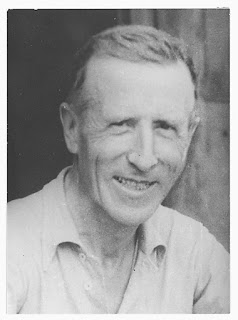
benedict

pierre-teilhard-de-chardin-sj

Pope Benedict XVI celebrates Teilhard de Chardin as part of the Year of Faith.

______________________________

______________________________

One of the goals of this blog is to show how the writings and teachings of Pierre Teilhard de Chardin are part of mainstream Catholic theology.  (You can find more details on current Catholic teaching on Teilhard de Chardin in my six-part series that starts here).  Along those lines I was aware that the Vatican had a conference at Pontifical Gregorian University held in November 2012 titled:  “Today’s Anthropological Challenges – a reading of Teilhard de Chardin for a renewed evangelization, 50 years after the Second Vatican Council.”  Unfortunately, I have not been able to find out much information on it (and the official transcripts are not expected until the end of 2013!; the Vatican could work on communications in the 21st century).  To my delight I received the Summer issue of Teilhard Perspective from the American Teilhard Association last week and found that the Perspective had two articles on the Teilhard de Chardin conference!

The first article was by Dr. David Grumett, Professor at the University of Edinburgh and author of several books on Teilhard de Chardin and Cardinal Henri de Lubac.  Dr. Grumett provided an excellent summary of the conference quoting Teilhard de Chardin two years after his unsuccessful trip to Rome to receive approval of his publications: “If the Church is not to be false to herself … she cannot but regard herself as the very axis upon which the looked-for movement of concentration and convergence can, and must, be effected.”  Dr. Grumett went to say:

“Perhaps Teilhard’s Roman sojourn renewed his sense that spiritual evolution had a necessarily institutional dimension that only the Church could fulfill. This is a message that has not always been remembered by either his advocates or detractors, resulting in a sometimes fractious ongoing relationship with the Roman Catholic Church. Nevertheless, this conference received significant coverage in Rome. An article by Éric de Moulins-Beaufort on Teilhard and de Lubac appeared in Osservatore Romano, and we were honored to receive a mention in Pope Benedict’s Angelus address on Sunday, delivered in a wet St Peter’s Square. It would not be an overstatement to say that this event, held in Rome’s premier pontifical university, made a welcome contribution to the long overdue rehabilitation of Teilhard within the Roman Catholic Church.”

The second article was by Gérard Donnadieu, President of the French Teilhard Association. Mr. Donnadieu  provided an outstanding summary of the positive reception of Teilhard de Chardin’s vision in recent years.  Donnadieu summarizes by quoting Fr. Eugenio Costa of the Papal Gregorian University, an organizer of the conference:

“This two day conference has been an excellent journey through Fr. Teilhard’s thought and life. I have wondered how we can explain this present, and sometimes passionate, renewed interest in our great friend. The circumstances in which we live, namely, culture,evolution of the mind, research, change of direction – often change the course of life’s river, as well as the thoughts of an Author, to follow tracks that are sometimes difficult to understand. Then, suddenly, something becomes clear before us… The tenacity and determination of some of the best people prevent these thoughts from being lost, and allow the current to go on stronger and stronger so that at last the river can be seen!”

Donnadieu summarized:  “Yes, the river of Teilhard’s thought has indeed become visible,with the irresistible force of a majestic flow now endorsed by the Catholic Church.”

Donnadieu then traces the history of Teilhard de Chardin’s early challenges with the Church and Teilhard’s response to them.  In 1924, Teilhard wrote:

“One must swallow the impediment through obedience”. . .  “Would it be logical for me, by breaking with my Church, to impatiently strain the growth of the Christian branch in which, I am convinced, the sap of tomorrow’s religion is breaking forth? I am a prisoner of the Church because of the very views which show me its insufficiencies.”

Donnadieu went to describe how the pontificates of Pope John II and Pope Benedict XVI praised both Teilhard de Chardin’s synthesis of science and religion and his theological vision, citing many of the examples described in my earlier series on the Orthodoxy of Teilhard de Chardin.  However, Donnadieu’s final point was perhaps the most profound.  Donnadieu contrasted the public image of Benedict XVI as an ultra-conservative with the actual theological writings and speeches of Benedict XVI which are exceptionally open-minded, engaging and forward-thinking.  I know on my personal journey, I discovered Teilhard de Chardin through the readings of Pope Benedict XVI.  His theological writings and papal encyclicals are absolutely beautiful.  As Mr. Donnadieu said:

“Benedict VI has been the first pope who named Pierre Teilhard de Chardin in order to refer to him and honor him! What a strange destiny for a pope whom the media constantly  described as a conservative, refusing to see his open-mindedness and his modernity as a thinker and a theologian. Because they keep on trying to make the spiritual realities, particularly those of the Church, fit in with their notions borrowed from political language – right/left,conservative/progressive – the media condemn themselves to completely misunderstand a large part of reality, its very core, which is beyond this simplistic view and has nothing to do with political accuracy. By willingly withdrawing from St. Peter’s seat before he could not rely anymore on his physical and intellectual capacities, Benedict XVI has just given to the world and to the Church another example of his great intelligence and no less great humility.

What should the Catholic Church do today? Fr. Teilhard was wondering in 1954, in a letter to Jeanne Mortier. And he immediately answered: “just present to the world the Universal Christ she has been able(she and she alone) to generate (to make explicit) during the last two millennia”. It seems to me that this is exactly what Benedict XVI has tried to do during his eight years as pope, through his teaching (three encyclical letters of an obvious Christological tone), through his preaching and through his very life in as much as it accepted passivity in order to let himself descend into Christ (what an extraordinary example his renunciation is); And on this road he could not but meet Teilhard, The Teilhard of The Divine Milieu, of the Mass on the World and of The Ever Greater Christ.”

I am grateful for the summaries of the Teilhard conference and I look forward to reviewing the full transcripts, hopefully later this year.

Posted in Ignatian Spirituality, Orthodoxy of Teilhard de Chardin | Tagged , , , , , , , , | 8 Comments

Feast of St. Martha (July 29, 2013): Imagining a Conversation

Today is the Feast of St. Martha. It is also two days away from the Feast of St. Ignatius of Loyola. As such, I thought it would be helpful tie these two themes together. Lacking the originality and talent to do so myself, I will reblog a wonderful post from Claire Bangasser.

Claire is a self-described cosmic pilgrim (as Claire would accurately say, we all are) who is a visionary writer and traveler, not to mention a deeply spiritual person. I strongly recommend following Claire’s blogs, the current one “A Seat at the Table” which Michael Leach named one of the Top 5 Catholic blogs at the Loyola Press blog.

Claire had literally followed the paths of St. Ignatius in her travels and her figuratively in her writings as they are deeply imbued with Ignatian Spirituality. A prime example is the blog above she imagines a conversation with Martha and Mary after the resurrection of Christ.

claire46's avatarA Seat At The Table

Image

Jesus entered a village where a woman whose name was Martha welcomed him. She had a sister named Mary… Lk 10:38-42

I guessed that it was Martha and Mary’s turn at mass this weekend when earlier this week I received Suzanne Guthrie’s link‘The Bread of Anxiety‘ in my inbox and noticed Phil Ewing’s ‘Jesus with Martha and Mary’ on my Google Reader. I did let out a heavy sigh, I must admit. What more can I find to say about this story with which I have had a love-hate relationship for as long as I can remember?

I forgot about tomorrow’s Gospel until last night when I woke up and started thinking about it. Luke’s Martha and Mary story is one of the reasons I wish I could have been a deacon to talk of Godde’s things as only a woman can. This deacon idea crossed my mind while…

View original post 851 more words

Posted in Ignatian Spirituality | Tagged , , , | 2 Comments

17th Sunday in Ordinary Time (July 28, 2013) (Lord’s Prayer: A Challenging Petition)

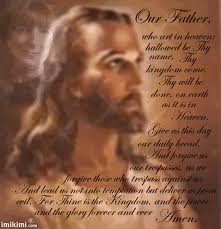
lord_prayer

Today’s readings contain the version of the Lord’s Prayer found in the Gospel of Luke.  I learned this prayer as a child and pray it almost every day. It has become so routine that I often lose the power of the words contained in that simple prayer.

A few weeks ago, when the version of the Lord’s Prayer from Matthew was in the daily readings, I had a reflection based on the text from Matthew.  Today, with the help of the Irish Jesuits,  I will do a similar analysis for the shorter Lucan version.

The text of the Lord’s Prayer should not be seen as just a formula for vocal recitation. It is, rather, a series of statements and petitions in which we affirm our relationship with God, with the people around us and with the world in general. It is a statement of faith and it is, as we shall see, a highly challenging and, therefore, even rather dangerous prayer.

Let us take a brief look at the petitions one by one.

1. Father:

We address God as Father, the source of life and of everything that we have; we have nothing purely of our own.  We do not address him as Lord, or Master, or Judge. We do not even call him, the Source of all being, Creator, but by the much more personal term, Father. And St Paul reminds us that this title is meant to be understood on the warmest and most intimate level. He tells us to call God Abba (’) “Papa” – titles used affectionately by young children all over the world.  This affectionate form of praying to the Divine is fairly unique among major world religions (and a blasphemy to our Abrahamic cousins the Muslims).

In addressing God as ‘Father’ we are acknowledging that every human person, including myself, is a child of God and therefore that we all belong to one huge family where we are all, in a very real way, brothers and sisters to each other. There is no room here for rejection, or hatred, or prejudice or contempt of any kind based on race, nationality, color of skin, gender, sexual orientation, social class, religion, etc.  If I am not prepared to accept every single person as a brother or sister, I will have problems even beginning to say this prayer.

2. May your name be held holy:

Other forms are ‘Hallowed be thy name’ or ‘Holy be your name’. Of course, God’s name is holy no matter what we say or think.  For the Jews, a name was not simply a label indicating identity. It denoted the whole person. When Moses spoke to God in the burning bush, he needed to know God’s name in order to know who he was. So here we are praying that God himself and not just his name be revered by all. It is not just a prayer for people to avoid irreverent language. In a sense, too, who can make God’s name or God himself “holy?” His holiness in no way depends on us.  We make this prayer for our sake more than for his. What we are rather asking for is that God’s holiness be acknowledged by us not only by our words but by the way we live. In other words, it is a prayer that God’s holiness be reflected in our own lives and in the lives of every single person.

3. Your kingdom come:

The Kingdom of God we may understand as a world in which everything that God stands for becomes a reality in the lives of people everywhere – a world that is built on truth, love, compassion, justice, freedom, human dignity, peace. We know it is God’s will that such a world should be the shared experience of all but it depends a great deal on our response and co-operation. Some elements of the Kingdom can be found in many places and in many communities but we are only too aware that, for the world at large, the Kingdom is still far from being a reality and much of the blame lies with us.  It is the work of the Church and of every single Christian, indeed of every person anywhere – to help people recognize the kingship and lordship of God and to accept it as the key to their present and future happiness.  So in saying this invocation we are not only calling on God’s help but reminding ourselves of working with God to make the Kingdom a reality.

4. Give us today our daily bread:

In the second half of the prayer we pray more directly for our own needs. And we begin with present needs. Notice that we ask for today’s bread, food, today’s material needs. Is that what we normally pray for? Or are our anxieties reaching far out into the future? Yet in praying this way we express our trust in a caring God. It is also the acceptance of a challenge by all of us to see that every person has their needs for today supplied. There is no need for worry and anxiety about the future.

There is one little word here that is highly dangerous. It is the word “us”. Who is that “us”? Just me and my immediate family? or my parish? or my neighborhood or my town or my country? All the above plus more; the “us” includes every single person. I am praying, therefore, that every single person have bread to eat today. We know, of course, that there are millions of people (some of them in rich countries) who do not have enough to eat or who suffer from malnutrition and poorly balanced diets. In praying that all of “us” have our daily bread, are we expecting God to drop manna from the skies or are we not reminding ourselves that the feeding of brothers and sisters is our responsibility? If people are hungry or badly fed, it is not God’s doing; human beings are responsible in most cases (outside of natural disasters).

Finally, this petition prayer is not limited to the physical food required to nourish our bodies; it also includes the spiritual food of the Eucharist to nourish our spirits.  But in sharing that Bread together we are saying sacramentally that we are a sharing people and we will share our goods and blessings with others, especially those in need.  If we turn our Eucharist into an individualistic affair, it becomes a kind of sacrilege.

5. Forgive us our sins, for we ourselves forgive everyone in debt to us:

Is this not an incredibly dangerous prayer to make? We are asking that God’s forgiveness to us be conditional on our readiness to forgive those we perceived to have hurt us in some way. That is a daring thing to do. And forgiveness does not simply mean uttering a few words. Forgiveness in the Scripture always includes reconciliation between offender and offended. In fact, I would go even further and say that the fully Christian person is never offended, cannot be offended. The true Christian has a rock solid sense of their own security and their own inner worth which no other person can take away. When such a person is the recipient of some attack, be it verbal or physical, their first response is to reach out to the attacker with concern and sympathy. It is the attacker who has the problem, not the one attacked. Most of us have a long way to go to reach that level of inner peace. ‘If what you say about me is true, I accept it; if it is false, then it is false. Why should I take offence?’  We are praying to share God’s most beautiful quality – his readiness to forgive not just “seventy time seven times” but indefinitely.

6. Do not subject us to the final test:

Finally, we pray for protection from future trials that might overwhelm us. Trials where we might fail and betray our following of him.  It is rare the we are subjected to the major trials that the first disciples faced.  However, we are faced with our own trials in our daily lives.  Do we really think about God in all of the decisions we make in our daily lives and in how we treat others?  The evil one is constantly trying to get us to focus on our own needs and wants and make us forgot that we spiritually connected to a much larger spiritual organism in the Church, all of humanity and all of God’s other creation.

Finally, in addition to simply reciting this prayer in the rapid way we normally do, we could sometimes take it very slowly, one petition at a time and let its meaning sink in. Or we could just take one petition which is particularly meaningful to us at any time and just stay with it until it really becomes part of us.

Posted in Sunday Reflections | Tagged , , , , , | 3 Comments

Teilhard de Chardin Quote of the Week (July 22, 2013)

resurrection_phoenixjpg

“To become unified and concentrated upon itself, the being must break many sensible attachments.  To make itself one with others and give itself to them, it must encroach upon those intimate personal intellectual and emotional reserves that it most jealously guards.  To enter into a higher life, by centering itself upon another self, it must destroy its own preliminary unity.  This can mean only one thing, that at all levels of the formation of being, creative synthesis involves detachments — every aggregation being accompanied by a segregation.  The moral effect is necessarily accompanied by suffering and sacrifice.  That is why, in every moral condition, perfection is inseparable from suffering, and the highest life is attained through a dying.  Death (which means disintegration) accompanies every change for better or worse.  However, while in the case of some (which it leaves permanently disintegrated and diminished) the death is ad mortem, in the case of others (those it reintegrates as it disintegrates them) it is a transition . . . that leads to a new life.” — L’Union creatrice (December 1917) quoted in Cardinal Henri de Lubac “The Religion of Teilhard de Chardin” p. 53

Posted in Teilhard Quote of the Week | Tagged , , , , , | 5 Comments

Feast of St. James the Apostle: July 25, 2013

St. James the Apostle

St. James the Apostle

Today is the Feast of St. James the Apostle, one of the three apostles that were closed to Jesus and the first apostle to become a martyr.

James and his brother John were sons of Zebedee and, together with Peter, were among the inner circle of Jesus’ twelve disciples. The family seems to have been of a slightly higher social level than the ordinary fisherman as we are told that Zebedee had hired men to help with the fishing (Mark 1:20). James and John were, with Peter and Andrew, among the first four to be called to follow Jesus.

They also had the special privilege, along with Peter, to be witnesses of the Transfiguration (Matt 17:1ff, Mark 9:2ff, Luke 9:28ff), to be present at the healing of Peter’s mother-in-law (Mark1:29) and the raising of the daughter of Jairus (Mark 5:40, Luke 8:51). After the Last Supper, it was these three who were called to watch and pray with Jesus in the Garden of Gethsemane (Matt 26:37, Mark 14:33).

Jesus on one occasion called James and John Boanerges, “sons of thunder” (Mark 3:17), perhaps indicating they were somewhat headstrong and impulsive. On one occasion, recounted by Luke (9:54ff), when Jesus and his disciples were refused hospitality by Samaritan villagers, James and John suggested Jesus call down fire from heaven on the offenders. On another occasion, they went behind the backs of their companions, and asked for the two best places in the Kingdom. On both occasions, they showed they had yet little real understanding of the Way of Jesus.  Moreover, James, along with the rest of the apostles other than John, deserted Jesus during his trial and crucifixion.

All that changed, of course, with the suffering, death and resurrection of Jesus. James would have been among the disciples when Jesus appeared to them after the resurrection and gave them their mission to continue his work. James would also have been present when the Spirit of Jesus was given to the disciples, after which they set aside all their former fears and boldly proclaimed the Gospel.

About the year 44 AD and at the time of the Passover, the Acts tells us that “King Herod laid hands upon some members of the church to harm them”. He seems to have done this as a sign of support for the Pharisees. One of the first victims was James, the brother of John.

King Herod Agrippa I, was the grandson of Herod the Great, who had tried to kill Jesus after his birth (Matt 2) and a nephew of Herod Antipas, who executed John the Baptist (Mark 6) and spoke with Jesus on Good Friday (Luke 23) and father of Herod Agrippa II, who heard the defence of Paul before Roman Governor Festus (Acts 25).

James was the first of the Twelve to suffer martyrdom and the only one whose death is recorded in the New Testament. By tradition all of the Apostles other than St. John the Evangelist were martyred, but the evidence in many cases is based on legend.

James is often called the Greater, to distinguish him from the other James, son of Alphaeus.  He is known as James the Great to distinguish him from James the Less, or James the brother of the Lord (also called by Eusebius James the Just) who became a pillar of the Jerusalem community, and is thought to have been the first bishop of Jerusalem (Galatians 1, 19 and 2, 9). It seems probable that there was a third James, James the son of Alpheus, about whom little more is known.

Little is known about St. James between Jesus’ Resurrection and his martyrdom.  One source of legends are the approximately sixteen apocryphal, non-canonical gospels, which have come down to us in more or less fragmentary form.  Several of these apocrypha gospels, to give them the appearance of greater authenticity, are attributed to people who appear in the canonical gospels (e.g. Thomas, and Mary of Magdala).  Two are attributed to James the Brother of the Lord, but none to James the Great.  The only reference to James the Great in the apocryphal gospels comes in the Gospel of the Ebionites (which survives only in fragments quoted by the 4th century writer Epiphanus), where a version of the story of the call beside the lake of Tiberias is given.

James’s absence from the apocryphal gospels is odd, given his pre-eminence in the canonical gospels, but might be explained in part by his early martyrdom, and in part by his departure from Jerusalem: legend has it that when the Apostles divided the known world into missionary zones, the Iberian peninsula fell to James. There is nothing intrinsically implausible about this: Spain was already a well-established part of the Roman world, and Paul, writing in 56 or 57 (Romans 15, 24 & 28), is clear about his own desire to make a missionary journey to Spain.  On the other hand, Paul was generally reluctant to visit places that had been evangelized by others, preferring to found churches of his own, so his reference might be taken as evidence against James having preceded him to Spain.

There is a tradition that, after his death, he was buried in Spain at the town of Compostela, in Galicia. (Some say the name is a corruption of ‘apostle’ but for others it comes from campus stellarum, or ‘field of stars’). Compostela became a major place of pilgrimage in the Middle Ages and was a rallying point for Spaniards trying to drive out the Moors who had occupied a large part of the country. “Santiago de Compostela!” was one of their battle cries. (The Spanish form of “James” is “Diego” or “Iago”. ‘James’ and ‘Jacob’ are forms of the same name.) The pilgrimage to the grave of the Saint, known as the “Way of St. James”, has become a highly popular pilgrimage for Western European Catholics from the early Middle Ages onwards, thus making James one of the patron saints of pilgrimage.

The 12th-century Historia Compostellana commissioned by bishop Diego Gelmírez provides a summary of the legend of St James as it was believed at Compostela. Two propositions are central to it: first, that St James preached the gospel in Spain as well as in Palestine, and, second, that after his martyrdom at the hands of Herod Agrippa I his disciples carried his body by sea to Spain, where they landed at Padrón on the coast of Galicia, and took it inland for burial at Santiago de Compostela.

James’s emblem was the scallop shell (or cockle shell), and pilgrims to his shrine often wore it as a symbol on their hats or clothes. The French for a scallop is coquille St. Jacques, which means “cockle (or mollusk) of St James”. The German word for a scallop is Jakobsmuschel, which means “mussel (or clam) of St James”; the Dutch word is Jacobsschelp, meaning “shell of St James”.

Sources:

Sacred Space
The Confraternity of St. James

Posted in Uncategorized | Tagged , , , , | 4 Comments

Scientific Potpourri: July 24, 2013

Is the universe not expanding after all?

Is the universe not expanding after all?

Universe May Not be Expanding After All.  From Nature Magazine:  It started with a bang, and has been expanding ever since. For nearly a century, this has been the standard view of the Universe. Now one cosmologist is proposing a radically different interpretation of events — in which the Universe is not expanding at all.  Christof Wetterich, a theoretical physicist at the University of Heidelberg in Germany, has devised a different cosmology in which the Universe is not expanding but the mass of everything has been increasing. [Editor’s Note: While the headlines are attention grabbing and deeply profound if true, read the full article to see why this has not gotten more publicity.  The theory is not able to be tested so this theory is closer to metaphysics than actual science.]

New Traits Evolve for No Reason.  From Science World Report:   Species constantly adapt and evolve, developing new traits and features over long periods of time. Yet scientists have long wondered exactly how these new traits emerge. Now, researchers have taken a closer look at these traits in order to find out how they might have been created.

New Moon Discovered Around Neptune in Old Hubble Images.  From Scientific American:  The Hubble Space Telescope has revealed a small, never-before-seen moon around Neptune, boosting the giant blue planet’s total satellite count to 14 satellites, new photos reveal.

Lizards Show Evolution is Predictable.  From Science Daily:  If you could hit the reset button on evolution and start over, would essentially the same species appear? Yes, according to a study of Caribbean lizards by researchers at the University of California, Davis, Harvard University and the University of Massachusetts.

but on the other hand . . .

The Surprising Origins of Life’s Complexity.  From Quanta Magazine: Conventional wisdom holds that complex structures evolve from simpler ones, step-by-step, through a gradual evolutionary process, with Darwinian selection favoring intermediate forms along the way.  But recently some scholars have proposed that complexity can arise by other means—as a side effect, for instance—even without natural selection to promote it. [Editor’s Note:  Interesting theory but it does not really change Darwin’s core biological theory]

How Mars’ Atmosphere Got So Thin.  From Science Daily:  A pair of new papers report measurements of the Martian atmosphere’s composition by NASA’s Curiosity rover, providing evidence about loss of much of Mars’ original atmosphere.

A Warmer Planetary Haven Around Cool Stars, as Ice Warms Rather Than Cools.  From Science Daily:  In a bit of cosmic irony, planets orbiting cooler stars may be more likely to remain ice-free than planets around hotter stars. This is due to the interaction of a star’s light with ice and snow on the planet’s surface.

Snow in an Infant Solar System: A Frosty Landmark for Planet and Comet Formation. From Science Daily:  A snow line has been imaged in a far-off infant solar system for the very first time. The snow line, located in the disc around the Sun-like star TW Hydrae, promises to tell us more about the formation of planets and comets, the factors that decide their composition, and the history of the Solar System.

Catholics Have Better Sex.  From U.S. News:  Devout, married Catholics have the best sex of any demographic group, the Family Research Council said at an event Wednesday, pointing to a collection of studies from the last several decades.  [Editor’s Note:  OK, this is not a valid scientific survey but it is an interesting conversation topic and a strong evangelization tool :-).

Posted in Reason and Faith | Tagged , , , , , | 3 Comments

Life of Teilhard de Chardin: Crisis of Obedience (1924-1926)

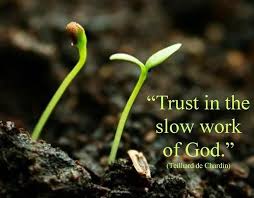
Trust_God

Teilhard de Chardin returned to Paris in Fall 1924 and resumed teaching at the Institute Catholique.  Teilhard continued to teach about evolution to educated Catholics.  By that time, not only was biological evolution strongly supported by the sciences, but Teilhard believed that this fact should lead to a deeper understanding of the Catholic faith. Unfortunately, his religious superiors in Rome did not agree with him.  Cardinal Merry del Val was Secretary of the Holy Office and was on the lookout for any “modernist” ideas, real or imagined (see note at end).*  The Jesuit Superior General of this period was Vladimir Ledochowski, a former Austrian military officer who openly sided with Cardinal del Val.

In November 1924, Teilhard received a letter from his Provincial Superior, Pere Costa de Beauregard, summoning him to Lyon.  Two years earlier, Teilhard had been asked by a Jesuit colleague who was also a professor of dogmatic theology, to write a paper on the doctrine of original sin.  Although we do not know what the paper contained, it mysteriously found its way to Rome.  Many believe it was stolen when Teilhard was in China.  Costa and Teilhard’s other religious Superiors met with Teilhard in May 1925. Teilhard was informed he could continue to teach at Institute Catholique for the upcoming academic year (October 1925 through Easter 1926), but thereafter he must leave Europe for China.  Further, Teilhard was asked to promise that he would neither say nor write anything “against the traditional position of the Church on the matter of original sin”.

Teilhard objected that the request was “too vague and too absolute”.  Teilhard felt in conscience bound due to his scientific and pastoral duties to reserve to himself the right to research among his professional colleagues (scientific duties)  and also the right to aide those who were themselves in intellectual trouble (pastoral duties).  There was some back and forth between Teilhard, supporters of Teilhard and the Roman authorities on the nature of the statement that Teilhard was being asked to sign.  Teilhard was finally requested to agree to six propositions (unfortunately we do not know what they were).  If Teilhard refused to sign, Ledochowski would almost certainly have dismissed him from the Jesuit Order and would risk further censure and perhaps excommunication by Rome. Teilhard decided that he could find ways of interpreting five of the propositions to his comfort, but one of the six caused him great difficulty.  Teilhard was faced with the biggest crisis of his career.

On one hand, Teilhard de Chardin knew that all of the scientific evidence supported biological evolution.  More importantly, Teilhard knew that the theological impact of incorporating this fact had the potential to significantly enhance Christian beliefs both intellectually and spiritually.  Further, Teilhard de Chardin never questioned the doctrine of original sin.  In one of his two seminal works, The Divine Milieu, Teilhard reaffirmed his belief in original sin no less than four times.  However, it appears that one of the six propositions Teilhard was being asked to sign would hinder the evolutionary theology that Teilhard wanted to develop.  Later theologians such as Cardinal Henri de Lubac and Pope Benedict XVI would take this this evolutionary theology first developed by Teilhard de Chardin and incorporate it into mainstream Catholic theology.  Cardinal Henri de Lubac stated:

“Allowing, it is true, for the inevitable imperfections of human nature, our ever-fruitful Mother the Catholic Church, to whom it would be putting it much too low to say that he was always and in all circumstances to remain unshakeably faithful, can herself recognize with joy that in Pierre Teilhard de Chardin she gave birth to the authentic witness to Jesus Christ whom our age so sorely needed.” — Cardinal Henri de Lubac, “The Religion of Teilhard de Chardin” (p. 238)

Pope Benedict XVI would later place Teilhard de Chardin’s cosmic vision as a core of Catholic liturgy:

“And so we can now say that the goal of worship and the goal of creation as a whole are one and the same—divinization, a world of freedom and love. But this means that the historical makes its appearance in the cosmic. The cosmos is not a kind of closed building, a stationary container in which history may by chance take place. It is itself movement, from its one beginning to its one end. In a sense, creation is history. Against the background of the modern evolutionary world view, Teilhard de Chardin depicted the cosmos as a process of ascent, a series of unions. From very simple beginnings the path leads to ever greater and more complex unities, in which multiplicity is not abolished but merged into a growing synthesis, leading to the “Noosphere”, in which spirit and its understanding embrace the whole and are blended into a kind of living organism.  — Pope Benedict XVI, “The Spirit of the Liturgy” (Chapter 2).

Unfortunately, the Roman Authorities of the mid-1920s were not yet there, resulting in the crisis of obedience for Teilhard de Chardin.

The other factor that strongly weighed in Teilhard de Chardin’s decision was the he was Jesuit priest who had a deep love for both Christ and the Church.  In 1921, Teilhard stated:

“It would be impossible for me to seek loyally a way outside the Church. I’m like a man who sees a light shining through the mist . . . impossible to reach our Lord otherwise than by going forward through the mist — that is to say, than by belonging more and more closely to the Church.”  (Robert Speaight, “The Life of Teilhard de Chardin”, p. 116)

This statement was now being challenged in a profound way.  Teilhard de Chardin essentially and two choices:  either leave the Jesuits and the priesthood or sign the order.  Teilhard sought counsel from his old Jesuit colleagues, especially Auguste Valensin, who was teaching theology in Lyon.  In some of his letters to Valensin, Teilhard writes of the deep anguish he was feeling.  Ultimately, Valensin was a proponent of trying to find a way to keep Teilhard in the Jesuit Order while allowing Teilhard to remain faithful to his conscience: “After considerable deliberation, Valensin decided that the best course was to consider the physical action of signing the document as a gesture of fidelity rather than as a symbol of intellectual assent”.  Valensin argued that the correctness of Teilhard’s spirit was ultimately Heaven’s business. After a week’s retreat and reflection on the Ignatian Exercises, Teilhard signed the document in July 1925 and agreed to leave for China at the end of the academic year.  Teilhard explained his decision as follows:

“When I thought of the comfort I drew from the appreciation of all these minds [Valensin and his friends], which were really reliable and devoted to the Church, I realized what enormous damage and scandal would have been caused by any act of indiscipline on my part . . . nothing spiritual or divine can come to a Christian, or to one who has taken religious vows, except through the Church or his Order.”

During the academic year, Teilhard continued his classes at the Institute. Those students who recalled the classes remembered the dynamic quality with which the young professor delivered his penetrating analysis. According to Teilhard the human as tool-maker and user of fire represents a significant moment in the development of human consciousness or hominization of the species. It is in this period that Teilhard began to use the term of Edward Suess, “biosphere,” or earth-layer of living things, in his geological schema. Teilhard then expanded the concept to include the earth-layer of thinking beings which he called the “noosphere” from the Greek word nous meaning “mind.” These lectures were filled to capacity and this concept of the noosphere would eventually become a centerpiece of the Catholic understanding of the Liturgy and of humanity.

This phase of Teilhard de Chardin’s life would come to an abrupt end at the end of the semester.  On April 5, 1926, when he was about to turn forty-five years old, he was exiled from France and sent to China, where was to be based for the next twenty years.  Although he occasionally returned to France, it was always as a visitor.

* Note on Modernism and Teilhard de Chardin:  We have seen earlier that Teilhard de Chardin was not a “modernist” in the sense that he was trying to undermine the Church.  As biographer Robert Speaight stated:

“The tendency of Modernism is to diminish the trancendent stature of Christ: Teilhard’s concern was to enlarge it to cosmic proportions.  So far from inventing a Christ to fit his own ideas, Teilhard had already found him in St. Paul.  It was ‘He in whom all things consist’, ‘He who fills all things’, ‘the Christ who is all in all’, and ‘has ascended high above all the heavens to fill all things with his presence’.  it was the Christus pantocrator of Byzantium, and more particularly the Christ of the Sacred Heart, freed from its popular iconography. Where the Modernist tends to imprison Christ in history at the same time as he questions the historicity of the Gospels which gave him to us, Teilhard adores him when he is transfigured on the mountain, rises from the tomb or is lost in the clouds above the heads of the Apostles. Whatever certain neo-modernists may pretend to the contrary, the opposition could not be more clear.” 

Resources:
Robert Speaight, “The Life of Teilhard de Chardin
John Cowburn, S.J., “Pierre Teilhard de Chardin; A Selective Summary of His Life
Ursula King, “Spirit of Fire; The Life and Vision of Teilhard de Chardin
Cardinal Henri de Lubac, “The Religion of Teilhard de Chardin
Pope Benedict XVI, “The Spirit of the Liturgy
JimDo public website
American Teilhard Association
Wikipedia
Posted in Uncategorized | Tagged , , , , , , , , , | 6 Comments