Teilhard de Chardin Quote of the Week (May 5, 2014): Developing Noosphere

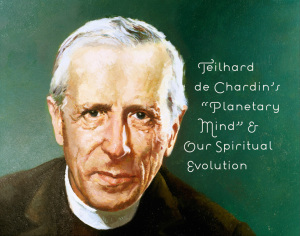
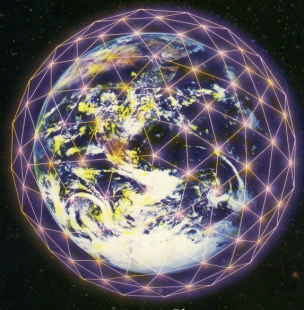
A depiction of the Noosphere

A depiction of the Noosphere

“From the first beginnings of History (sic) . . . this principle of the compressive generation of consciousness has been ceaselessly at work in the human mass. But from the moment — we have just reached it! — when the compression of populations in the teeming continents gains a decided ascendancy over their movement of expansion upon the earth’s surface, the process is naturally speeded up to a staggering extent. We  are today witnessing a truly explosive growth of technology and research, bringing and increasing mastery, both theoretical and practical, of the secrets and sources of cosmic energy at every level and in every form; and, correlative with this, the rapid heightening of what I have called the psychic temperature of the earth. A single glance at the overall picture of surface chaos is enough to assure us that this is so. We see a human tide bearing us upward with all the force of a contracting star.” — The Future of Man, p. 276

Posted in Teilhard Quote of the Week | Tagged , , , , , , , , , , | Leave a comment

Sunday Reflection, Third Sunday of Easter (May 4, 2014): Seeing More Clearly on the Road to Emmaus

emmaus

“[T]heir eyes were prevented from recognizing him.” — Luke 24:16

This weekend is the Third Sunday of Easter. The readings can be found here.  The Gospel contains the wonderful story of the Road to Emmaus in the Gospel of Luke.  Two disciples were walking with the risen Christ but did not recognize him. This story has deep symbolism and meaning in my own life. For most of my early adulthood, I was walking in the Divine Milieu but elected to ignore the presence of God around me in other people, in nature, in the calling of my innermost desires.  I was too busy focusing on career and individual “success” that I was blind to God walking next to me.

Today’s reflection comes courtesy of the St. Mary’s Woodford Anglican Parish in London. (the author of the reflection is not stated).  You can find the full reflection here, but set forth below is an extended summary:

“When Charles Darwin was confidently working out the details of his theory of evolution, he recorded in a moment of wonder, that of all the organic phenomena in the natural world, the development of eyesight in mammals and humans was the one thing that troubled him most. He was at a loss to adequately explain the origins of the sense of sight from a scientific point of view. The idea of an organism being able to perceive the world visually did not fit neatly into any schema of biological development. It seemed to him, almost miraculous and reading Darwin’s own writings on the subject, one realizes that this was one dilemma that became a real challenge to his own atheism. Even now, some scientists find the phenomena of eyesight the most incredible achievement of our biological development. 

But long before Darwin, thinkers and philosophers have been questioning, not just the wonder of eyesight, but the deeper significance of the act of seeing. The Greek philosopher Anaxagoras declared that we were “born for seeing”. And just over 2000 years later, that great priest, theologian and scientist, Pierre Teilhard de Chardin said that all life is comprehended within seeing and that the whole evolution of the cosmos aims above all at “the elaboration of ever more perfect eyes”. It is eyesight – the act of seeing – that is one of the biological faculties that makes us fundamentally human, but we have come to understand that seeing is much more than a mere biological function of a sentient body. It seems that in order to truly know ourselves, our existence and our deepest yearnings, we humans are always craving some form of understanding through seeing. In our world we have so much but we see so little. Certainly, we spend at lot of time looking at a great many things, but do we really see? In other words, we often have the experience but do we really get the meaning? 

The Emmaus story is very much a story about not seeing and seeing. We are told that while two of the disciples are walking and discussing recent events, Jesus was suddenly walking and talking with them, but they didn’t see that it was Jesus. Luke tells us: “There eyes were kept from recognising him”. And later, when they sat to eat with him, “Their eyes were opened” and then they recognised him, but suddenly he vanishes from their sight! Luke is the only evangelist who gives us this account and we may wonder why. Taken literally, this is all strange and for some it is difficult to swallow. Why did it take the disciples so long to recognize Jesus? 

It seems that Luke is trying to say something important about resurrection; how the disciples are to understand Jesus Christ’s presence in the world, and the joy that comes with that understanding. If they are to see Christ, they are to see him differently. It is not a bodily Christ they must seek or expect to find anymore. Christ must now be discovered dispersed into the world. This gospel passage should lead us to some profound insights about seeing and understanding. We too are like those first disciples. We seek to discover Christ – we seek the presence of the divine, but much of the time we do make that connection. But we can empathise with the disciples on the Emmaus Road, for the weight of human grief and personal tragedy can often blind us to what is going on around us. Darkness and despair becomes a barrier to seeing. All they had at that point were shattered hopes and dreams. 

We have daily opportunities of having some access to the sacred around us and within us. Our acts of worship, our rituals, our calendar of festivals and celebrations seek to give access to the holy, but we have to see through the symbols and the ritual actions to discover and touch that presence. If we are distracted or preoccupied; if we are not inwardly prepared, we do not make the connections and then even the most powerful of rituals can be empty of meaning. During our everyday lives, we spend a lot of time looking in our, working activity, commuting, socializing, and so on. But spiritually, is there any real seeing going on or is that something just reserved for Sundays?”

Read Full Reflection

Additional Resources:

Creighton Online Ministries
Jessie Rogers Reflections
Friar Musings Reflection
Fr. Robert Barron Homily

Posted in Sunday Reflections | Tagged , , , , , , , , , , , , , , , , , , , , , , , , , , , | 4 Comments

Science, the ‘Economist,’ and the Medieval Theologian

Posted in Uncategorized | 2 Comments

The Noosphere and Cosmic Christ: Happy Birthday Teilhard de Chardin

Jeremy D. Johnson's avatarEvolutionary Landscapes

lead_teilharddechardin

The Noosphere and Cosmic Christ: Happy Birthday Teilhard de Chardin

Happy birthday, Pierre Teilhard de Chardin (May 1, 1885 – April 10, 1955). Give a listen to this excellent biographical podcast with Ursula King, Andrew Revkin, and David Sloak Wilson.

King: “The human is not finished yet!”

Tippet: “He sees evolution both on a physical… and spiritual… that evolution proceeds towards spirit. Even as he looks towards Peking Man, and see himself as a 21st century human, he imagines future man looking back and seeing a primitive spirituality. He imagines this flowering of consciousness; this evolutionary consciousness.

King: “It’s mind blowing! The whole region of cyberspace… They say Teilhard is the patron saint of the world wide web. He used to say that we will intensify our communication: but what are we doing with it? That’s the big question. We have to create it.”

Though banned from publication in his…

View original post 80 more words

Posted in Uncategorized | 2 Comments

The Noosphere and Cosmic Christ: Happy Birthday Teilhard de Chardin

dreamweaver333's avatar dreamweaver333

lead_teilharddechardin

Happy birthday, Pierre Teilhard de Chardin (May 1, 1885 – April 10, 1955). A Jesuit priest and paleontologist, Teilhard was one of the first evolutionary mystics to popularize the term “noosphere.” Some consider him the patron saint of the world wide web.

The Noosphere and Cosmic Christ: Happy Birthday Teilhard de Chardin.

View original post

Posted in Uncategorized | Leave a comment

Fr. Stanislaw Herba on Teilhard de Chardin, Personal Evolution and the Church of Mercy


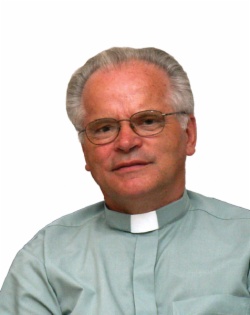
Fr. Stanislaw Herba

Fr. Stanislaw Herba

I came across an interesting article of Fr. Stanislaw Herba, pastor of Saint Mary of the Assumption in Park City, Utah.  The article talks about Fr. Herba’s life from Communist Poland to the United States. However, what was most interesting is his discussion of personal evolution and transformation (complete with Teilhard de Chardin reference) that comes from age and experience and how the Catholic Church, following Christ, thrives as a Church of Mercy:  

“From Communist Poland to Brazil to the United States, Father Stanislaw Herba has celebrated Mass in many cultures during his 50 years as a priest. Over that time, too, his understanding of the Catholic faith has changed.

As a child, “of course they taught us that God is love but the attitude wasn’t so loving,” he said, recalling that the pastor who taught the sacraments at his parish in Maziarnia, Poland, had a big stick in the classroom. “You grew up in that love, but you didn’t feel that love.”

The letter of the law was important to him as a new priest, he said. He read the Pierre Teilhard de Chardin and was struck by the theologian’s writings about a person’s evolution. “When I was younger I thought that as I got older I would become almost perfect,” he said with a laugh, “but I was wrong. … We’re saved by God’s mercy. It’s a grace. I think it takes time to [realize that]. When you’re younger you don’t see these things.”

Now, he says, he still respects the law, but he is more concerned with the people it affects.”

Read Full Article

Posted in Uncategorized | Tagged , , , , , , , , , , , , , , , , , , , | 1 Comment

2014 American Teilhard Association Meeting in New York: May 3

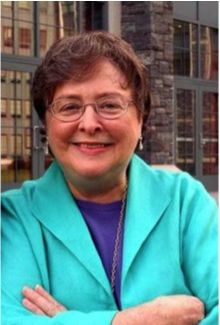
Elizabeth Johnson: Keynote Speaker

Elizabeth Johnson: Keynote Speaker

I was able to rearrange my work schedule so that I am able to be in New York this Saturday for the American Teilhard Association Meeting. Set forth below is a summary. You can read more on the American Teilhard Association website.    If any readers will be in New York this Saturday and would like to connect please let me know (williamockham17@gmail.com).

American Teilhard Association Annual Meeting

Union Theological Seminary
3041 Broadway at 121st St.
New York City, NY

12pm – Lunch
1:45pm – Talk

“Teilhard’s Thought: Growing the Tradition Forward”

Speaker: Elizabeth Johnson

For any tradition to have a vibrant future, it needs to keep on growing in dialogue with historical and cultural changes. This lecture will explore areas where such development could serve to open Teilhard’s thought and vision to more robust use by 21st century theology.

Posted in Uncategorized | Tagged , , , , , , , , , , | 6 Comments

Entanglement wormholes

This topic is well beyond my knowledge base for me to fully understand it but I find it fascinating as it helps us understand how God works in the universe as part of the Book of Nature.

Hunt 4 Truth's avatarthe Hunt for Truth

.

Entanglement may be akin to gravity

Program Description
Wal Thornhill examines A theoretical paper that was published by an MIT physicist… that claims to theoretically prove that so-called “quantum entanglement” — two particles seemingly occupying more than one state simultaneously — gives rise to a wormhole that allows particles to communicate through a “gravitational tunnel”. This theory follows from a paper published earlier this year, which suggests two black holes that become entangled and then are pulled apart create a wormhole, connecting the black holes
.

.

Thanks for visiting.

New post Eric

.

RELATED

.

.

View original post

Posted in Uncategorized | 4 Comments

Teilhard de Chardin Quote of the Week (April 28, 2014): A God Proportionate to our Understanding of the Universe

Creation-300x225 

“The human world of today has not grown cold, but . . . it is ardently searching for a God proportionate to the new dimensions of a Universe whose appearance has completely revolutionized the scale of our faculty of worship. And it is because the total Unity of which we dream still seems to beckon in two different directions, toward the zenith and toward the horizon, that we see the dramatic growth of a whole race of the “spiritually stateless” — human beings torn between [an atheism] whose depersonalizing effect revolts them and a Christianity so lukewarm in human terms that it sickens them.”

— Pierre Teilhard de Chardin, “The Future of Man“, p. 268.

Posted in Teilhard Quote of the Week | Tagged , , , , , , , , , , , , | 5 Comments

1 day 4 Popes

Reblogging this as it expresses sentiments I have felt during my years of spiritual wandering and still feel not that I came back “home”.

Posted in Uncategorized | 2 Comments