Reclaiming Teilhard de Chardin

Note the Roman Collar

I have remained silent at the most recent public remarks by Cardinal Gerhard Müller and the Leadership Conference of Women Religious (LCWR), mostly because the conflict saddens me and I feel like a child caught in the middle of a dispute between Mom and Dad. However, I also recognize that both “sides” have legitimate issues that need to be addressed and that some degree of healthy tension is good for the growth of any large, diverse organization (and the Catholic Church certain fits that category)  as long as the discussion remains respectful.  Despite the gross exaggeration of the conflict by the media, both Archbishop Peter Sartain and the head of the LCWR confirmed that the discussion remains productive and respectful.  As the LCWR said:

“[B]oth Archbishop J. Peter Sartain, archbishop delegate overseeing the implementation of the CDF mandate, and the LCWR presidency affirmed the accuracy of the Cardinal’s remarks and commented on the positive conversation that followed. For LCWR, this conversation was constructive in its frankness and lack of ambiguity. It was not an easy discussion, but its openness and spirit of inquiry created a space for authentic dialogue and discernment.

* * *

In our first visit on April 27 to the Pontifical Council for Social Communications, Monsignor Paul Tigue, Secretary, shared that Pope Francis insists upon creating, as part of the New Evangelization, a culture of encounter, marked by dialogue and discernment. We experienced this culture of encounter in every Vatican office we visited in the Curia, an encounter marked by genuine interaction and mutual respect.

* * *

This is a very complex matter, yet LCWR was heartened by the attempt of both CDF and LCWR to find a way through that honors the integrity and mission of both offices . . . At our meeting with the CDF officials, we experienced a movement toward honest and authentic conversation on some of the matters that lie at the heart of our faith and our vocation. We have come to believe that the continuation of such conversation may be one of the most critical endeavors we, as leaders, can pursue for the sake of the world, the Church, and religious life. “ 

 Yes, both “sides” do some really ill-advised things that make me scratch my head in bewilderment (e.g. the LCWR inviting Barbara Marx Hubbard to a conference or Cardinal Müller taking another unjustified swipe at Elizabeth Johnson, who is a first-rate Catholic scholar who has handled herself with class and dignity in the spirit of Teilhard de Chardin with the support of prominent Catholic priests and theologians). However, despite the portrayal in the media all parties seem to be respectful, open and engaged in finding a productive resolution. Hence, I have been silent on the issue.

However, a recent column by David Gibson of Religion News Service  forces me to bring the silence as it not only mentions Teilhard de Chardin, but it rightfully implies that Teilhard is a potential bridge between the CDF and the LCWR.  While there are some inaccuracies in the article and overly-sensational in its headline, it is a worthwhile read and David Gibson is one of the best in the business. The entire article can be found here but below is an extended excerpt:

 “Yet if few remember who Teilhard was, his views on faith and science continued to resonate, and today, remarkably, he’s actually enjoying something of a renaissance.

Pope Emeritus Benedict XVI, for example, who as a young theologian named Joseph Ratzinger criticized Teilhard’s views [Editor’s note: this statement is inaccurate; Joseph Ratzinger has been praising Teilhard de Chardin since the 1960s], a few years ago praised Teilhard’s “great vision” of the cosmos as a “living host.” That raised a few eyebrows and prompted Benedict’s spokesman to clarify that “by now, no one would dream of saying that (Teilhard) is a heterodox author who shouldn’t be studied.”

Benedict’s successor, Pope Francis, has also invoked Teilhard-sounding concepts about the ongoing development of human consciousness, and Vatican observers say it would not be surprising if Teilhard made an appearance in an encyclical on the environment that Francis is currently writing.

Teilhard “is definitely being quoted or invoked in ways we haven’t seen in decades, and really never before by the Roman magisterium,” said the Rev. Paul Crowley, a Jesuit at Santa Clara University who has studied Teilhard.

Crowley said one reason for the reconsideration is that reality caught up with Teilhard’s ideas: The growing global ecological crisis is prompting demands for the kind of holistic scientific and moral response Teilhard would have endorsed, and the Internet is itself a digital “noosphere” of universal interconnectivity.

* * *

There’s even a major documentary on Teilhard in the works, with a blurb from NPR’s Cokie Roberts: “Bringing Teilhard de Chardin alive to another generation could not come at a more opportune time.”

So how is it that the American nuns are getting tripped up by Teilhard just as Teilhard is becoming cool again?

The problem is, as Crowley put it, that for every serious Teilhard scholar “there are nine New Age types who invoke Teilhard’s name” — and often botch the pronunciation.

Granted, Teilhard remains his own worst enemy. He was as much mystic as scientist, and his concepts could be so idiosyncratic and esoteric that they fed right into the ecology-and-spirituality movement that blossomed in the 1970s and beyond. Teilhard tends to be quoted by the left the way G.K. Chesterton is cited by the right — frequently and to great effect, but often torn from any meaningful context.

To be sure, Teilhard’s disciples, including author and lecturer Barbara Marx Hubbard, whose invitation to address the American nuns in 2012 continues to irk some in Rome, helped keep his legacy alive.

But at this point the Catholic Church may need to take Teilhard more seriously if it is to take him back from his fan base outside traditional religion. 

Teilhard “needs substantive theological attention,” Crowley said. “What we need to do is to separate the gold from the dross and appropriate it in new ways.” (emphasis added)

You can read the full article here but it is consistent with my contention that the Catholic Church needs to incorporate Teilhard de Chardin’s vision of combining traditional Catholic thought with the insights of modern science more than ever.  Fortunately, we have scholars such as Fr. Brendan Purcell, John Haught, Sr. Ilia Delio, Sr. Kathleen Duffy, Louis Savary, Ursula King and David Grumett who are doing just that. Their voices need to be heard by a wider audience.

Washington Post Link
America Magazine Link

Posted in Orthodoxy of Teilhard de Chardin | Tagged , , , , , , , , , , , , , , , , , , , , , , , , , , , , , | 12 Comments

The Rawness of God

Posted in Uncategorized | 1 Comment

Teilhard de Chardin Quote of the Week (May 19, 2014): Relevance of Christianity

sunrise_christian

“As recently as yesterday Christianity represented the highest  point attained by the consciousness of Mankind in its striving to humanize itself. But does it still hold this position, or at the best can it continue to hold it for long? Many people think not; and to account for this slackening impulse in the highest and most complete of human mystical beliefs they argue that the evangelical flowering is ill-adapted to the critical and materialist climate of the modern world. They hold that the time of Christianity is past, and that some other shoot must grow in the field of religion to take its place.

But if, as I maintain, the event that characterizes our epoch is a growing awareness of the convergent nature of Space-Time, then nothing can be more ill-founded than this pessimism. Transferred within the cone of Time, and there transmuted, the Christian system is neither disorganized nor deformed. On the contrary, sustained by the new environment, it more than ever develops its main lines, acquiring an added coherence and clarity.

This is what, in conclusion, I wish to show.”

— Pierre Teilhard de Chardin, The Future of Man, pp. 85-86


Posted in Teilhard Quote of the Week | Tagged , , , , , , , , , | 8 Comments

Sunday Reflection: Fifth Sunday of Easter (May 18, 2014): Transformation in The Way


The Butterfly: One of my favorite images of what authentic Christianity is

The Butterfly: One of my favorite images of what authentic Christianity is

“It is not right for us to neglect the word of God to serve at table.” — Acts 6:2

This weekend is the Fifth Sunday of Easter. The readings can be found here.   The themes continue the story from Acts regarding the growth of the early Church and the inner transformation that is required of authentic Christianity as manifested by acts in the world.

This week’s reflection comes from Irish Jesuits.  The full reflection can be found here but set forth below is an extended summary:

 “Where does the Way go?

To follow the Way of Jesus is not to go anywhere. It is to become a special kind of person, a person whose whole being reflects the Truth and Life that Jesus reveals to us. It is to be a person who is totally identified with the vision and the values of Jesus. To be such a person is to be a person of Truth and Life.

Truth is here understood not in a purely intellectual sense. Truth here is that complete integrity and harmony which Jesus himself revealed not only in what he said but in the total manifestation of his life and person. Truth for Jesus was not just something he knew or accepted or believed in; truth for Jesus was what he was in his whole person: thoughts, feelings, actions, relationships. It was that total conformity between his inward self and his outward behavior. For us to live Truth in that way is also to be fully alive, to be a “fully-functioning person”, responding totally to that abundance of life which Jesus came to give us.

* * *

Pale reflection

Jesus, in his humanity, is but the palest reflection of the infinite Truth, Goodness and Beauty of God. When we see Jesus, we see God but… there is much that we do not see. And so we speak of Jesus as the Way. We go through him to find the total reality of God. A reality that mystics have been given glimpses of but which most of us will have to wait for until after we have left this earth. It is important that we understand this for I find that many people tend to speak rather loosely of the relationship between God the Father and Jesus. If we make Jesus, not the Way, but the End, we can find ourselves with a very reduced God. Philip thought he knew Jesus very well, spending every day with him. Yet he had not come to recognize God in the words and works of Jesus and so he did not really know Jesus.

God’s many dwelling places

Today, perhaps, our problem is not so much recognizing God in Jesus. In fact, as mentioned, we can go too far in doing so. Our problem is not being able to recognize God in the world and people around us. At the beginning of today’s Gospel, Jesus says that there are many “rooms”, many dwelling places in his Father’s house.

We can understand this, of course, as “heaven” but God’s dwelling is also the Church, every Christian community is a dwelling place of God. And indeed each and every disciple, who believes in Christ, is a part of God’s Temple. There is now no longer for us a material Temple. Furthermore, as Paul told the Romans, “ever since the creation of the world [God’s] invisible nature, namely, his eternal power and godhead, has been clearly perceived in the things that have been made“. This is to say, that not only in Christian communities, but indeed in people everywhere and in the whole of our created environment, God’s presence is shouting out to us. “The world is charged with the grandeur of God,” wrote the poet Gerard Manley Hopkins. Every little flower, every singing bird can say to us, “Who sees me sees the Father”.

Read Full Reflection

Additional Resources:

Sacred Space
Creighton Online Ministries
James Predmore Reflection
Fr. Robert Barron Word on Fire


Posted in Sunday Reflections | Tagged , , , , , , , , , , , , , , , , , , , , , , , | 6 Comments

Conversion: Driven by Thirst

melanie jean juneau's avatarjoy of nine9

Seeking

Asking

body_of_christ_hahlbodm body_of_christ_hahlbodm

Not content to live on the surface

Eating, drinking, shopping or buried in entertainment

Aware of a hollow within

Thirsty for more of God’s presence.

Searching for meaning.

Empty, even though  ’saved’

It drove me to

Question

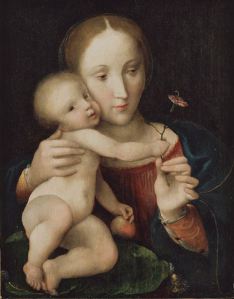
7ef54e4873f2e91de5d601912fc0b838 Lombard artist (ca. 1520), Madonna and Child

Listen.

Desperate

I stepped out in faith,

Letting go of old prejudices against Catholics

Curious

If the Eucharist really was the Body of Christ

Then I needed to ,eat, share

Trusting in the witness of millions of saints who had gone before me

Embracing the unknown,

The mysteries

Walking into the Unknown

To discover that

Mystery is liberating

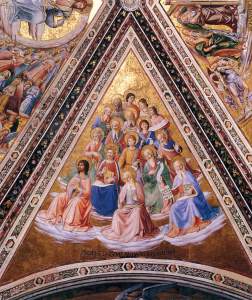
 1447,  Fra Angelico, 1447, Fra Angelico,

Joyful

fulfilling

Embraced by a Heavenly Mother

Surrounded by a cloud of witnesses

Plugged into a Mystical Body

Home

View original post

Posted in Uncategorized | 3 Comments

Teilhard de Chardin Quote of the Week (May 12, 2014): Freedom of Christianity

The Divine Milieu

The Divine Milieu

“Christianity is not, as it is sometimes presented and sometimes practiced, an additional burden of observances and obligations to weigh down and increase the already heavy load, or to multiply the already paralyzing ties of our life in society. It is, in fact, a soul of immense power which bestows significance and beauty and a new lightness on what we are already doing.” — Teilhard de Chardin, The Divine Milieu, pp. 34-35.

Posted in Teilhard Quote of the Week | Tagged , , , , , , , , , , , , | 3 Comments

Sunday Reflection, Fourth Sunday of Easter (May 11, 2014): A Tribute to Mothers


Berthe Adele Teilhard de Chardin with her husband, Emmanuel, parents of Pierre Teilhard de Chardin.

Berthe Adele Teilhard de Chardin with her husband, Emmanuel, parents of Pierre Teilhard de Chardin.

 “I come from a family where I became who I am. The great majority of my opinions, of my likes and dislikes, of my values and appreciations, of my judgments, my behavior, my tastes, were molded by the family I came from.” — Teilhard de Chardin

This weekend is the Fourth Sunday of Easter.  The readings can be found here.  The themes involve teaching and guiding early Christians by Peter and the image of Christ as the Good Shepherd.  

These themes are excellent as Sunday is also Mother’s Day in the United States, Canada and many other countries around the world.  Mother’s are the first and primary instructors of faith in many families around the world. They introduce children to faith but more importantly they are living examples of Christ in their teaching, healing and service to others.

My own Mother was and still is a huge role model to me. She was the first her family to go to college and she always emphasized the importance of education and continual learning. She was a professional woman in an era where there was still suspicion of how someone could be a “good mother” while having a career. She was always there for us when he had minor scrapes or needed cheering up.  She takes amazing care of my father who has had health issues. She is a tremendous grandmother who loves playing the role of spoiling the grandchildren. In her “retirement” she works extremely hard at a variety of community activities from serving on the Parish Council to visiting the elderly to helping out at the local food pantry.

Mom, you are an amazing woman and I thank you for being a great shepherd to me and the others you have encountered.

The namesake of this blog, Teilhard de Chardin, also had an amazing mother.  Berthe Teilhard de Chardin was extremely influential in the formation of young Pierre’s religious beliefs, vocation and character.  Pierre’s biographer, Robert Speaight described Berthe as

“a woman of exemplary piety to whom Pierre was later to confess that he owed ‘the best of myself’, to her, she instilled in him a devotion to the Sacred Heart, which was to be the radiating center of his own ardent spirituality. . . Berthe rose early; walked every day to Mass before dawn so that she might be at home to breakfast with the family; was indifferent to the conventions of society even when she conformed to them.”

An online biography of Pierre Teilhard de Chardin would state that

“[h]is sensitive nature was also nurtured by his mother’s steadfast piety. Teilhard’s reflections on his mother’s influence is striking, he writes:  ‘A spark had to fall upon me, to make the fire blaze out. And, without a doubt, it was through my mother that it came to me, sprung from the stream of Christian mysticism, to light up and kindle my childish soul. It was through that spark that `My universe,’ still but half-personalized, was to become amorised, and so achieve its full centration.’”

On this Mother’s Day weekend in the United States, here is a tribute to all of the mother’s around the world.

Mothers’ Prayers from Creighton Online Ministries 

Posted in Sunday Reflections | Tagged , , , , , , , , | 3 Comments

Pontifical Academy of Sciences Conference on Sustainable Humanity, Sustainable Nature: Our Responsibility

sustainable1

The Pontifical Academy of Sciences and the Pontifical Academy of Social Sciences recently hosted a joint conference titled “Sustainable Humanity, Sustainable Nature: Our Responsibility“.   The importance of this conference was highlighted by the appearance of Pope Francis.  I hope to have more information on this conference as it becomes available but in the interim, Andrew Revkin of the New York Times dot earth blog had a good summary of the conference.

Mr. Revkin gave his reflections on the conference and had a great speech.  You can find the full text of the speech here but set forth below is an excerpt:

Our predicament in an age some have named for us — the Anthropocene — was nicely captured by Cardinal Óscar Andrés Rodríguez Maradiaga on the first day here when he said, “Nowadays man finds himself to be a technical giant and an ethical child.”

Humanity, in essence, is in a race between potency and awareness. The outcome will determine the quality of our species’ journey and will leave an indelible mark, for better or worse, on the planet we inhabit.

A few years ago, I proposed that we are experiencing “puberty on the scale of a planet.” Global trends echo that awkward, sometimes damaging, transition from teenage-style ebullience to the more measured norms of adulthood.

And just as a teenager resists calls from elders to grow up, societies – only naturally – have been initially resistant to scientists’ warnings of irreversible damage to the planet’s biological patrimony, risks attending unabated climate change and long-distance impacts of consumptive resource appetites.

In many ways, science has done its job.

The physical and biological sciences, along with revolutionary advances in technology – from satellites to supercomputers – have provided a clarifying picture of human-driven environmental changes.

Psychological and sociological studies have revealed deeply ingrained human traits, many shaped by our evolutionary history as a “here and now” species, that prevent us from acting rationally in the face of threats with long time scales, dispersed impacts and inherent complexity.

Possible paths have been delineated in recent decades using ever more sophisticated models.

But that is where science’s task ends. It is up to individuals and societies to choose which paths to pursue.

Scientific knowledge reveals options. Values determine choices.

That is why the Roman Catholic Church — with its global reach, the ethical framework in its social justice teachings and, as with all great religions, the ability to reach hearts as well as minds — can play a valuable role in this consequential century.

This is particularly true for planet-scale problems like human-driven climate change, in which governments tend to put national interests ahead of planet-scale interests.

Read Full Article

Posted in Uncategorized | Tagged , , , , , , , , , , , , , , , , | 2 Comments

Consciousness: Where Do Our Thoughts Exist?

conscousness

Neuroscience has made rapid progress in the last few decades in understanding the mechanics of how the brain processes our thoughts and emotions.  For example, pioneer Richard Davidson has demonstrated that each person has emotional “types” in our brain that is analagous to the Myers-Briggs personality types based on the work of Carl Jung. [Full disclosure: I know Richard Davidson and have the deepest respect for both his scientific work and him as a person.]

While this work is fascinating and extremely worthwhile for better mental, emotional and psychological health, we have made little progress in understanding the origins of consciousness.  Materialists have argued that consciousness is merely the by-product of outputs from the brain.  I have previously argued that the brain is merely a transmitter of the mind which exists independent of the brain and the body.

An article this week in The Epoch Times talks about four non-exclusive ways of understanding the consciousness as part of the physical world:

From the article:

 Teilhard de Chardin, a Jesuit priest and paleontologist, wrote of a conceptual “noosphere” in the first half of the 20th century. He predicted that at a future stage of humanity’s development a membrane containing our collective thoughts and experiences would envelope the world.

In “The Phenomenon of Man,” he wrote: “Is this not like some great body which is being born—with its limbs, its nervous system, its perceptive organs, its memory—the body in fact of that great living Thing which had to come to fulfill the ambitions aroused in the reflective being by the newly acquired consciousness?”

Many have made a connection between [Teilhard de Chardin’s] noosphere and the Internet. Could the Internet be considered a realm in which our collective consciousness exists?

Bernard Carr, a professor of mathematics and astronomy at Queen Mary University of London, says our consciousness interacts with another dimension. Albert Einstein stated that there are at least four dimensions. The fourth dimension is time, or spacetime, since Einstein said space and time cannot be separated.

Carr reasons that our physical sensors only show us a 3-dimensional universe, though there are actually at least four dimensions. What exists in the higher dimensions are entities we cannot touch with our physical sensors. He said that such entities must still have a type of space in which to exist.

Read Full Article

It is highly unlikely that humanity will ever fully understand the wonder of human consciousness during our lifetimes, but I hope to include some philosophical reflections in the upcoming weeks.

Posted in Uncategorized | Tagged , , , , , , , , , , , , , , | 9 Comments

Outstanding Primer on Ignatian Spirituality by Andy Otto

artworks-000076063271-s601iq-t500x500

There are a number of outstanding Ignatian Spirituality resources available on the web, including those links at the right column of this blog.  However, I want to especially mention that Andy Otto, author of the outstanding blog and podcast God in All Things, is starting a ten-week primer on Ignatian Spirituality.  Week 1 can be found here.  If you are not familiar with Ignatian Spirituality, this is an outstanding introduction and I encourage you to visit it.


Posted in Ignatian Spirituality | Tagged , , , , , | 4 Comments