Candid Insights to Pope Francis’ Theology and Pastoral Approach

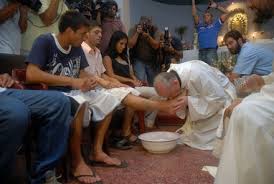
feet_washing

On June 6, 2013, Pope Francis received the presiding board of the Confederación Latinoamericana y Caribeña de Religiosos y Religiosas (CLAR) (the Latin American and Caribbean Confederation of Religious Men and Women). An unauthorized transcript of the Pope’s words was made by those present, and it has been leaked to the public.  Many media reports focused on Pope Francis’ offhanded statement about the “gay lobby” in the Vatican.  However, there are far more interesting statements made by Pope Francis that provide a very interesting insight to his theology, his pastoral approach and his vision for the Church.

You can read a full English translation of report here, but below are some of the most interesting excerpts, together with my commentary:

“They will make mistakes, they will make a blunder, this will pass! Perhaps even a letter of the Congregation for the Doctrine (of the Faith) will arrive for you, telling you that you said such or such thing… But do not worry. Explain whatever you have to explain, but move forward… Open the doors, do something there where life calls for it. I would rather have a Church that makes mistakes for doing something than one that gets sick for being closed up… (emphasis added) [Comment: This is fascinating on a couple of levels.  First, Pope Francis is encouraging the religious to push the envelope in spreading the Gospel, and not overly worry about making a theological or doctrinal mistake.  This is a big theme for Pope Francis and one of the stylistic differences from Pope Benedict.  Pope Benedict was very careful in his statements and would provide the full context of an issue in several pages, which do not easily translate to soundbites.  The press would take selected statements of Pope Benedict out of context.  In contrast, Pope Francis seems much more comfortable giving soundbites without their full context.  The latter may not be as theologically precise or fulfilling, but it more effectively uses current media.  Second, Pope Francis downplays the consequences of receiving a letter from the CDF.  This validates something I have long suspected; that the CDF will maintain its role of protecting the orthodoxy, the implications of straying off the rails are not a big deal.  A recent example is the different approaches that Joseph Ratzinger took when he was head of the CDF and later when he became Pope Benedict.  As head of the CDF, Cardinal Ratzinger developed a reputation as a hardliner (“God’s rottweiler”).  However, as Pope Benedict, he focused more on the big picture of Christianity, writing some of the most beautiful and open encyclicals in recent memory.  Moreover, Pope Benedict worked hard at reaching out to those who not share the Church’s views, whether it be the SSPX or atheists.  Pope Francis is just making explicit the various roles of the CDF in the context of the overall message of spreading the Gospel.  Pope Francis will lay out the doctrinal siderails below.] .

It is necessary to shake things up. It is not news that an old man dies of cold in Ottaviano [Rorate note: referring to the surroundings of via Ottaviano and the Ottaviano Rome Metro station, near the Vatican], or that there be so many children with no education, or hungry, I think of Argentina…On the other hand, the main stock exchanges go up or down 3 points, and this is a world event. One must shake things up! This cannot be. Computers are not made in the image and likeness of God; they are an instrument, yes, but nothing more. Money is not image and likeness of God. Only the person is image and likeness of God. It is necessary to flip it over. This is the gospel. (emphasis added) [Comment: Pope Francis is clearly a man of action and he is calling for all Christians to be very proactive in spreading the Gospel message].

It is necessary to go to the causes, to the roots. Abortion is bad, but that is clear. But behind the approval of this law, what interests are behind it… they are at times the conditions posed by the great organizations to support with money, you know that? It is necessary to go to the causes, we cannot remain only in the symptoms. Do not be afraid to denounce… you will suffer, you will have problems, but do not be afraid to denounce, that is the prophecy of religious life… [Comment: Pope Francis is strongly advocating going after the institutional sin of contemporary society.  It is not enough for Christians to sit on the sidelines focusing on personal piety or to march on abortion clinics. We need to address the institutional causes of consumerism (treating a human as less than human), poverty and despair.] 

I share with you two concerns.  [Pope Francis is laying out the doctrinal siderails for Christians, both of which are prevalent in Christianity today.  The common theme for both of these siderails is an intense focus on making Christ the center of your prayer life.]

One is the Pelagian current that there is in the Church at this moment. There are some restorationist groups. I know some, it fell upon me to receive them in Buenos Aires. And one feels as if one goes back 60 years! Before the Council… One feels in 1940… An anecdote, just to illustrate this, it is not to laugh at it, I took it with respect, but it concerns me; when I was elected, I received a letter from one of these groups, and they said: “Your Holiness, we offer you this spiritual treasure: 3,525 rosaries.” Why don’t they say, ‘we pray for you, we ask…’, but this thing of counting… And these groups return to practices and to disciplines that I lived through – not you, because you are not old – to disciplines, to things that in that moment took place, but not now, they do not exist today… [Comment:  Pope Francis is calling for a pure spirituality of asking for God’s grace and living the Gospel; not a “check-the-box so I can go to heaven” mentality.  Pope Francis theology, similar to his predecessors of the last 70 years, are describing Christianity as a love story with Christ and an engagement with the world, not a form of personal piety]

The second [concern] is for a Gnostic current. Those Pantheisms… Both are elite currents, but this one is of a more educated elite… I heard of a superior general that prompted the sisters of her congregation to not pray in the morning, but to spiritually bathe in the cosmos, things like that… They concern me because they ignore the incarnation! And the Son of God became our flesh, the Word was made flesh, and in Latin America we have flesh abundantly! What happens to the poor, their pains, this is our flesh… [Comment: Pope Francis is describing the other siderail; ignoring Christ and adopting a vague form of spiritualism.  Christianity is a unique religion in that it makes a radical claim that the universal energy or Logos, became human.  To ignore or downplay this Truth is to ignore the calling that God has for us in this world; with its focus on serving others, especially those most vulnerable.] 

The gospel is not the old rule, nor this Pantheism. If you look at the periphery; the destitute… the drug addicts! The traffic of people… This is the gospel. The poor are the gospel… [Comment:  The poor are the Gospel!  Pope Francis is living up to his namesake by focusing on the castoffs of society.]

* * *

Pray for me… that I make mistakes the least possible… [Pope Francis’ humility shines through.  Moreover, he again emphasizes that it OK to make mistakes as long as you are trying to live the Gospel].
Posted in Uncategorized | Tagged | 2 Comments

Belated Feast of St. Barnabas (June 11)

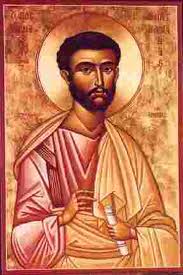
St. Barnabas

St. Barnabas

Yesterday was the Feast of St. Barnabas.  I had wanted to provide some thoughts but work and family got in the way so this is a day late.  This is not all bad as it extends the spirit of this interesting person.

Not much is known about St. Barnabas (whose original name was Joseph).  He was born of Jewish parents on the island of Cyprus about the beginning of the Christian Era. As a Levite (from which tribe the Temple priests came), he naturally spent much time in Jerusalem, probably even before the death of Jesus. He even seems to have settled there, where his relatives, the family of John Mark, had their homes (Acts 12:12). According to the Acts, he also had land which, following his conversion, he sold and donated the proceeds to the Christian community (4:36-37).

According to Acts of the Apostles, Saul of Tarsus, after his conversion, went to Jerusalem where the Christians did not want to approach him, being highly suspicious of the genuineness of his conversion. It was Barnabas who brought Saul to the leaders and guaranteed Saul’s conversion as real (Acts 9:27).

One of the potential Gospel Readings today is Matthew 5:13-16, which is as follows:

Jesus said to his disciples:
“You are the salt of the earth.
But if salt loses its taste, with what can it be seasoned?
It is no longer good for anything
but to be thrown out and trampled underfoot.
You are the light of the world.
A city set on a mountain cannot be hidden.
Nor do they light a lamp and then put it under a bushel basket;
it is set on a lampstand,
where it gives light to all in the house.
Just so, your light must shine before others,
that they may see your good deeds
and glorify your heavenly Father.”

The wonderful site, Sacred Space, run by the Irish Jesuits, has the following reflection on the salt analogy and what it means to be an authentic Christian today:

We are to be like salt; we are to give taste, zest to our environment. We do that through the specific outlook on life which we have and which we invite others to share. At their best, Christians have been very effective in doing this and have had a great impact on the values of many societies and in bringing about great changes. 

To be tasteless salt is to be next to useless. Salt that has lost its taste is only fit to be thrown out. At the same time, in the West we sometimes, too, put some salt on the side of our plate. That salt, however, tasty it may be is still not doing any good unless it is put into the food. And this is an interesting feature of salt, namely, that it blends completely with food and disappears. It cannot be seen, but it can be tasted. 

That reminds us that we as Christians, if we are to have the effect of giving taste, must be totally inserted in our societies. We have to resist any temptation, as Christians, to withdraw and separate ourselves from the world. It is a temptation we can easily fall into and there are many places in our cities where the Church is absent nowadays. There is no salt there. In our commercial districts, in our industrial areas, in our entertainment and media centres, where is the visible Christian presence?  

St. Barnabas was salt to the Jews and Gentiles in the first century.  Although he was a devout Jew, he accepted his call to share the Christian message to the Gentiles. He met people where they were and accepted even those who formerly persecuted him.  May we be the salt to our communities in the 21st century.

Posted in Uncategorized | Tagged | Leave a comment

Listening to Young Atheists: Lessons for a Stronger Christianity

fixed_point

Recently, the Atlantic Monthly had a fantastic article by Larry Alex Taunton, Executive Director of Fixed Point Foundation.  Mr. Taunton led a study of atheists at college campuses.  The results are fascinating and I strongly encourage you to read the entire article which can be found here.  Here is a summary of the key findings, together with my comments in [red, bold brackets]:

1.  They had attended church.  Most of our participants had not chosen their worldview from ideologically neutral positions at all, but in reaction to Christianity. Not Islam. Not Buddhism. Christianity. [Comment: Although it was not asked in the article, I am very curious whether there was any significant difference among denominations].

2.  The mission and message of their churches was vague.  These students heard plenty of messages encouraging “social justice,” community involvement, and “being good,” but they seldom saw the relationship between that message, Jesus Christ, and the Bible. [Comment: Obviously, these are good attributes. However, Christians need to draw the connection between the ontological reason for these actions and the inherent belief that they are “good”.  Mother Teresa is an ideal role model here.]

3.  They felt their churches offered superficial answers to life’s difficult questions.  When our participants were asked what they found unconvincing about the Christian faith, they spoke of evolution vs. creation, sexuality, the reliability of the biblical text, Jesus as the only way, etc. Some had gone to church hoping to find answers to these questions. Others hoped to find answers to questions of personal significance, purpose, and ethics. Serious-minded, they often concluded that church services were largely shallow, harmless, and ultimately irrelevant. [Comment:  This is a strong challenge to both understand our faith and not be afraid to ask the big questions such as the existence of God, the purpose of life, the nature of evil.  I believe that Christianity offers the most viable intellectual answers to these tough questions, but believers need to wrestle with the questions and present answers in a way that non-believers can relate to]. 

4.  They expressed their respect for those ministers who took the Bible seriously.  Without fail, former church-attending students expressed positive feelings for those Christians who unashamedly embraced biblical teaching. Comments like these should cause every Christian to examine his conscience to see if he truly believes that Jesus is, as he claimed, “the way, the truth, and the life.”  [Comment:  I agree that a muscular Christianity is more attractive than wimpy Christianity.  However, it needs to be tied to reason, science and an appropriate understanding of the Bible.  This is one of the primary attractions of Catholicism].

5.  Ages 14-17 were decisive.  One participant told us that she considered herself to be an atheist by the age of eight while another said that it was during his sophomore year of college that he de-converted, but these were the outliers. For most, the high school years were the time when they embraced unbelief. [Comment: As a father of two boys 9 and 6 this is interesting.  It is a message to continue to be active in the faith formation of my children.]

6.  The decision to embrace unbelief was often an emotional one.  With few exceptions, students would begin by telling us that they had become atheists for exclusively rational reasons. But as we listened it became clear that, for most, this was a deeply emotional transition as well.  [Comment: This highlights the need that beyond being able to promote Christianity on an intellectual basis, Christians need to exhibit the joy of living the Gospel]. 

7.  The internet factored heavily into their conversion to atheism.  When our participants were asked to cite key influences in their conversion to atheism–people, books, seminars, etc. — we expected to hear frequent references to the names of the “New Atheists.” We did not. Not once. Instead, we heard vague references to videos they had watched on YouTube or website forums.  [Comment:  Christians need to have better quantitative and qualitative web presence that reaches out to non-believers].

Posted in Embracing Doubt and Mature Faith | Tagged , | 4 Comments

Are Christian Believers Encouraging Mockery of Their Own Beliefs?

faith_reason

Worship him, I beg you, in a way that is worthy of thinking beings” — Romans 12:1 (Jerusalem Bible Translation)

Anyone who lives in Western society is aware that Christian intellectualism is being challenged; both explicitly by the New Atheists (despite their straw man arguments) and implicitly by the media and non-believers of goodwill who have a presupposition that Christianity or any other religion is simply the practice of meaningless ritual or the unquestioned ascension to statements made from above, whether it be Rome or sacred texts. These presuppositions not only frequently go unchallenged by Christians, but they are sometimes validated by the Christians who make statements that are contrary to both sound reasoning and sound theology.

This week’s America Magazine contains a provocative and excellent article by Stephen Bullivant, Theology Professor at St. Mary’s University College in London that addresses these issues head-on. In the article, Professor Bullivant challenges Christians to both understand the intellectual tradition of their faith, and to communicate this tradition in the language that is intellectually sound to non-believers, even if non-believers ultimately do not agree.

The article consists of three sections.

The first section highlights the principles of St. Augustine (from the fifth century) and Cardinal Henri de Lubac (in the twentieth century) that believers have an obligation to present an intelligent accounting of their belief. As St. Augustine said:

“It is a disgraceful and dangerous thing for an unbeliever to hear a Christian, presumably giving the meaning of Holy Scripture, talking nonsense on these topics [the literal interpretation of Genesis] and we should take all means to present such an embarrassing situation, in which people show up a Christian’s vast ignorance and laugh it to scorn”.

The article also quotes the Church’s understanding of the this principle from Vatican II’s “Pastoral Constitution on the Church in the Modern World”:

“Believers can have no small part in the rise of atheism, since by neglecting education in the faith, teaching false doctrine, or through defects in their own religious, moral or social lives, they may be said rather more to conceal than reveal the true countenance of God and of religion”

The second section of the article highlights the symbiotic relationship between reason and faith. It starts with statements by Richard Dawkins, Sam Harris and A.C. Grayling that define faith as a commitment to a belief that is contrary to evidence and reason. As Professor Bullivant states:

“The one problem with this [definition] is that this is not what faith, whether religious or otherwise, means at all. The word faith comes from the Latin word fides, and its primary meaning is “trust”. That is why to have confidence in something is to trust that it will happen.”

In other words, faith is not belief contrary to evidence, it is trust in an ultimate outcome or understanding of reality with the support of evidence, whether it be reason, science or otherwise. Professor Bullivant provides examples of where Christians too often fall prey to statements about “blind faith” without the need to resort to the intellectual underpinnings that support their faith. The Church hierarchy is sometimes complicit in this not articulating a clear position of faith. For example, in 2010, Pope Benedict gave an extensive book interview with Peter Seewald on a variety of subjects.  One aspects of that interview was a discussion of what the Catholic Church is doing to assist AIDS victims in Africa.  After discussing the deep involvement of the Church in assisting victims (e.g. 25% of all AIDS victims in the world are treated in Catholic facilities), Seewald and Pope Benedict discussed on whether the use of condoms would help reduce the spread of AIDS.  Pope Benedict stated Church teaching that condoms is no more than a temporary band-aid and that the real solution is to have a more humane and fulfilling view of the sexuality of the human person.  However, Pope Benedict also said that there is a hierarchy of values and in the context of a hypothetical of a male prostitute who views sexuality solely as a self-gratifying drug rather than a loving relationship.  Pope Benedict indicated that in this context, the use of a condom could be a “first step in the direction of moralization, a first assumption of responsibility, on the way toward recovering an awareness that not everything is allowed and that one cannot do whatever one wants.”  This statement is clearly a correct Christian view that the path to God is gradual.  Christianity identifies the end-point in Christ, but also recognizes that Christ meets us where we are.

The mainstream press took Pope Benedict’s statement as a change in the Church’s view on contraception, which it clearly was not.  Unfortunately, rather than emphasizing the core teaching point God meeting us where we are as Pope Benedict did, the Vatican issued statements restating its view on contraception, without the full analysis of Pope Benedict’s teaching.  This is a prime example of a missed teaching opportunity by the Vatican.

The third section of the article calls on Christians counter these deficiencies and to “make a real effort learn more about the faith we profess (and to receive the requisite help and encouragement in order to do so). Evangelization begins at home”. In summary, I would challenge Christians in four areas:

1. Knowledge of Christian Belief. Take every effort to Christianity, both the doctrinal practices but more importantly the historical and philosophical underpinnings of Christianity. The documents of Vatican II are a wonderful starting point, as are many of the speeches and books by theologians such as Pope Emeritus Benedict. It was only after reading many of these resources that I shed the immature belief of my youth and discovered the true richness of Christianity. I am a Christian because I belief it is the best description of ultimate reality.

2. Knowledge of Science. Science is a system that is widely accepted by modern society and strongly promoted by non-believers. Often they attempt to contrast science with faith. Of course, Christians know this is not accurate. Christianity gave birth to science and science is a wonderful tool to help us better understand the Creator and to draw closer to him. Christians should make an effort to understand scientific principles and current scientific knowledge. They should also integrate this knowledge in their faith.

3. Sympathize with the Legitimate Issues of Nonbelievers. Many nonbelievers raise legitimate questions about Christianity. If there is a God, why doesn’t he make himself more visible? How can the concept of evil be reconciled with a loving Creator? If religion is supposed to make better people, why do so many Christians and other people of faith do evil things? These are real questions for which there are explanations, but reason people can certainly disagree on how valid these explanations are. It is in the genuine dialogue, with non-believer and in the accepting of their concerns that we can find common ground in our humanity.

4. Live the Gospel. Lastly, and most importantly, Christians must live the Gospel of loving God with our whole hearts, minds and souls and our neighbors as ourself. Christianity did not survive its early centuries as a small offshoot of Judaism in a hostile society due to its intellectual rigor (although that was a necessary pre-condition). The primary reason Christianity survived its early generations was because of its counter-cultural emphasis on love of God and love of one-another.  Christians lived these values and, in many cases, died for these values in its first few centuries.  It was because of the attraction of this living out the faith that Christianity was able to survive.  Today, although Christians make up a much larger portion of humanity than they did 1,800 years ago, it is often hard to tell who Christians are:  Divorce rates in Western societies are comparable for Christians and non-Christians.  There have been horrific scandals in the clergy from the recent child abuse cases to the corruption of the late middle ages.  If being able to provide a basic intellectual case for the faith to non-believers is a minimum starting point, living the Gospel of love, service and joy can be a witness to non-believers to want what Christians have.

Posted in Embracing Doubt and Mature Faith, Reason and Faith | Tagged , , , | 7 Comments

The current relevance of the spirit of Saint Francis

I am reblogging an excellent analysis of the relevance of St. Francis for the message that Pope Francis is trying to convey.

Leonardo Boff's avatarLeonardo Boff

Since the present Pope adopted the name of Francis, many people are interested again in this singular figure, perhaps one of the most luminous that Christianity and the West have produced: Francis of Assisi. Some call him “the last Christian” or “the first after the Unique,” this is, after Jesus Christ.

We surely can say that when Cardinal Bergoglio took this name he was indicating that the Church would be in line with the spirit of Saint Francis. Saint Francis was the opposite of the tendency of the Church of his own time, that was expressed by temporal power over almost all of Europe, including Russia, by immense cathedrals, sumptuous palaces and grandiose abbeys. Saint Francis opted for living the pure gospel, literally, in the most extreme poverty, with an almost ingenuous simplicity, and a humility that kept him close to the Earth, at the level of the most despised…

View original post 746 more words

Posted in Uncategorized | Leave a comment

Sunday Reflection: 10th Sunday in Ordinary Time

Ordinary-Time-705700

This week, we returned to Ordinary Time, after the preparation of Lent and celebrating the Easter Season through Pentecost and Corpus Christi.  We have entered almost five months of ordinary time as the Liturgical Calendar settles into the rhythms of summer in the Northern Hemisphere.  One of the spiritual risks that I often face with the long Ordinary Season without the seasons of Lent and Easter for focus is that my prayer life falls into a deadening routine, where I go through the motions, but mentally and emotionally I am elsewhere; thinking about work, baseball schedule for the kids or the weekend get-away.

Today’s Gospel and First Reading speak of people the dead rising, first with Elijah and the son of the widow of Zarephath and in the Gospel, Jesus and the son of the widow of Nain.  This dying and rising is symbolic of the risk of become spiritual zombies: going through the motions of prayer, but not really living the Gospel.  Pope Francis has echoed these themes beautifully in the past few weeks.  As the Irish Jesuits say, the readings:

“should help us to look at our own situation and see, first of all, how alive we really are. Fr Tony de Mello used to like saying that most of us are dead or asleep. We do not live in the real world of the now. We are nostalgically looking at the past or we are dreaming about a future that never comes. In the meantime, the real world just passes us by. Another popular Catholic writer, John Powell, sometimes reminds us that most of us only use a tiny fraction of our real potential. We are only partly alive. So he wrote a book called “Fully Human, Fully Alive”. We have probably all heard the saying of St Irenaeus often quoted: “The glory of God is a person fully alive.”

Posted in Sunday Reflections | Tagged | Leave a comment

Scientific Potpourri

eMars Science Laboratory approaches Red Planet

Here are few interesting scientific articles from the last week:

Astronauts to Mars Face Significant Radiation Risk.  Astronauts who travel to Mars could face radiation risks equal to two-thirds of the safe lifetime limit for astronauts according to NASA.  NASA says that despite the risks, the will to explore will prevail.

A Wrinkle in Time?.  According to Science News, light may break up to cloak gaps in time:  “A device that manipulates light to open up small gaps in time has crept toward implementation outside the lab. Detailed in the June 6 Nature, it could soon improve security over fiber-optic lines or improve data streaming rates.”

Fossils Shed Light on Early Primates.  From Science News:  an international team led by paleontologist Xijun Ni of the Chinese Academy of Sciences in Beijing analyzed this animal’s 55-million-year-old remains, the oldest known primate skeleton. Discovered 10 years ago along an ancient lake bed in central China, the fossil comes from a previously unknown genus and species, Archicebus achilles, the scientists report June 6 in Nature.

Are There Are as Many Neurons in the Human Brain as There are Stars in the Milky Way?  Close, but not quite according to Scitable:  Approximately 86 billion neurons in the human brain. The latest estimates for the number of stars in the Milky Way is somewhere between 200 and 400 billion.

Scientists Map the Wiring of the Biological Clock.  From Science Daily:  In the June 5 issue of Neuron, Erik Herzog, PhD and his colleagues report the discovery of a crucial part of the biological clock: the wiring that sets its accuracy to within a few minutes out of the 1440 minutes per day.


Posted in Uncategorized | Tagged , , , | Leave a comment

Teilhard de Chardin and the Sacred Heart of Jesus

sacred_heart

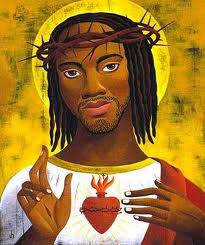
Today is the Solemnity of the Most Sacred Heart of Jesus. Largely due to the early influence of his Mother, the Sacred Heart was a special focus in the devotional life and eventual theological vision of Teilhard de Chardin. According to biographer Robert Speaight, young Pierre’s Mother, Berthe, hung an image in the Sacred Heart in the salon at their home. This “instilled in him a devotion to the Sacred Heart, which was to be the radiating center of his own ardent spirituality.” The Sacred Heart was the “foyer of divine love that his mother had dedicated [to] him at birth”. As Teilhard grew into adulthood and entered the Jesuits, the Sacred Heart was the central feature of devotion. According to Speaight:

“No form of Catholic piety is more repellent in its visual aspect than devotion to the Sacred Heart. Yet this was at the very center of Teilhard’s spiritual life . . . It was, for him, the fountain of energy and love. . . Everything must end where it had begun – in the foyer of the Sacred Heart, whose image greeted him in the salon every time he returned [home].”

Teilhard took this image of the Sacred Heart, and extended it to the entire cosmos, which Teilhard envisioned as the living, beating, evolutionary love of Christ:

“It is in the Sacred Heart that the conjunction of the Divine and the cosmic has taken place . . . There lies the power that, from the beginning, has attracted me and conquered me . . . All the later development of my interior life has been nothing other than the evolution of that seed.”

— The Heart of the Matter, p. 43

Posted in Uncategorized | Tagged , | 2 Comments

Outside the Gate

Attached is a link to a great blogpost by Robert Robinson on how living the Gospel is a challenge the civil and religious authorities.

Posted in Uncategorized | 1 Comment

MIT Survey on Science, Religion and Origins

religions

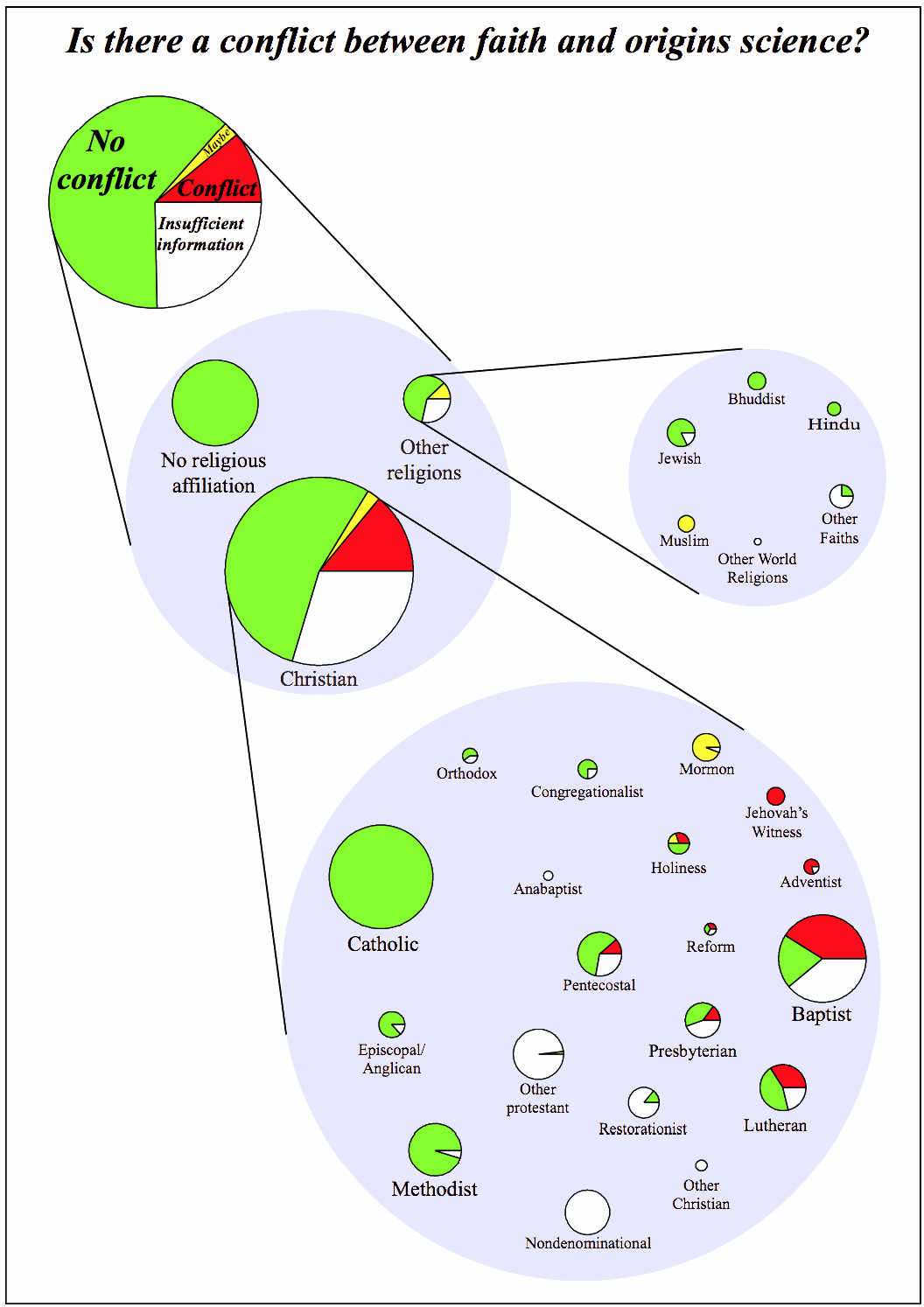
Earlier this year, in honor of Charles Darwin’s 204th birthday, Eugena Lee and Max Tegmark of the M.I.T. Department of Physics did a survey on how different religious beliefs viewed science, specifically, Big Bang cosmology and biological evolution.  Not surprisingly, the vast majority of mainstream religions do not see any conflict.  According to the MIT survey, only 11% of the U.S. population belong to religions openly rejecting evolution.   Here is a summary of their findings as stated by Professor Tegmark in the Huffington Post:

“is there a conflict between science and religion? The religious organizations representing most Americans clearly don’t think so. Interestingly, the science organizations representing most American scientists don’t think so either: For example, the American Association for the Advancement of Science states that science and religion “live together quite comfortably, including in the minds of many scientists.” This shows that the main divide in the U.S. origins debate isn’t between science and religion, but between a small fundamentalist minority and mainstream religious communities who embrace science. (emphasis added)

In my opinion, there are two very interesting things in the survey, and neither of them are the harmony between faith and science.

First, the two largest groups in the survey, Catholics and No Religious Affiliation which collectively are over 40% of the U.S. population, both have strongest support for science in that they are rated a “5” in the survey, which means they “Enthusiastically embracing origins science” (as opposed to less supportive “Compatible with origins science”).  Further,     if you add in mainstream Protestants, and non-Christians such as Jews, Buddhists and Hindus, there is an overwhelming majority of institutional religions in the U.S. that support science.

The second, and somewhat discouraging aspect of the survey, is that despite the overwhelming support by organized religion for science, the actual members of these religions are somewhat less enthusiastic.  According to Gallup surveys, 46% of Americans believe that God created humans in their present form 10,000 years ago!  Setting aside problems with the survey, this is a mind-boggling disconnect between official religious positions and members of these religions.  This indicates three things:  (i) religions are doing a terrible job of education their members on faith and science; (ii) science and theology knowledge in the U.S. is abysmal; and (iii) the media does a great job of perpetuating perceived conflict when there is none.  (As an aside, I am shocked at these numbers; I am a cradle Catholic born in the 1960s and I never knew anyone, but less was taught by anyone, who was a Young Earth Creationist).

In summary, the survey is fascinating in that it highlights that there is no intellectual conflict between science faith, but there is a serious education deficiency of both science and theology in the United States.  I believe that Professor Tegmark sums the real battle up best with his conclusion:

“I feel that people bent on science-religion conflict are picking the wrong battle. The real battle is against the daunting challenges facing the future of humanity, and regardless of our religious views, we’re all better off fighting this battle united.”

Posted in Reason and Faith | Tagged , , | 1 Comment