Sunday Reflection: Second Sunday in Ordinary Time (January 19, 2014): Growing in Christ

This weekend is the Second Sunday in Ordinary Time. The readings can be found here. The themes are on the nature of Christ and our call to grow closer to Christ and each other.

Today’s reflection is courtesy of friend of the blog, Fran Rossi Szpylczyn. Ms. Szpylczyn is a published author and operates the outstanding blog There Will Be Bread.   However, this reflection comes from an article Ms. Szpylczyn published three years ago in the Albany Times Union.  I encourage you to read the entire article here but set forth below is an extended summary:

[T]oday we encounter three readings that offer us some direction about who God is and who we are as well. It is important to consider that both elements are essential to living our faith. We spend a lot of time in general figuring out who God is but who we are and how we are holy matters. It matters a lot!

The first reading from Isaiah reminds us that not only is Isaiah prophesying Jesus but reminding us all that we are to be a light to the nations. Yes – we. You and me, us – the whole lot of humanity, if we but respond.

The responsorial psalm points us to what is required for all of this to happen, “here I am Lord, I come to do your will.” Oh that is easier said than done!

And then St. Paul in the beginning of his first letter to the Corinthians. What does Paul say? The Corinthians then – and us today – are to be holy. Holy is often thought of as pious, but what about holy as growing in Christ? What about holy as people becoming more and more who God loved into being?

John addresses us in the Gospel by reminding us how he recognized God in his midst in the person of Jesus. In some way John had to realize that Jesus was “the Lamb of God.” And he did so. It makes me wonder if I would be so open-eyed and open-minded to see God in my midst?

You see, recognizing God as God also requires some recognition of ourselves as the light. We are each the light of the nations. I was talking to someone yesterday about how this reminds me of many little candlelights coming together as one large bright vision. That would be something we would see at the Eater Vigil.

Seeing ourselves and each other as elements of God is hard, but it is true and it is who and what we are called to.

Which leads me at last back to St. Gregory of Nyssa and his words… If we refuse to keep growing, how can we grow closer to God and to one another? How can we be a light to the nations? If Isaiah, if St. Paul and if St. John all refused to grow, I guess we would not be having this conversation today, would we?

I don’t know but I do know how often I resist change and growth. And I do know that today I am invited into it anew, as I am each day by Christ our Lord.

Resources:

Is Refusal to Grow a Sin?
Living Space
Creighton Online Ministries
Fr. Robert Barron Word on Fire
There Will Be Bread

Posted in Sunday Reflections | Tagged , , , , , , , , , , , , , , , , , , , | 1 Comment

We Are Now Entering the Noosphere

I am reblogging this quote from David Sloan Wilson from his book “The Neighborhood Project” as it specifically talks about the evolving Noosphere on a neighborhood level. I have not yet read the book but it is on my (way too long) to-read list. Below is a link to an interview with David Sloan Wilson from an OnBeing radio production about Teilhard de Chardin last year.

Link to David Sloan Wilson and Teilhard de Chardin podcast

intheologus's avatarThe Irrefutable Proof about Hobbits

Our closest living relatives — chimps, bonobos, gorillas, orang-utans, and gibbons — are extremely smart, but their particular form of intelligence is predicated on the fact that they can’t necessarily trust their neighbours.  Male chimps cooperate to hund for food or patrol their territory, but they also are obsessed with achieving social dominance within their group.  Female chimps also compete with one another to monopolise the best resources for themselves and their kin within the group.  A baby chimp can’t leave its mother to play with the other chimps; it might get beaten up or killed.

Modern human social life can get this dysfunctional.  Think of the arms races among superpowers, blood feuds in tribal societies, and bitter political disputes in which the only thing that matters is to beat one’s opponent.  The kind of reflection that Teilhard de Chardin had in mind comes to a screeching halt under these conditions…

View original post 302 more words

Posted in Uncategorized | Tagged , , , , , , | 2 Comments

Slaying the Flying Spaghetti Monster by Robert Barron

Posted in Uncategorized | Tagged , , , , , | 8 Comments

Pictures from Teilhard de Chardin Collection at Georgetown University

Bust of Teilhard de Chardin at Georgetown Library

Bust of Teilhard de Chardin at Georgetown Library

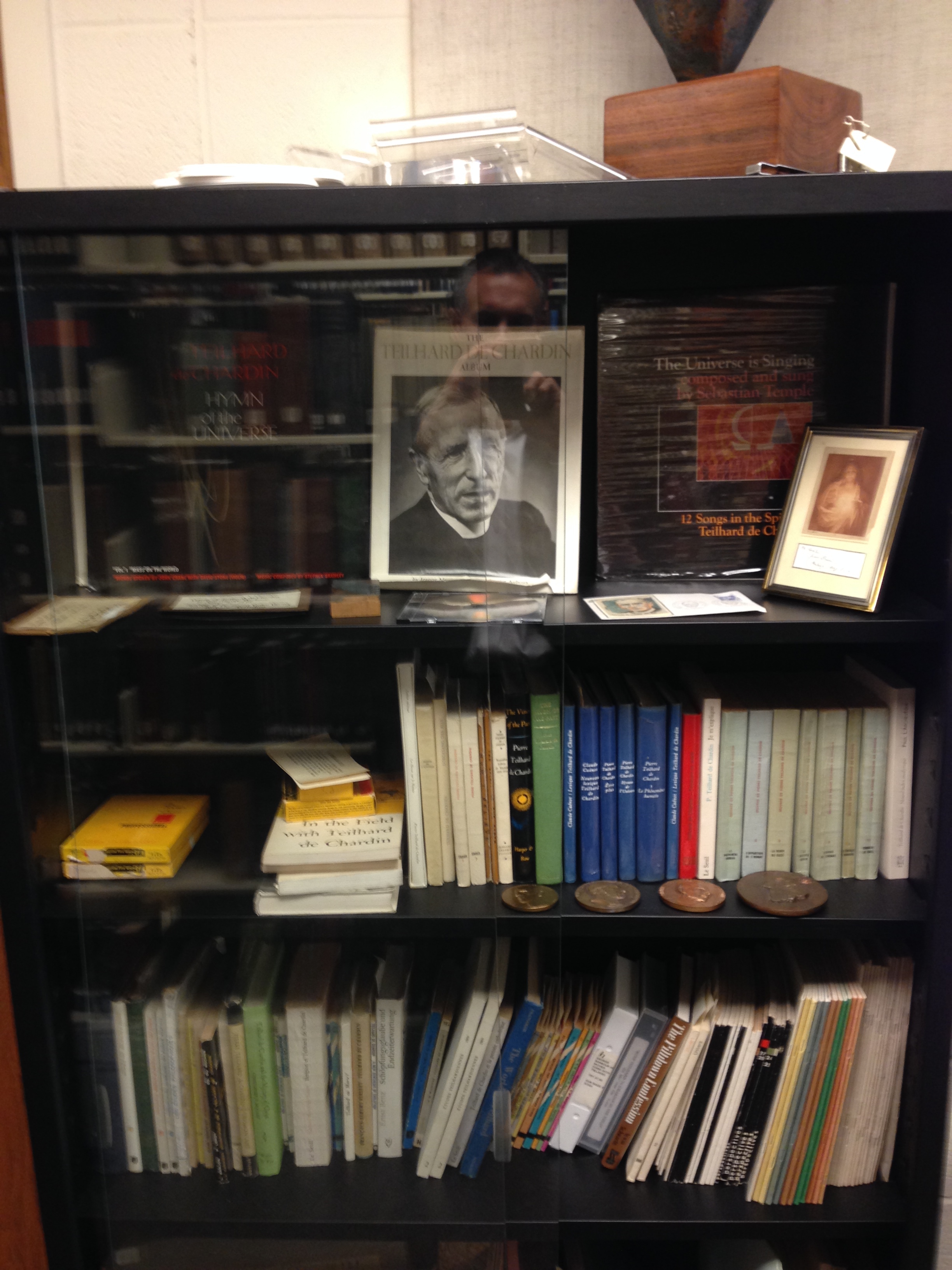
Last week, I had the pleasure of meeting in person Frank Frost and Mary Frost who are producing the PBS documentary The Teilhard Project.  Frank Frost was gracious to give me a tour of the Teilhard de Chardin collection at Georgetown University.  Here are a few of the pictures I took.

I am grateful to Frank and Mary, as well as Georgetown University, for all of their efforts in The Teilhard Project.

Description of Teilhard de Chardin Bust

Description of Teilhard de Chardin Bust

Teilhard de Chardin collection at Georgetown Library

Teilhard de Chardin collection at Georgetown Library

Letter from Teilhard de Chardin to George Barbour

Letter from Teilhard de Chardin to George Barbour


Teilhard de Chardin's picture of the Sacred Heart of Jesus at Georgetown (apologies about the poor photography)

Teilhard de Chardin’s picture of the Sacred Heart of Jesus at Georgetown (apologies about the poor photography)


Posted in Uncategorized | Tagged , , , , , , , , , , , , | 6 Comments

Teilhard de Chardin Quote of the Week (January 13, 2014): The Cosmic Design

Intervention

This week the quote is not directly from Teilhard de Chardin but it is inspired by Teilhard in the outstanding science fiction series The Galactic Milieu by Julian May.  The quote is by the character Rogatien Remillard (“Uncle Rogi”):

“And how much more difficult it is to apprehend the greater pattern! We know we are free, even though constraints hedge us. We cannot see the unus mundus, the entirety that we know must exist, but are forced to live each event rushing through space and time. Our efforts seem to us as random as the Brownian movement of molecules in a single drop of ultramagnified water. Nevertheless the water droplets come together to make a stream, and then a river that flows to the sea where the individual drops— to say nothing of the molecules!— are apparently lost in a vast and random pooling. The sea not only has a life and identity of its own, but it engenders other, higher lives, a role denied to water molecules alone. Later, after the sun draws them up, the molecules condense into new water drops or snowflakes and fall, and sustain life on the land before draining away to the sea again in the cycle that has prevailed since the biogenesis. No molecule evades its destiny, its role in the great pattern. Neither do we, although we may deny that a pattern exists, since it is so difficult to envision. But sometimes, usually at a far remove of time, we may be granted the insight that our actions, our lives, were not pointless after all. Those (and I am one) who have never experienced cosmic consciousness may find consolation in simple instinct. I know in my heart— as Einstein did, and he was justified in the long view if not in the short— that the universe is not a game of chance but a design, and beautiful.”

May, Julian; Dikty, Ted (1987-09-28). INTERVENTION (Kindle Locations 325-335). Houghton Mifflin Harcourt. Kindle Edition.


Posted in Teilhard Quote of the Week | Tagged , , , , , , , , | 2 Comments

St. Peter Faber, SJ: Patron Saint of Business?

St. Peter Faber, S.J.

St. Peter Faber, S.J.

Chris Lowney had an interesting article in National Catholic Register proposing that Peter Faber, S.J. be the patron saint for business people:

On Dec. 17, Pope Francis signed the bull of canonization recognizing Faber as a saint, and the relatively low-key elevation — no ornate Mass in St. Peter’s Square for poor Faber — is in keeping with his relative obscurity in the Jesuit pantheon. Faber was among the handful who co-founded the Jesuit order in the mid-1500s, but he never quite attained the renown of St. Ignatius of Loyola and St. Francis Xavier. No Jesuit church is complete without some triumphalistic mural or statuary of Loyola or Xavier. But Faber? He is usually one of an indistinguishable line of black-robed Jesuit extras, looking plastically pious at stage left of the mural.

His ministry was vital but not headline-grabbing. He was an extraordinarily capable spiritual director who reinvigorated clergy and bishops who had grown decadent, and patiently drew wavering Catholics back to the fold at a time when the Protestant Reformation was sweeping Europe. In an interview with La Civiltà Cattolica, Francis praised Faber’s style, his “dialogue with all … even with his opponents … his simple piety … his careful interior discernment … capable of being so gentle and loving.” Faber’s patient but ever-persistent outreach, his “frontier spirit” so to speak, embodies the culture change Francis is trying to engender in our church at large.

Read Full Article

Additional Resources on St. Peter Faber, S.J.:

Peter Faber, the first Jesuit Priest
Pope Francis and Peter Faber
Peter Faber to be declared Saint
The Spirituality of Peter Faber

Posted in Ignatian Spirituality | Tagged , , , , , , , , , , | 2 Comments

Video: The Summons

fcjmap's avatarKeeping Company

On this Sunday, we celebrate the feast of the Baptism of our Lord, and consequently, our own baptisms as well. The Summons (Will You Come and Follow Me) by John Bell was sung at Mass, and there was an undeniable presence of the Spirit alive in the hearts of the congregation. I thought it especially expressive of the ideals of the FCJ charism.

So with this, I wish you a happy day and a blessed week ahead.

View original post

Posted in Uncategorized | Leave a comment

Sunday Reflection: Feast of Baptism of the Lord (January 12, 2014)

baptism
I, the LORD, have called you for the victory of justice, I have grasped you by the hand; I formed you, and set you as a covenant of the people, a light for the nations, to open the eyes of the blind, to bring out prisoners from confinement, and from the dungeon, those who live in darkness.” — Isaiah 42:6-7
“In truth, I see that God shows no partiality.” — Acts 10:34

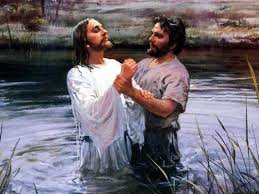
This weekend is the Feast of the Baptism of the Lord. The readings can be found here. This Feast is both the last day of the Christmas season and the First Sunday in Ordinary Time.

The Baptism of Jesus is an interesting conundrum for Biblical scholars and theologians. This event is contained in all four Gospels and even the most skeptical Biblical scholars believe that it is a historical event. This leads to a more perplexing question: Why would the Son of God be baptized by a human, not to mention a strange societal outcast such as John the Baptist? I believe the answer to this question speaks to the kenotic outpouring of God’s love.  God, who is love, wanted to bridge the gap between God and humanity.

Today’s reflection comes from Creighton University Online Ministries and Fr. Paddy Gilger, S.J., founding Editor-in-Chief of The Jesuit Post.  You can read the entire reflection here but set forth below is an extended excerpt:

In order to answer this question the great theologians of the Church remind us of what we call the whole of the paschal mystery, that is, they remind us that Jesus’ Incarnation, life, death and resurrection are of one piece, one whole movement of the divine mystery into the fragility and finitude of humanity so that we might be joined fully to God’s divinity. These theologians point out that Jesus’ baptism is a particular part of this whole, a kind of double submission, another example of the creator of the universe emptying Godself to take the form of a servant, that is, our human form. The first of the two submissions is Jesus’ submission to John, the one who was sent to prepare his way. And the second submission is his acceptance of not just our human flesh (as in the Incarnation), but of our very neediness, our existential thirst for repentance and forgiveness and acceptance. In this way, these theologians read the baptism as another sign of God being Emmanuel, with us fully and completely – this time fully with us even in our need for conversion. As a part of the whole paschal mystery then, the baptism that we hear in the Gospel today is another way that the creator of the universe says to us: “To be with you I give everything. I give all to you, all my divinity, everything. Nothing will keep you from me.”The question we are faced with today, then, as we stand in the doorway between the season of the Incarnation and the Ordinary season of Jesus’ active ministry, is the same question we are always faced with: will we accept the self-Gift of such a humble God?

When I am honest, my own answer is both yes and no. The excitement, the yes, comes because accepting God really means accepting that the words spoken to Jesus today are spoken to us: we are God’s beloved children, with whom He is well pleased. This is who we are at root, beloved children.

The reluctance, the no, might come from anyplace beyond that doorway. We might hesitate in the doorway of acceptance because we know who we’ve been in the past, we know those gifts and flaws. But the future? We don’t know that version of ourselves yet. Or we might hesitate because we don’t know whether the gifts we’ve been given during the holidays/holy days will carry over into the rest of our lives. Or we might hesitate because we’re not sure we can trust the voice that calls us beloved, not yet. Or we might trust that voice, but still be afraid because we know where such love leads, to the cross.

Whatever it is that handcuffs our hearts, it’s okay. Not okay to stay constrained, but okay to bring our hesitation to a God who gives up all, over and over again, to be who God is: Emmanuel, fully with us, even with us in our existential thirst, our neediness. God asks us – and never tires of asking – to accept His self gift: “Accept me, accept me, accept me.” But he does not force us. Our is not a God who will force us to be beloved.

And this for one reason: because God knows what it is to be fragile and finite. Because ours is the kind of God willing to be baptized into our very neediness. It’s because of this that we can trust Him not to break us, bruised reeds that we are.

It’s because He is with us this fully that we can trust Him not to push us out the door of Christmas season too quickly, but instead to give us today to stand on the threshold and look out into the world of ordinary time. It’s because we are the sons and daughters of this kind of God that, this Sunday, it’s okay for us to be both ready and not ready, divided, both in and out; to stand in the doorway that leads to the rest of our lives and feel both the fear and the excitement of walking in the ordinary world with a such a God.

Resources:

Creighton Online Reflection
Living Space (Irish Jesuits)

Posted in Sunday Reflections | Tagged , , , , , , , , , , , , , , , , , , , , , | 1 Comment

The Continuing Influence of Teilhard de Chardin

Teilhard_calendar

The article below appeared in the Independent Catholic News this week:

The French philosopher, palaeontologist and geologist, Fr Pierre Teilhard de Chardin SJ is the focus for the Society of Jesus this January, as he features in the commemorative calendar produced by the Jesuits in Britain. 

* * *

The January essay on Teilhard de Chardin was written by Fr Christopher Corbally SJ, a British Jesuit Jesuit working at the Vatican Observatory. While Fr Corbally did not meet the French Jesuit himself, he acknowledges in his essay the great influence he had upon him and his vocation: ‘Teilhard’s thought and spirituality are so rich that I am only able to touch on a small part of them,’ he writes. ‘My selection comes from aspects that have been and remain helpful to me as a Jesuit priest and astronomer for the Vatican Observatory. These aspects have particularly dealt with the interpenetration of matter with spirit. It is this interpenetration that makes the work I do as an astronomer, even the tedious parts, totally spiritual while also totally material. They form an element of the progress of the Universe, human and everything else, into the Whole, which is Christ.’

Read Full Article

Posted in Uncategorized | Tagged , , , , , , , , , | 3 Comments

Pope Benedict, Environmental Stewardship and Request for Help (not money:-)

The Green Pope

The Green Pope

It is hard to believe that it was less than a ago that Pope Benedict XVI shocked the world by becoming the first Pope to resign in 600 years. While the mainstream media likes to draw (false) contrasts between Pope Francis (whom I deeply admire) and Pope Benedict, I believe that Pope Benedict has left a lasting intellectual and symbolic legacy in the Church that is not sufficiently recognized by Catholics, much less the mainstream press.  Specifically, Pope Benedict has a significant legacy in three areas:

1.   He was the first Pope in 600 years to voluntary resign. He recognized that the office of the Pope was much greater than the individual holding the office and that he did not have the physical stamina to continue the job. That action speaks of a deep love of Christ and the Church, as well as a deep personal humility.

2.  Pope Benedict completed the rehabilitation of Teilhard de Chardin into mainstream Catholicism. Pope Benedict has been writing positively of Teilhard de Chardin for over 40 years prior to becoming Pope. As Pope he continued to speak favorably of Teilhard’s vision.

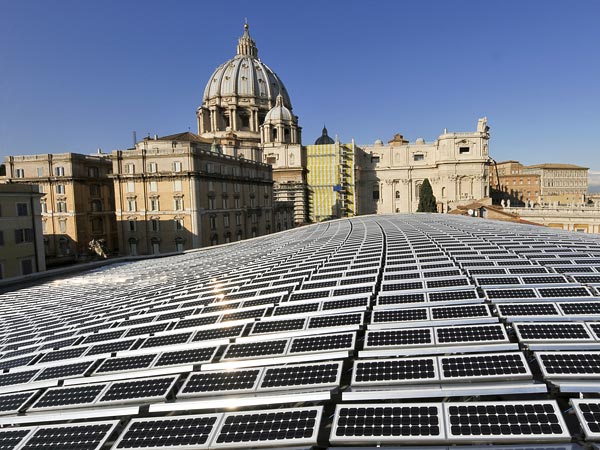
3.  Pope Benedict was the first Pope to make environmentalism and a deep spiritual ecology a central component of Catholic theology.  Pope Benedict led the initiative to make Vatican City the first carbon-neutral country.

Vatican Solar Panels

Vatican Solar Panels

In this regard, I am asking for assistance. Our local parish is considering following the Vatican’s lead and installing solar panels on our roof which needs replacing in a few years.  I have “been volunteered” to lead the financing initiative.  The legal structure should be fairly straight-forward. As a non-profit, our parish is not able to take advantage of any federal or state tax incentives for installing solar panels.  However, we could set up a structure whereby the solar panels are owned by private individuals who lease the panels back to the parish.  After the tax credits have been used, the private individuals would sell the panels to the parish for a nominal amount ($1).

My request is this:  Has anyone been involved in a Catholic parish that has set up this specific structure?  I have done it in other contexts but it would be helpful to talk to someone who has experience with the unique issues of a Catholic parish.  Any precedent would be greatly appreciated.  If you have experience, please leave a comment below or contact me at williamockham17@gmail.com

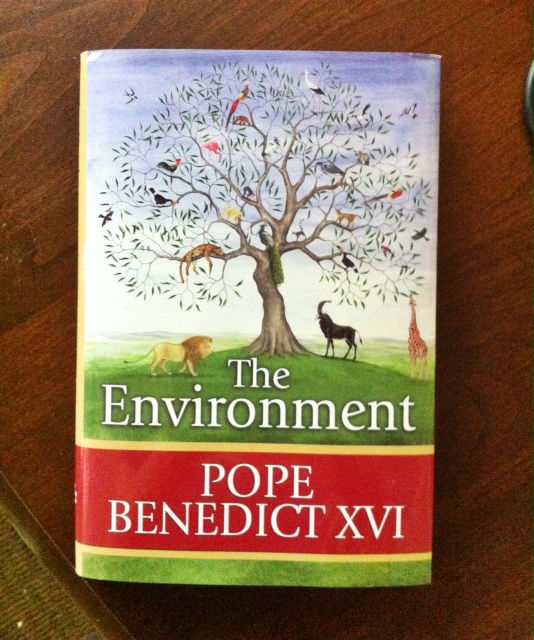
benedict-the-environment

Thank you!
W. Ockham

Posted in Uncategorized | Tagged , , , , , , , , , , , , , , , , | 10 Comments