CHRISTMAS 2013: Reflection for the Feast of the Holy Family, Dec. 29

Sorry, I did not have a Sunday Reflection this week. Things have been crazy at work. Here is a short but excellent reflection courtesy of Pax Christi USA. Hope everyone is having a great Christmas Season.

paxchristiusa's avatarPax Christi USA

christmas2013banner

by Megan McKenna

Sirach 3:2-6, 12-14 | Colossians 3:12-21 | Matthew 2:13-15, 19-23

“Who are we drawing into the circle of God?”

For us, just days after the child is born, danger appears. Oh, the book of Sirach seeks with folk wisdom in the culture of the Jewish family to teach what the commandment “Honor your father and mother” looks like in practice. Do not grieve your parents. Care for them in their old age, be considerate of them, even if their minds fail, revere them. But this is the old way, with this respect limited to blood ties. Now the family has extended out into time and space.

Paul reminds us that we are all now God’s chosen ones and we are to care for all and love each other with “heartfelt mercy, kindness, humility, meekness (nonviolence) and patience, bearing with one another, forgiving as God has forgiven us…

View original post 274 more words

Posted in Uncategorized | 3 Comments

Archbishop Dolan: No Season for Sourpusses

The Gospel Should be Joyful

The Gospel Should be Joyful

Here is a great read from Archbishop Timothy Dolan in Sunday’s New York Daily News. Using Evangelii Gaudium as a base, he encourages Christians to be joyful this Christmas season. The article is great, but it gets special mention here because of the Teilhard de Chardin reference 🙂

What’s the Latin word for “sourpuss”? You got me. But that’s the expression Pope Francis uses in his recent letter on The Joy of the Gospel. It has to be the first time that word’s been used in a papal document!

Crabby, whining, frowning people — sourpusses! — according to Pope Francis, are in contradiction to belief.

If we have faith that all is in God’s loving, providential hands; that, as the Bible teaches, “all will work out for the good for those who believe,” a sense of quiet joy would then characterize our days. As Stephen Colbert remarked at Fordham University, “My sense of humor comes from my hope, because I believe God’s in charge, and all will work out. So, I can laugh!” Sure, there will be concerns, trials, and heartaches, at times nonstop, and these can cause tears, worry and questioning.

* * *

As the Jesuit scholar Pierre Teilhard de Chardin observed, “Joy is the infallible sign of God’s presence.”

Francis_laugh

Merry Christmas to All!

Posted in Uncategorized | Tagged , , , , , , | 4 Comments

Teilhard de Chardin Quote of the Week (December 23, 2013): Purifying the Heart

purify

“Lord, enclose me in the depths of your Heart. And, when you have me there, burn me, purify me, set me afire, raise me up to perfect satisfaction of your pleasure, unto the most complete annihilation of myself.” 

— Courtesy of Company of St. Ursula

Posted in Teilhard Quote of the Week | Tagged , , , , , , , , | 4 Comments

Sunday Reflection Fourth Sunday of Advent (December 22, 2013): Waiting for Signs

fourth_sunday_advent

“Scripture has depths missing from other forms of wisdom.  This is closer to the ground we walk on.” — Jeanne Schuler, PhD.

This weekend is the Fourth Sunday of Advent. The readings can be found here.  We are coming to the end of Advent Season and are waiting the beauty of the Incarnation as the ultimate sign of God’s presence in the universe.

Today’s reflection is courtesy of Jeanne Schuler, Professor of Philosophy at Creighton University. You can find the entire reflection here, but set forth below is an extended excerpt:

“Should we ask God for signs?  In Dostoevsky’s The Brothers Karamazov, the Grand Inquisitor condemns Jesus for refusing to give us signs when he was tempted by the devil in the desert.  If only God had turned stones into bread, then humans would have the proof we need.  For this cardinal, people seek signs because they are too fearful to embrace true faith.

Do we hesitate to look for signs?  After all, education teaches us to view the universe as matter in motion that follows mathematical laws.  We learn that what is unexpected always has a cause, even if we haven’t discovered it yet.  There is nothing new under the sun, we say. Yet Advent is a time of expectation, of awaiting the remarkable.

Look closer: our lives are full of signs of beginnings.  When the robin returns, spring is close at hand.  A first cry means the baby is born.  To build peace after years of struggle, Nelson Mandela extends a hand to his jailers.  A candle is lit in the darkness.  Pope Francis kneels and washes the feet of a Muslim girl.  Witnessing the presence of the sacred, we sign the cross.

God promised that a child will be born whose life shows how “God is with us.”  Who would have thought [the] son of God would be conceived by an unwed mother, be homeless at birth, a refugee for years, tortured and crucified as a criminal, only to return to his friends after the resurrection?  Our horizon shifts.  There is much more to reality than what we expect.

When we find our place with the poor, with the child, with the single mother, with the gang member, with our enemies, we are the signs that God is with us.  Pope Francis warns us not to close our doors to sinners and imbibe our own righteousness.  In his recent letter, he writes, “I prefer a Church which is bruised, hurting and dirty because it has been out on the streets, rather than a Church which is unhealthy from being confined and from clinging to its own security.”  God’s kingdom is not a fortress.  When we move outside the walls, we share in the freedom of God.”

Creighton University Reflection Fourth Sunday of Advent
Creighton University Online Ministries

Posted in Sunday Reflections | Tagged , , , , , , , , , , , , , , , , , | 4 Comments

Pope Francis: The Radical Traditionalist of Mercy, Simplicity and Joy

Pope_Francis


I am sharing a speech by Deacon David Backes that he gave to his parish on the early pontificate of Pope Francis.  It is a fantastic summary and I encourage you to read it here. Set forth below is a sample:

Imagine that you’re a book publisher, and last January some novelist comes to you with an idea for a book that begins with the first resignation by a pope in 600 years, who is followed by the first Jesuit pope who becomes the first to take the name of Francis, after the iconic saint. As archbishop, this Jesuit rode the bus and walked the most dangerous streets of Buenos Aires; now, as pope, he rejects the papal palace and lives in a guest house, proclaims a church for the poor, and on Holy Thursday washes the feet of Muslim women and other young people in a prison.

A typical publisher would say that in order for novels to succeed, they have to at least be believable. Last January, this probably would have been seen as unbelievable. But not any more.

* * *

[A commentator said:] “Further, Francis is drawing so-called progressives and so-called conservatives together in the mission of the church as never before. Old fault lines between those who supported Vatican II and those who have been cool to it seem, for now, to have been diminished. In other words, Francis is acting as a pontiff, a bridge builder, should. He is a radical traditionalist.”

Read the entire speech

Posted in Uncategorized | Tagged , , , , , , | 2 Comments

The Galactic Milieu: The “Irrationality” and Beauty of the Incarnation

Jack_bodiless

As we approach Christmas, I thought I would share one of my favorite descriptions of the Incarnation. This is courtesy of Julian May, a prolific and talented science fiction writer. One of her most popular works is the Galactic Milieu, a four-book science fiction series that constructs a future world based on the evolutionary ideas of Teilhard de Chardin and psychological ideas of Carl Jung. The title Galactic Milieu is taken from Teilhard’s Divine Milieu. In this world, a segment of humanity has evolved powerful mental powers such as telepathic communication and psychokinesis. At this point, four other sentient types of life form intervene on Earth and teach humans about Unity, an intense form of psychological and intellectual union similar to the Noosphere. In Chapter 24 of the second book of the series (Jack the Bodiless) May, a practicing Catholic, provides a succinct and powerful explanation of Christmas and the Incarnation.  The following is an adaptation of May’s explanation, which consists of a telepathic communication between Teresa Remillard and her unborn genius baby, Jon Paul Kendall Remillard (Jack):

APE LAKE, BRITISH COLUMBIA, EARTH DECEMBER 25, 2051

Jon Paul Kendall Remillard had philosophical difficulties with the concept of Christmas. That the scraggly little evergreen tree his mother was trimming was a midwinter hope symbol was easy enough to understand from the explanations and mental images his mother Teresa offered. But the notion of God creating a body for himself to wear—and even Creation itself—bothered Jack.

Jack said: “It seems a very strange and unnecessary thing for God to do. To become human so that we’d love him rather than fear him. If he’s truly a Supreme Being then it follows that he has no need of any other entity to ensure his own happiness. Especially entities that are so imperfect by their very nature that they will inevitably befoul an otherwise orderly creation. I can understand God creating the physical universe for fun. But why create other minds when you know they’re going to mess things up?”

Teresa: “I believe famous human thinkers have debated those points.” I seem to remember that the theologians of early times were quite positive that God had no absolute need to create other thinking persons,” Teresa said. “This is perfectly ridiculous, of course, since the theologians were willing to concede that he had done it and must have had a good reason. Now, unless we’re ready to admit that a Supreme Being can be capricious or wishy-washy, it follows that he needed to do it. He did need us.”

Jack: “But what prompted God’s need of us?”

“Love,” said Teresa.

Jack said: “That’s irrational.”

“Exactly. I don’t believe anyone has ever reasoned out a satisfactory answer to God’s need of us. Those religions outside the Judeo-Christian tradition rarely hit upon the notion of a loving God at all. As for natural philosophy, loving-kindness would not be an attribute that one would logically deduce that a Big-Bang-Creator-God would have.”

“Hardly.”

“But love is the only motive that seems to make any sense. Without it, you have the Creator-God as a game player trying to assuage his cosmic boredom, caring about us only as game pieces. That is to say, not caring very much! Now, if God wanted us to know that he created us out of love, he’d have to tell us, since we couldn’t figure it out for ourselves. He’d have to get directly involved with us, rather than let us tick along obliviously the way the evolving non-sapient universe does.”

“I suppose so …”

“There are any number of ways he might have done this. But put yourself in God’s position and try to decide the most elegant way to get involved with your thinking creatures. The way that is at once most difficult and unlikely but has the potentiality to succeed in the most magnificent manner imaginable.”

“Not the easiest way?”

“Heavens, no! What would be the satisfaction in that! I can sing ‘Happy Birthday to You’, but I get more satisfaction doing the mad scene from Lucia, even if it tires me out terribly.”

“I understand.”

Pinching and twisting, Teresa affixed one little candle after another, pausing now and then to straighten those that leaned out of true. “God’s most elegant way of involving himself with us would have to be a scandal to the stodgy-minded and a delight to minds that have a sense of humor and of adventure. As his mind does.”

“God can laugh?”

“Of course, dear, and feel sorrowful, too. A Supreme Being without those attributes wouldn’t be supreme. Grim and joyless people try to pretend otherwise, but their arguments are unpersuasive.”

“Explain to me how God became directly involved with us.”

“It has happened differently on different worlds in the Galaxy. On ours, I believe that the primary involvement happened through the Jewish people and the Christians. It’s a long story, and you’ll really have to read it in the Bible. That book is a fascinating account of human moral evolution, with historical and deeply mythic truth all mingled in a wonderful mishmash. It’s a literary treasure as well as the word of God, and some parts of it are profound, and some are fascinating and some are poetic, and some are even a bore. Different religions interpret the Bible in different ways, but we Catholics believe that when the mentalities of one single key tribe of extremely intelligent people were finally mature enough to grasp the concept of a loving God, God simply spoke to them.” She laughed. “Well—perhaps not simply.”

“And the tribe accepted his messages and passed them on?”

“Some members did. Others kept slipping and sliding back into primitive notions of angry gods that constantly needed to be appeased with blood sacrifices and other rubbish. God had to keep coaxing them and putting them in their place the way a loving mother has to do when her children are naughty.”

“Is love the motivation for all creation, then?”

“I imagine so. Mental lattices within our normal Reality can’t exist without the other five kinds, and vice versa. If God wanted to make minds to love, he had to make the whole cosmos. And it is quite lovely, most of it.”

“But to create for the love of it seems so odd!”

“Of course it does. It really makes no sense—in a rational view of the universe. And yet every artist knows the truth of it. And every healthy adult human knows that people who are in love want the whole world to be as happy as they are. If you are God, loving yourself or even being Love in some mysterious fashion, and there aren’t any other minds to share happiness with—then you make some.”

“So one may conclude that God does need us?”

“Most of our coreligionists today believe it’s true.”

Jack persisted: “And the problem of the created minds being imperfect? And sometimes evil?”

“There’s a principle to the effect that it is much more glorious to make something wonderful out of imperfect parts. The very imperfection of the individual elements—even when there’s actual evil involved, as there often is in human affairs—challenges God to greater creative heights.”

“What a strange idea.”

“There’s an old proverb that says: ‘God writes straight with crooked lines.’ Human history is just full of crooks and twists and twines. One would think anarchy or barbarism or the lowest common denominator would have triumphed ages ago. But it hasn’t. All the messes and atrocities and disasters have somehow been woven into a construct that looks better and better every year—at the same time that some things look even worse! The world you’re going to be born into is a wonderland compared to the world that existed only forty years or so in the past. But even so, there are still persons who are discontented or who are villains, and situations that are evil or tragic. Nevertheless we children of God continue to evolve and improve on every level, almost in spite of ourselves. That also has something to do with nonlinearity and chaos. And God’s love, too.”

Jack said: “That is very mysterious. Contrary to common sense!… Why do I find the concept pleasing? Mama, why do you give gifts at Christmas?”

“It’s a tradition. Wise men gave gifts to the infant Jesus. To Baby God. And he is God’s gift to us.”

Jack said: “That’s the biggest paradox. Even greater than Creation. It was quite unnecessary for God to become human and teach us his love in person. I can see why some Earth religions deny that it happened.”

“Yes, the Incarnation is quite absurd. But you must admit it would be an excellent way to catch our attention! And so madly elegant. It’s also much easier for us to pray to and love a God-made-man, who would be more likely to understand our human difficulties, than to try to love an almighty Big-Bang-Creator. Why should he care if my roast is overdone or if I live long enough for you to be safely born?”

Jack said: “I would like him to care.”

“Ah! Now we’re moving into psychology! An incarnate, loving God takes on significant mythic overtones that appeal to the deepest levels of the human psyche. To that almost instinctive part of us called the collective unconscious.”

“I have not yet had any experience of that.”

“You will,” Teresa laughed, “when you really begin to socialize.”

“I—I wish I did not have to. Opening myself up to others can be painful as others are not always nice.”

“You mustn’t fret about it. All people have good and bad in them. I do, and so do you. This is one reason why a loving God is such an amazing consolation. He has no dark about him at all. God must know all there is to know about us—and yet he loves us anyway. He only wishes us well, even when we’re wicked or when we deny him. We would never have guessed that about him in a million years, if he hadn’t told us. It’s mysterious beyond belief”

“Did God become incarnate for aliens?

“All of them seem to think that he did. And Milieu anthropologists—or whatever they call themselves—tell us that many of the more primitive races in the Galaxy have Incarnation myths very much like ours. Of course, none of this is proof of God’s Incarnation. Even though the evidence strongly points to the Incarnation, ultimately it can’t be proved. But I believe it, and so does Uncle Rogi, and your Papa and brothers and sisters, and billions of other entities. That kind of belief is called faith.”

She gave Jack a giant hug and closed her eyes for a moment. “I have faith in God’s love just as I have faith in your great future, Jack. There are many things that frighten me and other things that make me very unhappy. But if I can just hold on to faith, I won’t give in to despair. I won’t.”

Modified from:

May, Julian (2011-04-27). Jack the Bodiless (Galactic Milieu Trilogy) (pp. 268-275). Random House, Inc.. Kindle Edition.

Posted in Embracing Doubt and Mature Faith, Ignatian Spirituality, Reason and Faith, Uncategorized | Tagged , , , , , , , , , , , , , , | Leave a comment

Original Sin, Advent and Christian Hope

in_the_beginning

Earlier this week, I was having a discussion with a good-hearted atheist friend who argued that the existence of evil and the explanatory power of evolutionary biology combined to create a strong argument against the existence of God and in favor of a materialistic version of reality.  Perhaps coincidentally, last night as part of my Advent reflections I came across a 2008 homily by Pope Benedict XVI on Original Sin and the hope of Advent. This homily by Pope Benedict is a brilliant summary of the hopefulness of evolutionary Christian theology as articulated by St. Paul and Teilhard de Chardin in contrast to secular atheism. The same Christ who became incarnate in Jesus of Nazareth continues to draw the Universe towards himself as the Omega Point light that extinguishes the darkness of evil.  I encourage you to read the full homily here but set forth below is an extended summary:

“[A]s people of today we must ask ourselves: what is this original sin? What does St Paul teach, what does the Church teach? Is this doctrine still sustainable today? Many think that in light of the history of evolution, there is no longer room for the doctrine of a first sin that then would have permeated the whole of human history. And, as a result, the matter of Redemption and of the Redeemer would also lose its foundation. Therefore, does original sin exist or not? In order to respond, we must distinguish between two aspects of the doctrine on original sin. There exists an empirical aspect, that is, a reality that is concrete, visible, I would say tangible to all. And an aspect of mystery concerning the ontological foundation of this event. The empirical fact is that a contradiction exists in our being. On the one hand every person knows that he must do good and intimately wants to do it. Yet at the same time he also feels the other impulse to do the contrary, to follow the path of selfishness and violence, to do only what pleases him, while also knowing that in this way he is acting against the good, against God and against his neighbour. In his Letter to the Romans St Paul expressed this contradiction in our being in this way: “I can will what is right, but I cannot do it. For I do not do the good I want, but I do the evil I do not want” (7: 18-19). This inner contradiction of our being is not a theory. Each one of us experiences it every day. And above all we always see around us the prevalence of this second will. It is enough to think of the daily news of injustice, violence, falsehood and lust. We see it every day. It is a fact.

* * *

The question is: how can this evil be explained? In the history of thought, Christian faith aside, there exists a key explanation of this duality, with different variations. This model says: being in itself is contradictory, it bears within it both good and evil. In antiquity, this idea implied the opinion that two equally primal principles existed: a good principle and a bad principle. This duality would be insuperable; the two principles are at the same level, so this contradiction from the being’s origin would always exist. The contradiction of our being would therefore only reflect the contrary nature of the two divine principles, so to speak. In the evolutionist, atheist version of the world the same vision returns in a new form. Although in this conception the vision of being is monist, it supposes that being as such bears within itself both evil and good from the outset. Being itself is not simply good, but open to good and to evil. Evil is equally primal with the good. And human history would develop only the model already present in all of the previous evolution. What Christians call original sin would in reality be merely the mixed nature of being, a mixture of good and evil which, according to atheist thought, belong to the same fabric of being. This is a fundamentally desperate view: if this is the case, evil is invincible. In the end all that counts is one’s own interest. All progress would necessarily be paid for with a torrent of evil and those who wanted to serve progress would have to agree to pay this price. Politics is fundamentally structured on these premises and we see the effects of this. In the end, this modern way of thinking can create only sadness and cynicism.

* * *

As an explanation, in contrast with the dualism and monism that we have briefly considered and found distressing, faith tells us: there exist two mysteries, one of light and one of night, that is, however, enveloped by the mysteries of light. The first mystery of light is this: faith tells us that there are not two principles, one good and one evil, but there is only one single principle, God the Creator, and this principle is good, only good, without a shadow of evil. And therefore, being too is not a mixture of good and evil; being as such is good and therefore it is good to be, it is good to live. This is the good news of the faith: only one good source exists, the Creator. Therefore living is a good, it is a good thing to be a man or a woman life is good. Then follows a mystery of darkness, or night. Evil does not come from the source of being itself, it is not equally primal. Evil comes from a freedom created, from a freedom abused.

How was it possible, how did it happen? This remains obscure. Evil is not logical. Only God and good are logical, are light. Evil remains mysterious. It is presented as such in great images, as it is in chapter 3 of Genesis, with that scene of the two trees, of the serpent, of sinful man: a great image that makes us guess but cannot explain what is itself illogical. We may guess, not explain; nor may we recount it as one fact beside another, because it is a deeper reality. It remains a mystery of darkness, of night. But a mystery of light is immediately added. Evil comes from a subordinate source. God with his light is stronger. And therefore evil can be overcome. Thus the creature, man, can be healed. The dualist visions, including the monism of evolutionism, cannot say that man is curable; but if evil comes only from a subordinate source, it remains true that man is healable. And the Book of Wisdom says: “he made the nations of the world curable” (1: 14 Vulgate). And finally, the last point: man is not only healable, but is healed de facto. God introduced healing. He entered into history in person. He set a source of pure good against the permanent source of evil. The Crucified and Risen Christ, the new Adam, counters the murky river of evil with a river of light. And this river is present in history: we see the Saints, the great Saints but also the humble saints, the simple faithful. We see that the stream of light which flows from Christ is present, is strong.”

General Audience, Pope Benedict, December 3, 2008

Posted in Orthodoxy of Teilhard de Chardin, Reason and Faith | Tagged , , , , , , , , , , , , , , , | 22 Comments

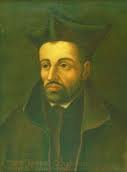
It’s Official: Peter (Pierre) Faber, S.J. is a Saint!

St. Peter Faber, S.J.

St. Peter Faber, S.J.

From Catholic News Service:

Pope proclaims sainthood of Jesuit companion of St. Ignatius

By Carol Glatz
Catholic News Service

VATICAN CITY (CNS) — Pope Francis issued a decree declaring one of his favorite Jesuits, Blessed Peter Faber, a saint.

The decree is what the Vatican terms an “equivalent canonization,” in which the pope inserts the name of the new saint in the universal calendar of saints without verifying a miracle performed through his intercession and without holding a formal canonization ceremony.

The Vatican announced Dec. 17 that the pope formalized the church’s recognition of the 16th-century priest, who with St. Ignatius of Loyola and St. Francis Xavier, was a founding member of the Society of Jesus, by “inscribing him in the catalog of saints.”

* * * 

Welcoming the news of St. Faber’s canonization, a statement from the Jesuit headquarters in Rome said the canonization was significant because it highlights a man who “is a model of the spirituality and priestly life of the current pontiff and at the same time is one of the important references for understanding his style of governance.”

Full Story on Sainthood of Peter Faber, S.J.

More information on Peter Faber, S.J. can be found here,  here and here.

Posted in Ignatian Spirituality | Tagged , , , , , , , , , | Leave a comment

Teilhard de Chardin Quote of the Week (December 16, 2013): God Loves Us as We Are

Sunset_Tent


“I feel that you must resign yourself to taking me as I am, that is, with the congenital quality which ever since my childhood has caused my spiritual life to be completely dominated by a sort of profound ‘feeling’ for the organic realness of the World. At first it was an ill-defined feeling in my mind and heart, but as the years have gone by it has gradually become a precise, compelling sense of the Universe’s general convergence upon itself; a convergence which coincides with, and culminates in, him in whom all holds together, and whom the Society taught me to love.

I have found an extraordinarily rich and inexhaustible source of clarity and interior strength, and an atmosphere outside which it is now physically impossible for me to breathe, to worship, to believe. My attitude is simply the result of my own absolute inability to contain my own feeling of wonderment.

Everything stems from that basic psychological condition, and I can no more change it than I can change my age or the color of my eyes. Never has Christ seemed to me more real, more personal or more immense.

“How, then, can I believe that there is any evil in the road I am following?

I fully recognize, of course, that Rome may have its own reasons for judging that, in its present form, my concept of Christianity may be premature or incomplete and that at the present moment its wider diffusion may be inopportune.

Obviously I cannot abandon my own personal search – that would involve me in an interior catastrophe and in disloyalty to my own cherished vocation.

Look on this letter simply as a proof that you can rely on me unreservedly to work for the kingdom of God, which is the one thing I keep before my eyes and the one goal to which science leads me.”

Quote taken from Letter of Teilhard de Chardin in 1951 to the Jesuit Superior General in Rome; courtesy of Colin Coward of Changing Attitude.

Posted in Teilhard Quote of the Week | Tagged , , , , , , , , , | 9 Comments

If Christ Had Become Incarnate Now

A beautiful reflection on Gaudete Sunday by Archbishop Oscar Romero, one of the great Catholic figures in the last 50 years. Here is a link to information on the canonization of Archbishop Romero.

Archbishop Oscar Romero: A Saint for the Poor

claire46's avatarA Seat At The Table

If Christ had become incarnate now

and were a thirty-year-old man today,

he would be here in the cathedral

and we wouldn’t know him from the rest of you —

a thirty-year-old man, a peasant from Nazareth,

here in the cathedral like any peasant

from our countryside.

The Son of God made flesh would be here

and we wouldn’t know him —

one completely like us.


How shameful to think that perhaps pagans,

people with no faith in Christ,

may be better than we

and nearer to God’s reign.

Remember how Christ received a pagan centurion

and told him, “I’ll go and cure your servant”?

The centurion, full of humility and confidence,

said, “No, Lord, I am not worthy that you go there.

Just say a word

and my servant will be cured.”

Christ marveled, says the gospel, and he said,

“Truly, I have not found such faith in…

View original post 359 more words

Posted in Uncategorized | 3 Comments