Scientific Potpourri (November 22, 2013): Neutrinos outside the solar system, first Americans, origins of dogs and more


Searching for the hard to detect neutrino

Neutrinos from outside the solar system discovered

Here are some top stories in cosmology, physics and evolutionary biology from the past couple of weeks.

Astronomers Detect Neutrinos From Outside the Solar System.  This follows from the earlier post on the IceCube Project. From the Verge: Astronomers Astronomers in Antarctica are kicking off a new way of studying the cosmos. Rather than studying light, researchers now plan to study neutrinos from outside of our solar system. These hard-to-detect particles can carry new information on distant galaxies. Unlike light, neutrinos can pass through most all matter in their path, allowing researchers to see exactly where they came from and to learn more about black holes, supernovas, and other cosmic occurrences. Though neutrinos have been known about for some time, and were detected in one isolated experiment in 1987, researchers have since only able to detect ones from within our own solar system. In an article published today in Science, researchers from the IceCube Neutrino Observatory in the South Pole detail the detection of 28 of them, which they say must have originated farther out in the cosmos.

24,000 Year Old Skeletal Remains Raise Questions About the First Americans.  From Science Daily: Results from a DNA study of a young boy’s skeletal remains believed to be 24,000 years old could turn the archaeological world upside down — it’s been demonstrated that nearly 30 percent of modern Native American’s ancestry came from this youngster’s gene pool, suggesting First Americans came directly from Siberia, according to a research team that includes a Texas A&M University professor. “Though our results cannot speak directly to this debate, they do indicate Native American ancestors could have been in Beringia — extreme northeastern Russia and Alaska — any time after 24,000 years ago and therefore could have colonized Alaska and the Americas much earlier than 14,500 years ago, the age suggested by the archaeological record.”

Eight Interesting Facts About Human Evolution. From IO9: Some interesting evolutionary facts include: (1) Early humans left Africa over 1 million years ago; (2) Humans have very low genetic diversity compared to other species; (3) You may have Neanderthal DNA; (4) The human population crashed 80,000 years ago; (5) Humans crossed the Indian Ocean 50,000 years ago; (6) Homo sapiens had a culture for less than 50,000 years; (7) Homo sapiens have always used fire as a tool; and (8) Homo sapiens are still evolving rapidly.

Dogs Originated in Europe, Not East Asia?  From the Economist: Foxes can be tamed deliberately, by selective breeding (see article). But this probably recapitulates a process that happened accidentally, many millennia ago, to wolves. The product of that was the animal now known as the dog. But where on Earth this happened is moot. Fossils have been used to make the claim for places as diverse as Russia and the Middle East. Genetic evidence has pointed towards East Asia, with some people believing that New Guinea singing dogs and their Australian offshoots, dingoes, are largely unchanged descendants of the first pooches. Olaf Thalmann of the University of Turku, in Finland, Robert Wayne of the University of California, Los Angeles, and their colleagues beg to differ. They think Fido was born in Europe, and that they have the DNA to prove it.

Secrets of Mars’ Birth Revealed From Unique Meteorite?  From Science Daily: Florida State University scientist has uncovered what may be the first recognized example of ancient Martian crust. The work of Munir Humayun — a professor in FSU’s Department of Earth, Ocean and Atmospheric Science and a researcher at the National High Magnetic Field Laboratory (MagLab) — is based on an analysis of a 4.4 billion-year-old Martian meteorite that was unearthed by Bedouin tribesmen in the Sahara desert. The rock (NWA 7533) may be the first recognized sample of ancient Martian crust and holds a wealth of information about the origin and age of the Red Planet’s crust. Humayun’s groundbreaking discoveries about the crust and what it reveals about the Red Planet’s origins will be published in the journal Nature.

Posted in Uncategorized | Tagged , , , , , , , | Leave a comment

Quantum Physics, Relationality and the Triune God

quantum_theology

One of the great contributions that Teilhard de Chardin made to Christian theology is his reconciliation of traditional Christian theology with evolutionary biology. Science has continued to advance. Discoveries in the past 100 years, from the Big Bang to particle physics provide additional evidence in support of the monotheistic belief that there is an intelligent Creator of the Universe. Moreover, the strange world physics of quantum mechanics also supports the notion that this Creator is relational, similar to the Christian belief in the Trinity.

I am not a scientist and do not pretend to understand anything more than the basics of quantum physics. However, George Farahat of the blog Today’s Questions does have background in quantum physics and did a great job of synthesizing quantum physics and the triune God in a recent blogpost. I encourage you to read the entire post here, but set forth below is an extended excerpt:

“In 2007, I gave a lecture on evidence in the cosmos for the God of Christians. It was precisely based on quantum physics. Nothing has changed since then other than the fact that we are now aware of many more facts in human behavior, the accelerating rate of the development and deployment of information technology, the development of life on earth for billions of years with its challenges, and more knowledge on the intricate nature of the expanding cosmos. Those who wish to remain in their simple faith and ignore scientific advances may well find themselves surrounded by questions from their friends, children or grandchildren: Why do you still believe?

In this post, I survey a number of human disciplines to show that the probabilities of quantum physics are at the core of every action in the cosmos. Cases in each discipline will be examined but due to space limitation only one publication will be referenced.”

Mr. Farahat then discusses recent developments in a number of disciplines such as particle physics, chaotic systems, evolutionary biology, collaborative information systems, sociology, neuroscience, game theory and particle physics and how each of these disciples point to the existence of God. Mr. Farahat then has a detailed discussion on quantum physics:

Although quantum physics has been used in numerous inventions since its discovery (such as transistors in electronic devices, lasers used in CDs, quantum cryptography, quantum computers and more), no scientist claims to fully understand it nearly 90 years after the formulation of Quantum Theory. Finding the Higgs boson in the past year at CERN‘s Large Hydron Collider, for which Peter Higgs and Francois Englert have been awarded the 2013 Nobel Prize in physics, has opened more questions than answers for scientists to explore. The elusive Higgs boson, dubbed the “God Particle” by Leon Lederman, reveals the quantum nature of everything from matter to antimatter and energy, calculated at almost the beginning of the Big Bang. In his 1993 book “The God Particle,” Leon Lederman, who is also a Nobel Laureate, asks “If the Universe is the Answer, What is the Question?”

* * *

John Polkinghorne, retired professor of mathematical physics at Cambridge University, wrote, in one of his latest books: Quantum Physics and Theology in 2008, about relationship as science is attempting to discover it at the subnuclear level: “Quantum theory brought to light a remarkable form of entanglement between subatomic particles that have once interacted with each other (the so-called EPR effect), which implies that they remain effectively a single system however far they may subsequently separate spatially- a counterintuitive togetherness-in-separation that has been abundantly confirmed experimentally as a property of nature. The physical world looks more and more like a universe that would be the fitting creation of the trinitarian God, the One whose deepest reality is relational.” (Cf. John Polkinghorne, 2008, “Quantum Physics and Theology: An Unexpected Kinship” Published by Yale University Press).

The above findings support the 2 most important observations in quantum physics:

1. The probabilistic nature of particles which yields the Uncertainty Principle

2. The communication between particles at long distances (quantum entanglement)

From 2 above, everything must be in a relationship to live. In Christianity God is a relatedness or a relationship of selfless love. It is our belief that God the Father being Love (1 John 4: 8) abandons the fullness of divinity and gives all he has to his image the Son (John 10:30; Col 1: 15-19; Phil 2: 6-11 ) who in turn returns this  love in the Holy Spirit who is the binding love of Father and Son (John 15). The concept that God is relatedness or relational is found not only in Holy Scriptures but also in doctors of the Church including St. Thomas Aquinas and, in our days,  Joseph Ratzinger (Bishop of Rome Emeritus Pope Benedict XVI).

If this is true, then we can say that the cosmos is signed by the stamp of the Triune God of Christians.

From 1, we all live in a cosmos still  in development. Certainty is achieved beyond this life when we are in the togetherness of the family of the kingdom of God. Hell is reserved to those who never loved nor dared to explore the probability of opening themselves to the vulnerability of the other that in him God lives. According to St. Paul “For now we see in a mirror dimly but then face to face” (1 Cor. 13: 12).

I encourage you to read the entire article here.

Posted in Reason and Faith | Tagged , , , , , , , , , , , , , , , , , , | 16 Comments

The God of Joy and Laughter

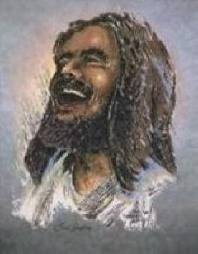
Jesus enjoys a good laugh

“Joy is the most infallible sign of the presence of God” — Teilhard de Chardin

I am currently in the second week of my online Ignatian Retreat. Each morning before I begin my prayer, I ask God for a grace. Yesterday, I was feeling particularly stressed due to work and home and I asked for the grace of joy. I was blessed as I had a wonderful day full of joy, peace and laughter. During my evening Examen, I could recognize the presence of God during many of my interactions.

It also got me thinking about the upcoming season of Advent, the Incarnation and the characteristics of God. Specifically, why authentic joy and peace are hallmarks of a healthy spirituality. The answer is that is the way God intended for us to be.

I was reminded of the most recent blogpost by Author, Professor and Catholic Deacon David Backes who was reflecting on the anniversary of the death of their long-time family dog. Naturally, this brought up feelings of sadness. David compensated by watching Gilligan’s Island and found that humor helped lift his spirits. He subsequently became involved in a Facebook conversation in which one of the posters said that “it was wrong to post such an image or to promote the belief that God has a sense of humor.  God cannot have a sense of humor, this person insisted, because humor requires surprise, and God is omniscient and therefore cannot be surprised.”  David provided a beautiful and logical response in his most recent blog. I encourage you to read the entire blog here but set forth below is a summary:

“What most disturbs me about the argument that God cannot have a sense of humor is that the image of a humorless God goes along with the image of a God who is quick to judge, who is harsh, punishing, who demands tribute and is picky about the details, concerned with the letter of the law more than the heart.  I encountered all too much of this same sort of negative theology growing up; it made me fall away from religion for a long time until I finally realized that it is not what the church actually teaches, but is merely what negative people within the church teach.  It causes so much damage to people’s hearts and spirits!

The argument that God is humorless not only damages people, it also is illogical.  The argument makes two points: 1) humor requires surprise, and 2) God is omniscient, and so cannot be surprised.  Now, I could make a case for why an omniscient God could nevertheless be surprised, but that is unnecessary, as the humorless God argument fails if its first point is false.

Does humor require surprise?  Of course not. Have you ever watched a sitcom?  Much of the things we laugh at are absolutely predictable; there is no surprise whatsoever.  My own immersion experience in the ninety-some episodes of “Gilligan’s Island” made that absolutely clear.  I had watched those episodes many times growing up, and occasionally as an adult.  I knew what was coming.  I still laughed.  And when that negative Facebook comment made me think about this last fall as I was in the midst of watching all these silly episodes, I realized that even as a kid I probably was not often surprised by the action.

Humor is all about context.  Surprise can be funny because of how it relates to our expectations, but the context that sets those expectations is far more important than surprise.  I can laugh at what Gilligan says or does, for example, even though I know exactly what is going to happen.  That’s because the episode provides the context for the kinds of things that would be funny, and the kinds of things that would not be funny.

Context implies relationship.  . . . Humor does not depend on surprise.  It depends on an understanding of context, and context  implies relationship. God is all about relationship–that’s what Christians are saying when they describe God as a Trinity.  We also describe God as perfectly humble, and humility is all about relationship, too: about knowing one’s full truth in the context of all things.  Furthermore, God not only is all about relationship, but in addition, as creator, God sets the context of all things, too.

Humor is all about relationships in context.  A perfectly humble, Trinitarian God, all about relationship and creator of all context, therefore, should have the greatest sense of humor of all!

There are other ways to make my case.  I could say that if humans are created in the image of God, then our sense of humor is part of that image and so speaks to some genuine truth about God.  Or I could say that God, having become fully human in the person of Jesus without losing divinity, surely must have a perfect understanding of all the emotions and experiences Jesus went through. (Don’t even try to tell me that Jesus never laughed….) But the argument in favor of a humorless God depends on belief that humor requires surprise, and that is patently false, and should take most people just a little reflection to realize that they find all kinds of things funny without being surprised.”

I strongly believe that the second point of David’s argument, that an omniscient God can be surprised, is also true. But that is the topic for a future discussion.  Moreover, I also believe that God can be with us also during times of pain and suffering. God experiences those also and we can find joy even during these times. However, one of the greatest evangelization tools have is spreading the joy that stems from a relationship with God, especially when combined with humor.

Wishing each of you a joyful and peaceful week.

Posted in Ignatian Spirituality, Uncategorized | Tagged , , , , , , , , , , , | 13 Comments

Quote of the Week About Teilhard de Chardin (Brilliant but Obtuse)

pierre-teilhard-de-chardin-sj

The following was taken from the Teilhard de Chardin Facebook page. I laughed when I read it and thought I would share it here:

“Teilhard’s combination of divine and evolution, instead of divine single-step complete creation and instead of blind evolution, and his arguments for it are so good … that I will forgive him for the incredibly long runaway sentences in many of his books.”

Hank HaarmannDirector for Cognitive Neuroscience at Center for Advanced Study of Language at University of Maryland Neuroimaging Center

Posted in Uncategorized | Tagged , , , , , | 11 Comments

Teilhard de Chardin Quote of the Week (November 18, 2013): Mystery of the Incarnation

incarnation_love

“The present religious crisis derives from the antagonism between the God of supernatural revelation on one side and the great mysterious figure of the universe on the other; in consequence there will be no permanent peace for our faith unless we succeed in understanding that God and the cosmos are not real enemies—that there is no opposition between them—but that what is possible is a conjunction between the two stars whose pull in opposite directions may well tear apart our souls. If we are to convert the earth and give it peace, today, we must see and make our fellow-men see that it is God himself who is pulling them and making his influence felt on them through the unifying process of the universe. Is such an enterprise possible? Of course it is; but on one condition, that we understand with all the necessary realism the mystery of the Incarnation.”

Teilhard de Chardin, Pierre (2002-11-18). Christianity and Evolution (Harvest Book, Hb 276) (Kindle Locations 809-815). Houghton Mifflin Harcourt. Kindle Edition.

Posted in Teilhard Quote of the Week | Tagged , , , , | 1 Comment

SATURDAY READING: The New Commission of the One Love, by Karl Rahner, SJ

thevalueofsparrows's avatarThe Value of Sparrows

From The Mystical Way In Everyday Life

The topic [we are discussing here] is the unity of love of neighbor and love of God.  Are these simply two things that stand next to each other, loosely connected through a commandment from God, so that one can only properly love God when the commandment of loving one’s neighbor is equally respected and carried out to the best of one’s ability?  Or is there a closer relationship between the two?

One could assume that God has commanded all kinds of things and that obeying these various commandments is only a test and the concrete fulfillment of what he wants ultimately, namely that people love him, the eternal God, from their very core and with their entire heart and with all their strength.  But that is actually not true.  The love of God and the love of neighbor are in much closer relationship…

View original post 4,063 more words

Posted in Uncategorized | 2 Comments

Sunday Reflection, 33rd Sunday in Ordinary Time (November 17, 2013): Teilhard de Chardin, St. Paul, End Times and God in All

end_times

The last enemy to be destroyed is death, for “he subjected everything under his feet.” But when it says that everything has been subjected, it is clear that it excludes the one who subjected everything to him. When everything is subjected to him, then the Son himself will [also] be subjected to the one who subjected everything to him, so that God may be all in all. — 1 Corinthians 15: 26-28 (from the last page of Pierre Teilhard de Chardin’s journal, written three days before his death).

This Sunday is the 33rd Sunday in Ordinary Time. The readings can be found here. We are nearing the end of the liturgical year. Next Sunday is the Feast of Christ the King and the following Sunday is the First Sunday of Advent. The first reading and the Gospel are apocalyptic literature that focus on the end times.

Today’s reflection comes from Pierre Teilhard de Chardin. Teilhard de Chardin wrote a lot about the end times. In The Phenomenon of Man and The Future of Man Teilhard explained his evolutionary theology where the Omega Point, or Christ the second person of the Trinity, was drawing both the material and spiritual dimensions of the universe towards greater Unity. The following is taken from The Future of Man and was written in March 1924 in China:

“Forced against one another by the increase in their numbers and the multiplication of their interrelations — compressed together by the activation of a common force and the awareness of a common distress — the men of the future will form, in some way, but one single consciousness; and since, once their initiation is complete they will have gauged the strength of their associated minds, the immensity of the universe, and the narrowness of their prison, this consciousness will be truly adult and of age. May we not imagine that at that moment a truly and totally human act will be effected for the first time, in a final option — the yes or no as an answer to God, pronounced individually by beings in each one of whom the sense of human freedom and responsibility will have reached its full development?

It is by no means easy to picture to ourselves what sort of event the end of the world could be. A sidereal catastrophe would be a fitting counterpart to our individual deaths, but it would entail the end of the earth rather than that of the cosmos — and it is the cosmos that has to disappear.

The more I think about this mystery, the more it appears to me, in my dreams, as a “turning-about” of consciousness — as an eruption of interior life — as an ecstasy. There is no need to rack our brains to understand how the material vastness of the universe will ever be able to disappear. Spirit has only to be reversed, to move into a different zone, for the whole shape of the world immediately to be changed.

When the end of time is at hand, a terrifying spiritual pressure will be exerted on the confines of the real, built up by the desperate efforts of souls tense with longing to escape from the earth. This pressure will be unanimous. Scripture, however, tells us that at the same time the world will be infected by a profound schism — some trying to emerge from themselves in order to dominate the world even more completely — others, relying on the words of Christ, waiting passionately for the world to die, so that they may be absorbed with it in God.

It is then, we may be sure, that the Parousia will be realized in a creation that has been taken to the climax of its capacity for union. The single act of assimilation and synthesis that has been going on since the beginning of time will then at last be made plain, and the universal Christ will blaze out like a flash of lightning in the storm clouds of a world whose slow consecration is complete. The trumpets of the angels are but a poor symbol. It will be impelled by the most powerful organic attraction that can be conceived (the very force by which the universe holds together) that the monads will join in a headlong rush to the place irrevocably appointed for them by the total adulthood of things and the inexorable irreversibility of the whole history of the world — some, spiritualized matter, in the limitless fulfillment of an eternal communion — others, materialized spirit, in the conscious torment of an endless decomposition.

At that moment, St. Paul tells us (1 Cor. 15. 23 fi) when Christ has emptied all created forces (rejecting in them everything that is a factor of dissociation and superannuating all that is a force of unity), he will consummate universal unification by giving himself, in his complete and adult Body, with a finally satisfied capacity for union, to the embrace of the Godhead.

Thus will be constituted the organic complex of God and world — the Pleroma — the mysterious reality of which we cannot say that it is more beautiful than God by himself (since God could dispense with the world), but which we cannot, either, consider completely gratuitous, completely subsidiary, without making Creation unintelligible, the Passion of Christ meaningless, and our effort completely valueless.

Et tunc erit finis.

Like a vast tide, Being will have engulfed the shifting sands of being. Within a now tranquil ocean, each drop of which, nevertheless, will be conscious of remaining itself, the astonishing adventure of the world will have ended. The dream of every mystic, the eternal pantheist ideal, will have found its full and legitimate satisfaction. “Erit in omnibus omnia Deus” (Translation: “So that God may be all in all”.)

Tientsin, March 25, 1924

Pierre Teilhard de Chardin, “The Future of Man“, pp. 308-310).

Posted in Sunday Reflections | Tagged , , , , , , , , , , , , , , , , | 2 Comments

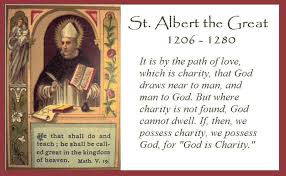
Feast of St. Albert the Great (November 15): Patron Saint of Scientists

St. Albert the Great, Patron Saint of Scientists

St. Albert the Great, Patron Saint of Scientists

Today is the Feast of St. Albert the Great who, along with St. Dominic, are the patron Saints of scientists.  In honor of this Feast Day, I am going to restate much of what I wrote on August on the Feast Day of St. Dominic. Specifically, it is a perfect opportunity to correct the false but unfortunately common perception that there is a conflict between science and religion.  Part of the reason for that is the poor state of knowledge of both science and theology in the modern world.  One of the purposes of this blog is to promote the mutually reinforcing methods of finding ultimate Truths through faith and science.

Religion in general and Christianity in particular has long been supportive of science, from the beginnings of the modern scientific method in the Middle Ages to the scientific advancements of the last 100 years.  Set forth below are selective examples of leading scientists who were either clerics or devout lay Christians over the centuries:

Nicolaus Copernicus (1473-1543). A brilliant man and a Catholic monk, Copernicus held important positions in both secular and ecclesiastical government, all the while writing voluminously. A sophisticated economic thinker, Copernicus was the first to propose that increases in the money supply have a tendency to drive price inflation. But what he is remembered for today is his heliocentric theory of the solar system. Through patient observation and calculation, Copernicus displaced the earth from the center of things, reorienting the way we view everything and thereby ushering in the modern world.

Johannes Kepler (1571-1630). Kepler was a brilliant mathematician and astronomer. He did early work on light, and established the laws of planetary motion about the sun. He also came close to reaching the Newtonian concept of universal gravity – well before Newton was born! His introduction of the idea of force in astronomy changed it radically in a modern direction. Kepler was an extremely sincere and pious Lutheran, whose works on astronomy contain writings about how space and the heavenly bodies represent the Trinity.

Blaise Pascal (1623-1662).  Pascal was a Catholic French mathematician, physicist, inventor, writer and theologian. In mathematics, he published a treatise on the subject of projective geometry and established the foundation for probability theory. Pascal invented a mechanical calculator, and established the principles of vacuums and the pressure of air. Pascal also published several theological works beginning with Lettres provinciales, in 1656. His most influential theological work, the Pensées (“Thoughts”), was a defense of Christianity, which was published after his death. The most famous concept from Pensées was Pascal’s Wager. Pascal’s last words were reported to be “May God never abandon me.”

Robert Boyle (1627-1691).  Boyle gave his name to “Boyle’s Law” for gases, and is regarded as the father of modern chemistry.  As a devout Christian, Boyle took a special interest in promoting the Christian religion abroad, giving money to translate and publish the New Testament into Irish and Turkish. In 1690 he developed his theological views in The Christian Virtuoso, which he wrote to show that the study of nature was a central religious duty.” Boyle wrote against atheists in his day (the notion that atheism is a modern invention is a myth), and was clearly much more devoutly Christian than the average in his era.

Michael Faraday (1791-1867).  Michael Faraday was the son of a blacksmith who became one of the greatest scientists of the 19th century. His work on electricity and magnetism not only revolutionized physics, but led to much of our lifestyles today, which depends on them (including computers and telephone lines and, so, web sites). Faraday was a devout Christian which significantly influenced him and strongly affected the way in which he approached and interpreted nature.

Gregor Mendel (1822-1884).  Mendel was an Augustinian monk and professor of natural philosophy and eventually became the abbot of his monastery. And today he is recalled for his path-breaking studies of pea plants which showed the existence of recessive and dominant genes, an essential cornerstone of modern genetics.

Pierre Teilhard de Chardin, S.J.  (1881-1955).   My personal favorite.  Teilhard de Chardin was a Jesuit priest, paleontologist and geologist from the early 20th century.  Teilhard de Chardin’s primary field of study was human evolution.  Teilhard de Chardin was a leader of the team that discovered the Peking Man, now known as Homo Erectus, in 1929.  Teilhard worked hard to integrate his scientific findings into a broad vision of Christianity.  Although Teilhard had some disagreements with the Church during his lifetime on the theological implications of evolution, the Church fully supported and encouraged Teilhard’s scientific research and publications.  Today, Teilhard’s core ideas on the marriage of evolution (both cosmic and biological) and theological evolution (all of natural and spiritual creation is evolving towards a deeper union with God) is accepted as part of mainstream Christian theology.

Georges Lemaître (1894-1966).  Known as the “father of the big bang,” Lemaître was a Belgian priest who first developed the theory of that the Universe originated in an instant flash now known as the Big Bang.  Fr. Lemaître did his graduate work in theoretical physics at Cambridge University and Harvard. In 1927, while still a junior lecturer at the Catholic University of Louvain, he proposed an expansionary theory of the universe at odds with the then-prevailing belief that the universe had always existed in a steady state. Four years later, in 1931, he asserted that the entire universe began with what he called a “cosmic egg” or “primeval atom”.  This theory was ridiculed by leading scientists of the time such as Albert Einstein and Sir Fred Hoyle (the latter derisively dismissed Lemaître’s theory as “the big bang”). Later that same year, Fr. Lemaître argued that not only was the universe expanding, its expansion was accelerating in speed. While it has taken decades, Lemaître’s theories have been confirmed in every major particular.

John Polkinghorne (1930 – Present).  Dr. Polkinghorne is an English theoretical physicist, theologian, writer, and Anglican priest. He was professor of Mathematical physics at the University of Cambridge from 1968 to 1979, when he resigned his chair to study for the priesthood, becoming an ordained Anglican priest in 1982. He served as the president of Queens’ College, Cambridge from 1988 until 1996. Polkinghorne is the author of five books on physics, and 26 on the relationship between science and religion; his publications include The Quantum World (1989), Quantum Physics and Theology: An Unexpected Kinship (2005), Exploring Reality: The Intertwining of Science and Religion (2007), and Questions of Truth (2009).

Francis Collins (1950 – Present).  Dr. Collins is an American physician-geneticist noted for his discoveries of disease genes and his leadership of the Human Genome Project (HGP).  Collins led one of the groups to first sequence the human genome. He currently serves as Director of the National Institutes of Health in Bethesda, Maryland.  Prior to being appointed Director, he was the founder and president of the BioLogos Foundation, an organization which promotes discourse on the relationship between science and religion and advocates the perspective that belief in Christianity can be reconciled with acceptance of evolution and science.  Collins also wrote the New York Times bestseller, The Language of God: A Scientist Presents Evidence for Belief, which discusses Collins’ conversion from atheism to Christianity, evaluates the evidence for Christianity, and argues for theistic evolution. In 2009, Pope Benedict XVI appointed Collins to the Pontifical Academy of Sciences.

Guy Consolmagno, S.J.  (1952 – Present).  Fr. Guy Consolmagno is an astronomer at the Vatican Observatory, where he also serves as curator of the Vatican Meteorite collection, positions he has held since then. In addition to his continuing professional work in planetary science, he has also studied philosophy and theology. His research is centered on the connections between meteorites and asteroids, and the origin and evolution of small bodies in the solar system. In addition to over 40 reviewed scientific papers, he has co-authored several books on astronomy for the popular market, which have been translated into multiple languages. An asteroid was named in his honor by the International Astronomical Union, IAU in 2000: 4597 Consolmagno, also known as “Little Guy”. Fr. Consolmagno believes in the need for science and religion to work alongside one another rather than as competing ideologies. In 2006, he said, “Religion needs science to keep it away from superstition and keep it close to reality, to protect it from creationism, which at the end of the day is a kind of paganism – it’s turning God into a nature god.”

Set forth below are additional resources on the intersection of faith and science:

Magis Center for Reason and Faith
The Catholic Laboratory
BioLogos Foundation
God and Science
Stacy Trasancos Blog
God of Evolution
Quantum Theology Blog
Wikipedia List of Christian Thinkers in Science
Wikipedia List of Jesuit Scientists
Wikipedia List of Quaker Scientists

Posted in Reason and Faith, Uncategorized | Tagged , , , , , , , , , , , , , , , , , , , , , , | 10 Comments

Authentic Spiritual Freedom from Disordered Attachments

spiritual_freedom

This week I started an online Ignatian Retreat. So far so good, although I have not been able to devote as much time to prayer and meditation as I hoped for. One of the themes this week is on Spiritual Freedom. A copy of the reflection is set forth below:

Spiritual Freedom

Spiritual freedom is an interior freedom, a freedom of the mind and heart. People who are spiritually free know who they are—with all of their gifts and limitations—and are comfortable with who they are.

However, we have numerous preoccupations that get in the way of our hearing and responding to God’s call: fears, prejudices, greed, the need to control, perfectionism, jealousies, resentments, and excessive self-doubts. These tendencies bind us and hold us back from loving God, ourselves, and others as we ought to. They create chaos in our souls and lead us to make poor choices.

Lacking spiritual freedom, we become excessively attached to persons, places, material possessions, titles, occupations, honors, and the acclaim of others. These things are good in themselves when ordered and directed by the love of God. They become disordered attachments when they push God out of the center of our lives and become key to our identity.

A Prayer for Spiritual Freedom

The Grace I Seek

I pray for the following graces: to grow in interior freedom; to become more aware of disordered attachments that get in the way of loving God, others, or myself.

This theme fits nicely as Lynda, one of the most loyal and insightful commentators on this blog had another magnificent contemplative gem for me:

“Thinking about a cosmic consciousness and being aware of my own experiences of feeling part of something much greater is a source of freedom of spirit. The more I learn, the greater the freedom I experience and the more I realize “the importance of the Whole”.”

This brought me back to a reflection I did this summer on the 13th Sunday of Ordinary Time on authentic Christian freedom vs. what 21st century Western society considers freedom:

One of the comments I hear from people (both non-believers and believers) on religion in general and Christianity in particular is that it is a stifling set of rules that limit human freedom.  These people view commitment to a belief system and person freedom as incompatible.  This view reflects an incomplete view of freedom.

True freedom involves the interior spirituality to live as God intended you to live.  The Christian sense of freedom (which is shared by non-Christian religions such as Judaism, Islam, Buddhism and Hinduism) involves orienting one’s life towards God with a radical detachment from anything that gets in the way of this goal such as money, property, status, success, achievements, ego and the like.  This message is very counter-cultural, especially for advanced Western societies that value wealth, status and material possessions.  This message is also very different than so-called Christians who promote the gospel of “health and wealth”.  The truly free person is someone who is indifferent as to these matters and, to the extent they have them, use them as tools to serve God and others rather than as ends in and of themselves.  That is why there is an increasing rate of depression and mental health issues in Western Society; we are treating wealth, status and physical desires as ends rather than as a means to serving God.  

St. Paul summarized what true freedom means in today’s wonderful reading to the Galatians:

For freedom Christ set us free; so stand firm and do not submit again to the yoke of slavery.  For you were called for freedom, brothers and sisters.  But do not use this freedom as an opportunity for the flesh; rather, serve one another through love.  For the whole law is fulfilled in one statement, namely, You shall love your neighbor as yourself.

The free person does exactly what he wants because what he passionately wants is a world of truth, and caring, and sharing, and inner security and peace. Of course, he does not always get these things from others because they do not share his vision but he sees that as their problem rather than his.

And so we find this freedom in people such as Jesus, in Elisha, in Paul. More recently we found it in the lives of people like Martin Luther King, Jr., Bishop Oscar Romero and Blessed Mother Teresa. They said an unconditional ‘Yes’ to Jesus and had a radical indifference to the values of wealth, status and power that permeate our world.

Posted in Ignatian Spirituality | Tagged , , , , , , , | 11 Comments

God, Evolution, Teilhard de Chardin and the Problem of Innocent Suffering

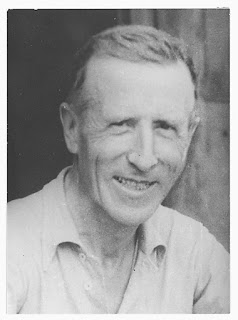
Richard W. Kropf

Richard W. Kropf

One of the biggest challenges to the concept of the Christian God is the problem of evil and the suffering of innocents. People have been trying to reconcile an all-loving, all-powerful God with the existence of evil since the first revelation of monotheism. The Book of Job is a classic work on the problem of theodicy, but like all explanations, Job is not entirely satisfying intellectually or emotionally.

The most recent example of this problem is the devastation in the Philippines as a result of Typhoon Haiyan.  Like many others around the world I watch in horror at the pictures of death and suffering of millions of innocent people. How can an all-powerful, all-loving God let this happen? In my opinion, this problem is the only rational argument in favor of atheism (but it is ultimately outweighed by the massive amount of evidence in favor of God).  Teilhard de Chardin wrote a lot on suffering in part because of his personal experiences with suffering in World War I and the early death of many of his siblings. Teilhard viewed suffering as an inherent component of the evolutionary universe. As Nathan O’Halloran, SJ describes:

“God, who is existence itself, decides to create finite being, being that can only become perfect by means of change and growth, there will necessarily be statistical evil.  All finite being necessarily involves suffering, insofar as it involves change and movement toward perfection.  Teilhard sees the movement of Creation as one from the multiple to the unitary.  This process requires suffering and death.”

Theologian, author and retired priest, Richard W. Kropf, another Teilhard scholar, had an interesting article earlier this week in the Huffington Post. Kropf has been a parish priest and academic scholar in Europe before retiring early to become a contemplative in Northern Michigan.  Kropf has written numerous books on theology, ecology, science and faith and Teilhard de Chardin.  You can find some other writings by Kropf on his website.

In the Huffington Post article, Kropf has a slightly different angle how an evolutionary theology accounts for innocent suffering:

“[A]s a theologian, I had long been puzzled by the problem of evil in the world. “When Bad Things Happen To Good People”, as Rabbi Harold Kuschner titled his best selling book, must it not be that maybe God isn’t as good as we think? Or might it not be that God is not as all-powerful as we once thought?

After I began reading, back in the late 1950s, the works of the French Jesuit paleontologist, Pierre Teilhard de Chardin (1881-1955), who devoted his life to reconciling evolution with Christian beliefs, one of the things that struck me most about the theory of evolution is that it gives us an “out” that takes God “off the hook”, so to speak, when it comes to the dilemma stated above. How can this be? So back around 1978 I began working on a book I called Evil and Evolution that was first published in 1984, then updated for a paperback edition in 2004.

As I reasoned and summarized it in an article I wrote in 2000, if God saw it fit that humans evolved from “lower” forms of life, then it must be that the same laws of nature that produced these other forms are also at work in us. But we know that evolution works on the basis of two principles: first, random mutation, and second, the principle of natural selection or “survival of the fittest”. While lately most of the argument has been over the latter principle (fittest individuals, fittest species, or fittest genes?) it is the first principle that is most important in regard to my thesis. Although it has been our large brains and capacity for reasoning that has enabled the human species to not only survive and to advance beyond the other animals, it has been the randomness, the “chanciness” that is built into the process that seems to be the key to our capacity for free will. For one, without the working of chance producing endless variety in the universe, what would be left to choose?”

Yet there is a lot more to it than that. Just as our distinct ability for reflective awareness (to not only know, but “to know that we know” as Teilhard often put it) depends on the sensory awareness that we share with the animal world, so too our ability to make firm decisions (free will properly speaking) depends on our ability to be reflectively aware of all the implications of what would be otherwise simply instinctive choice. In other words, unless the Creator had given chance a role in creation, we would have all turned out to be robots!

I admit that I do not find this answer entirely convincing but it is interesting enough that I purchased Kropf’s book “Evil and Evolution to learn more on Kropf’s theory. I am likely to be pleased as I had previously read two of Kropf’s books, “Teilhard, Scripture and Revelation” and “Logical Faith: Introducing a Scientific View of Spirituality and Religion” (co-written with Joseph Provenzano). 

What are your thoughts on the problem of suffering?  We have previously had an interesting discussion with one of the athiest friends of the blog on this issue. I would love to hear insights of others who have better answers than I have been able to come up with.

Posted in Uncategorized | Tagged , , , , , , , , , , , , , , | 20 Comments