Life of Teilhard de Chardin: Writing and Research in France (1918-1923)

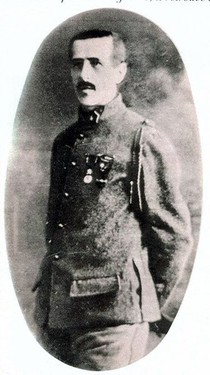
Geological Expedition to la Fere (Aisne), France, May 1920. Teilhard de Chardin is the one in the center.

Geological Expedition to la Fere (Aisne), France, May 1920. Teilhard de Chardin is the one in the center.

After World War I, Teilhard de Chardin recuperated which gave him the time to develop his thoughts.  Two of the essays that he wrote in late 1918 and early 1919 highlight the tension that he faced his entire life.   On one hand, Teilhard was an orthodox Catholic priest who had a deep love of Christ and reached back to the earliest Christians in St. Paul, St. John the Evangelist and St. Irenaeus for expressions of his thoughts.  On the other hand, although Teilhard was always loyal to his vows of obedience, he often had a rocky relationship with the Church hierarchy during his lifetime (which was later rectified posthumously by leading clerical theologians such as Pope Benedict XVI and Cardinal Henri de Lubac).

The first trait was apparent in L’Element Universel which he wrote in 1919.  This essay was not intended for publication but it represents his most concentrated exposition of his doctrine to date.  In this essay, he outlined his own journey in three stages to understanding God.  First, he had recognized the organization and beauty of the created universe provides “immediate and tangible reality of a divine will”.  Teilhard was very critical of pantheism saying it was irrational as it presupposed “two contradictory properties, necessity and contingence.”  Second, Teilhard drew upon his Ignatian training and their belief in ‘finding God in all things’ to recognize the creative action of God in everything that moved or existed.  But there still remained between the human soul and God “a hiatus, a gap, a coldness — the distance separating the necessary Being” with its human creation.  For his third stage, Teilhard reached back to St. Paul for his concept of the universal and cosmic Body of Christ.  It was through assisting the world reach its potential that one came to Christ.

The second trait was evidenced in his private 1919 memorandum addressed to his Jesuit superiors, in which he challenged the Church to be more engaged in the world.  According to Robert Speaight:

“[Teilhard] pleaded that if St. Ignatius were right in reminding the Christian of his duty to ‘feel with Mother Church’, it was equally the duty of Mother Church to ‘feel with mankind’. It was ridiculous for the clergy to spend their time in the ‘beatification of a Servant of God’, in the propagation of special devotions, and on the minutiae of funeral rites, when they should be preaching and practicing ‘the Gospel of human effort’. The present business of the Church was to meet the reproach that it produced ‘souls interested in their own selfish advantage, uninterested in the common task; and therefore uninteresting’ to those which accorded a primacy of . . . ‘labor over detachment’.  The Christian and the human ideals no longer coincided; this was the ‘great schism’ which now threatened the Church.  Teilhard asked for priests [editors note: and presumably nuns, other religious and strong Christian lay persons] who would devote themselves to science or sociology as part of their vocation, and who would not be afraid to let their fellow-workers see that they too experienced ‘the richness and the anguish of doubt‘. ” (Robert Speaight, “The Life of Teilhard de Chardin, pp. 99-100).

Ironically, the institutional Church would follow the advice above with respect to Teilhard.  During the upcoming years, the Church stifled Teilhard’s desire to publish his thoughts on the synthesis on theology and science and encouraged him to focus on serving God through his vocation as a scientist, at which he excelled.  In February 1919, he received a letter from his superiors suggesting he return to France and devote himself to geology.

After returning to Paris, Teilhard continued his studies with Marcellin Boule in the phosphorite fossils of the Lower Eocene period in France. Extensive field trips took him to Belgium where he also began to address student clubs on the significance of evolution in relation to current French theology. By the fall of 1920, Teilhard had secured a post in geology at the Institute Catholique and was lecturing to student audiences who knew him as an active promoter of evolutionary thought.  In 1922 Teilhard received a Doctorate with Distinction and was elected president of the Geological Society of France.  Teilhard was now recognized as a master in his field and was consulted by his peers.

Teilhard continued to forcefully speak and write on the symbiotic relationship between evolution and Christianity.  During this period, he wrote:

“Without biological evolution which produced the brain, there would be no sanctified souls; similarly, without the evolution of collective thought which alone can realize on earth the fullness of human consciousness, could there be a consummated Christ? “

There were rumblings of an approaching storm with the Roman curia becoming more conservative around this time.  The Church did not have a problem with the scientific theory of evolution; however, it expressed concern about making this theory a presupposition to Catholic theology, which some of the Church hierarchy (incorrectly) thought was the teachings of Teilhard de Chardin.  Nevertheless, the climate in ecclesiastical circles towards the type of work that Teilhard was doing gradually convinced him field work in geology paleontology would not only help his career but would also quiet the controversy in which he and other French thinkers were involved.

The opportunity for field work in China had been open to Teilhard as early as 1919 by an invitation from the Jesuit scientist Emile Licent who had undertaken paleontological work in the environs of Peking. On April 1, 1923, Teilhard set sail from Marseille bound for China. Little did he know that this “short trip” would initiate the many years of travel to follow.
Sources:
Robert Speaight, “The Life of Teilhard de Chardin
JimDo public website
American Teilhard Association
Wikipedia
Posted in Uncategorized | Tagged , , | Leave a comment

The Prayerful Beauty of Silence

silence_god

Today is the last day of my Silent Retreat and I am about to reenter the world, starting with what will be chaotic Board meeting.  I will remember the experiences and the silence of the last few days.  As Andy Otto cites in his outstanding Ignatian Spirituality blog, “God in All Things“:

“Silence ‘is difficult, not only because in silence does the Spirit surface, but also my past surfaces in silence, especially the unresolved areas.’  This mixture of God’s presence with one’s own history can prove to be an uncomfortable challenge. Some of the thoughts and emotions which tend to surface during these periods are things which can be categorized as ‘the things I can’t tell myself.’ For example, the truth that one is lonely, afraid, or angry. These and other items which one has ‘pushed to the background begin to surface as one descends into silence. . . Silence can be a great spiritual practice, revealing things in one’s own heart, spirituality, and relationships.  (Andy Otto, quoting Una Agnew where designated).

You can find more on Andy Otto’s reflections on the Beauty of Silence on his wonderful blog on Ignatian Spirituality, “God In All Things“.

Posted in Uncategorized | Tagged , , | Leave a comment

Scientific Potpourri

130626101023-eso-habitable-planets-horizontal-gallery

Here are some top stories from cosmology, astronomy and evolutionary biology in the past couple of weeks.

Newly Found Planets Might Support Life. From CNN: Astronomers now are upping the likelihood that their may be other inhabitable planets, announcing that they’ve identified a star system with up to seven planets — three of which could potentially host life — 22 light-years away. The likelihood that conditions could support life on at least one of those planets, given that there are three terrestrial-mass planets in the habitable zone of one system, is “tremendous,” according to at least one scientist. [Editor’s Note: This is definitely an interesting find but there is much more to the conditions that support organic life than being in a hospitable zone]

Kepler Data Reveal First Transiting Planets in a Star Cluster. From NASA: Astronomers have found two planets smaller than three times the size of Earth orbiting sun-like stars in a crowded stellar cluster approximately 3,000 light-years from Earth in the constellation Cygnus. This finding demonstrates that small planets can form and persist in a densely packed cluster environment, and implies that the frequency and properties of planets in open clusters are consistent with those of planets around field stars not associated with clusters, like our sun, in the galaxy.

NASA Telescope to Probe Long-Standing Solar Mystery.  From Reuters:  A small NASA telescope was launched into orbit on Thursday on a mission to determine how the sun heats its atmosphere to millions of degrees, sending off rivers of particles that define the boundaries of the solar system.  Scientists have been trying to unravel the mechanisms that drive the sun for decades but one fundamental mystery endures: How it manages to release energy from its relatively cool, 10,000 degree Fahrenheit (5,500 degree Celsius) surface into an atmosphere that can reach up to 5 million degrees Fahrenheit (2.8 million Celsius).

NASA Probe Finds New Zone at Doorstep to Interstellar Space.  From Reuters: Reports last summer than NASA’s long-lived Voyager 1 space probe had finally left the solar system turned out to be a bit premature, scientists said on Thursday.  Rather, the spacecraft, which was launched in 1977 for a five-year mission to study Jupiter and Saturn, has found itself in a previously unknown region between the outermost part of the solar system and interstellar space.

How Dinosaur Switched From Four Feet to Two.  From Science Daily:  Tracking the growth of dinosaurs and how they changed as they grew is difficult. Using a combination of biomechanical analysis and bone histology, palaeontologists from Beijing, Bristol, and Bonn have shown how one of the best-known dinosaurs switched from four feet to two as it grew.

Cloud Behavior Expands Habitable Zone of Alien Planets.  From Science Daily:  A new study that calculates the influence of cloud behavior on climate doubles the number of potentially habitable planets orbiting red dwarfs, the most common type of stars in the universe. This finding means that in the Milky Way galaxy alone, 60 billion planets may be orbiting red dwarf stars in the habitable zone.


Posted in Reason and Faith | Tagged , , , , , | Leave a comment

Sunday Reflection; 14th Sunday of Ordinary Time (July 7, 2013) (Peace in Christ)

harvests

Today is the 14th Sunday in Ordinary Time.  Today’s reflection comes from Father Albert Lakra, pastor of St Elizabeth of Hungary Catholic Church at John Day, Oregon USA.  Fr. Lakra reflects on the themes of peace contained in this week’s readings.  I encourage you to read the full homily here, but below are key items for reflection:

Theme of Peace

One word that occurs and is repeated in all the three readings of today is “peace.” Isaiah, in the First Reading, speaks of God sending ‘flowing peace, like a river.’ Paul, in the Second Reading, speaks of the peace and mercy that come to all who become that transformed person in Jesus Christ. And, in the Gospel, Jesus sends his disciples as lambs in the midst of wolves, and tells them to proclaim peace and to bring peace with them to every house they enter. This peace is not merely the absence of war or maintaining a balance of power between adversaries. This peace is not dependent on outside circumstances. It can exist even when we are surrounded by storms. It is the tranquility of order, it is the effect of justice and it is the effect of charity. And we all are called today to be peace-bearers.

First Reading: River of Peace

In the First Reading of today, the Prophet Isaiah announces that the Messianic era will be characterized by its abundance of divine gift – it will be ‘like a torrent of peace, like an overflowing stream.’ It is to be an era that will gather together everything that is good – joy, happiness, consolation and the prosperity promised by God when Jerusalem was restored after the Babylonian exile. Here, the prophet sees the blessing in store for his people. They will know the joy of being God’s special people.

The holy city is like their mother. This is the image used in today’s reading to tell the Israelite people how happy they will be when Jerusalem is restored. She knows how much they have suffered in exile. Now she will comfort and nourish them. It states, “That you may nurse and be satisfied from her consoling breasts; that you may drink deeply with delight from her glorious bosom.

Here, we are left with images of tenderness and cherishing and are given glimpses of a new way of seeing God. God is a God of might and power who delivers His people from exile and slavery – God as Father who will protect and defend His children. But God also protects and nurtures and, today, Isaiah offers us images of the Motherhood of God – “As a mother comforts her child, so will I comfort you.” Isaiah refers in these words to the Messiah, the bearer of that peace which is, at one and the same time, grace & eternal salvation for each individual and for the whole people of God. The new Jerusalem is an image of the Church and each one of us.

Gospel:  Disciples on a Mission

We are told that Jesus appointed seventy disciples and sent them on ahead of him two by two to every town and place where he himself intended to go.  The number ‘seventy’ here, has a symbolic reference. It refers to the seventy nations descended from Noah described in the Book of Genesis, to the number of the elders chosen by Moses with the task of leading and directing people in the wilderness, to the number of the Sanhedrin – the supreme council of the Jews. Moreover, seventy was also the number of the nations in the world considered at the time. Doesn’t it speak of the universal character of Jesus’ mission? Jesus sends all his disciples out in every direction to proclaim his Good News.

Secondly, Jesus sends out his disciples ‘two by two’  in pairs, not as isolated individuals, but with a companion to share the journey with all its joys and sorrows. The number two also adds to the witness value which required the testimony of two people. Moreover, the sending out in twos mirrors the fact that God has sent His Son and His Spirit to reveal himself to us. A preaching community is a powerful sign not only through its words or works but also through the way that the members of the community relate to each other, through divinely-inspired love. In a sense, love is the proper language of mission for it is the language of God. When we live in the world as members of the body of Christ we are cemented together by the Spirit of love.

Posted in Sunday Reflections | Tagged , , , , , | Leave a comment

Teilhard de Chardin Quote of the Week (July 1, 2013): Big Christianity

big_bang12

“A Christ without historical personification would not be capable (either in fact or reason) of emerging from metaphysical abstractions or hypotheses.  The success of the Christ of Christianity is due to the association of his birth (which gives him the value of a fact or a concrete element in the world) and his resurrection (which lets us grant him superhuman and, as it were, cosmic attributes). . . Christ must be endowed with certain physical properties — theandric as theology puts it — radically different from those of a simple prophet — who is a vehicle of truth without being in the least a center which organizes the universe.  Christ must always be far greater than our greatest conceptions of the world, but for two or three centuries we have allowed him to appear hardly equal to them, or even smaller.  That is why Christianity is so anemic at the present moment.” (emphasis added).

— Letter to Pierre Lamare, January 1, 1930 (quoted in Robert Speaight, “The Life of Teilhard de Chardin“)

Posted in Teilhard Quote of the Week | Tagged | 2 Comments

The Serenity of a Silent Retreat for Busy People

My View Over the Next Five Days

My View Over the Next Five Days

For the next few days, I will have the good fortune of being at the Jesuit Retreat House in Oshkosh, Wisconsin for a silent retreat.  This is one of my favorite places in the entire world and truly a cocoon where I can get away from my daily life, spend time in deep contemplation and prayer, and refresh my body and soul.

The contrast between the retreat and my normal life could not be more stark.  I am a “Type A” personality.  I have a demanding profession where I constantly need to be plugged in and available via cell phone, e-mail, text, etc.  I am one of those people that is always on my iPhone.  I sleep with my iPad and iPhone next to my bed and not infrequently do I awake in the middle of the night thinking about some problem at work and send off a quick e-mail or note to a client or colleague.  I recognize that this behavior is not necessarily normal or healthy but after 20 years it is hard to disengage.

I have developed a fairly solid prayer life and routine, loosely based around a modified Daily Office and weekday Mass 1-2 times a week.  However, other than those brief respites or my occasional five-second resettings in The Divine Milieu, I am constantly on the go between work and two growing boys.  That is why the retreat is so refreshing as it truly allows me to get away from the distractions of everday life and develop a more personal relationship with God.  Until a couple of years ago, I thought I did not have the time for a retreat like this.  After experiencing it, I can not imagine going without.

[Editor’s Note:  As I will be on a Silent Retreat the next few days, I have pre-published the next several blogposts.  I may not be able to approve or respond to comments immediately so please be patient].

Posted in Uncategorized | Tagged , , | 3 Comments

The Skepticism of St. Thomas and Finding Faith Through Doubt

St. Thomas

St. Thomas

St. Thomas is one the apostles I can most easily identify with due to his skepticism on the resurrection of Jesus:

“Unless I see the mark of the nails in his hands and put my finger into the nailmarks and put my hand into his side, I will not believe.”

This type of statement is what I likely would have said if I was St. Thomas:

“I had put my whole life into believing a charasmatic leader that I thought was going to be a prophet to lead Israel to freedom from Roman occupation.  My leader was summarily executed during Passover by the Roman authorities.  I was afraid for my life.  My colleagues were delusional, taking about “seeing our leader”.  That was impossible.  I saw him crucified.  I am a pious Jew.  People do not rise from the dead, except perhaps at the end of times.  Peter, John mentally ill and seeing things that cannot exist.  I have no occupation or home to return to, and I am surrounded by crazy people.”

Such thoughts must have been going through the minds of St. Thomas . . . until everything changed when he saw the Risen Christ.  The story of Christianity has been around for 2,000 years and has become so familiar that we are desensitized to its profoundly shocking origins and message.  Many believers take the Christian story for granted and non-believers view it as a collection of superstitious myths that should be relegated to history.  The story of St. Thomas reminds us that the Christian story of God becoming Incarnate in the form of a poor peasant from a backwater town in the Roman Empire, having a short public ministry, being executed in a gruesome manner and rising in a new spiritual and material form was as absurd to the original disciples as it would sound to us today.  In fact it is so absurd, if there were not hundreds of personal witnesses who have changed their life in ways that are counter-intuitive, it would not be believable.

For St. Thomas, it was not believable, so he publicly questioned those who claimed it was.  Ultimately, the Risen Christ appeared to Thomas and he believed.  However, the lesson is that it is important to ask questions and to confront our doubts, as these doubts can lead us to a deeper understanding of our faith and a deeper relationship with Christ.  As Pope Benedict XVI said about Thomas in his wonderful reflections on the apostles:

“his question also confers upon us the right, so to speak, to ask Jesus for explanations. We often do not understand him. Let us be brave enough to say: “I do not understand you, Lord; listen to me, help me to understand.”  In such a way, with this frankness which is the true way of praying, of speaking to Jesus, we express our meager capacity to understand and at the same time place ourselves in the trusting attitude of someone who expects light and strength from the One able to provide them.” (Benedict XVI, Pope (2011-03-04). Jesus, the Apostles and the Early Church (pp. 92-93). Ignatius Press. Kindle Edition).

We knew very little about the historical life of St. Thomas.  According to tradition, his evangelization covered a large territory, eventually reaching India.  Thomas reached Muziris, India in 52 AD and baptized several people who are today known as Saint Thomas Christians or Nasranis. After his murder and death by spear in India, the remaining relics of Saint Thomas the Apostle were enshrined as far as Mesopotamia in the 3rd century, and later moved to various places. In 1258 they were brought to Abruzzo, in Ortona, Italy, where they have been held in the Church of Saint Thomas the Apostle. He is often regarded as the Patron Saint of India, and the name Thomas remains quite popular among Saint Thomas Christians of India.

Tradition holds that St. Thomas was killed in India in 72 AD, attaining martyrdom at St. Thomas Mount near Mylapore (part of Chennai, capital of Tamil Nadu). He was buried on the site of Chennai’s San Thome Basilica in the Dioceses of Saint Thomas of Mylapore. The Acts of Thomas and oral traditions (only recorded in writing centuries later) provide weak and unreliable evidence but the tradition is that Thomas, having aroused the hostility of the local priests by making converts, fled to St. Thomas’s Mount four miles southwest of Mylapore. He was supposedly followed by his persecutors, who transfixed him with a lance as he prayed kneeling on a stone. His body was brought to Mylapore and buried inside the church he had built. The present Basilica is on this spot. 

Posted in Embracing Doubt and Mature Faith, Uncategorized | Tagged , , | 6 Comments

31 Days with Saint Ignatius

I was going to do a post on the Ignatian 31 day countdown to the Feast of St. Ignatius of Loyola on July 31.  Ignatian prayer had a profound influence on the attitude and ideas of Pierre Teilhard de Chardin.

I found out that Fran Rossi Szpylczyn of the outstanding blog “There Will Be Bread” had already done one so rather than duplicate efforts I will borrow from her. I encourage you to check out other posts from her outsanding blog.

Fran Rossi Szpylczyn's avatarThere Will Be Bread

9388_10151703982151450_1218080999_nJuly 31 is the feast day of Saint Ignatius of Loyola, founder of the Jesuits. If you were not familiar with the Jesuits before, the election of Pope Francis, who is a Jesuit, may have raised your consciousness about them.

The Society of Jesus, the full name of the Jesuit order,  have a long and important history in the Church, but that is not what I am here to share today. As the image above points to, July brings us 31 Days with Saint Ignatius from Loyola Press. You will also notice a link to this in the sidebar of this blog. I hope that you will follow along with the different Ignatian inspired posting for each day.

Today’s post is about the Examen, and I highly recommend it. And while I am a day late, don’t take that as a signal to miss the post…

View original post 56 more words

Posted in Uncategorized | Tagged , , , , | Leave a comment

Life of Teilhard de Chardin: War Years (1914-1918): Finding God in Suffering

Pierre Teilhard de Chardin, 1918

Pierre Teilhard de Chardin, 1918

When the war came in August, Teilhard returned to Paris to help Boule store museum pieces, to assist cousin Marguerite turn the girl’s school she headed into a hospital, and to prepare for his own eventual induction.  Teilhard’s induction was delayed, and his Jesuit Superiors decided to send him back to Hastings for his tertianship, the year before final vows.  At Hastings, Teilhard made the “long retreat” or the 30-day silent retreat focused on the Spiritual Exercises of St. Ignatius of Loyola that is a central component of Jesuit training.  Undoubtedly, this experience of solitude and spiritual direction was a defining moment on forming Teilhard’s personal relationship with God.  

Teilhard is sometimes criticized as being insensitive to suffering and death, both in his theology and his personal correspondence.  This criticism is misplaced.  Teilhard both witnessed and knew first-hand immense physical and personal suffering, from having six of his siblings die prematurely, to witnessing the carnage of the trenches in World War I to being prohibited from publishing his life’s work of synthesizing traditional Catholic theology with evolutionary biology.  Despite this immense personal suffering, he maintained an optimism and healthy perspective that others attribute to insensitivity.  Although I did not know Teilhard, I attribute his optimism to a deep relationship with God, tattooed in his spirit by the 30 long retreat.  After that experiences, Teilhard was able to view all suffering in light of the ultimate purpose of growing closer to the Cosmic Christ.  Teilhard viewed suffering as a potential to accelerate the Kingdom of God:

What a vast ocean of human suffering spreads over the entire earth at every moment! Of what is this mass formed? Of blackness, gaps, and rejections. No, let me repeat, of potential energy. In suffering, the ascending force of the world is concealed in a very intense form. The whole question is how to liberate it and give it a consciousness of its significance and potentialities.

The world would leap high toward God if all the sick together were to turn their pain into a common desire that the kingdom of God should come to rapid fruition through the conquest and organization of the earth. All the sufferers of the earth joining their sufferings so that the world’s pain might become a great and unique act of consciousness, elevation, and union. Would not this be one of the highest forms that the mysterious work of creation could take in our sight?

Could it not be precisely for this that the creation was completed in Christian eyes by the Passion of Jesus? We are perhaps in danger of seeing on the cross only an individual suffering, a single act of expiation. The creative power of that death escapes us. Let us take a broader glance, and we shall see that the cross is the symbol and place of an action whose intensity is beyond expression. Even from the earthly point of view, the crucified Jesus, fully understood, is not rejected or conquered. It is on the contrary he who bears the weight and draws ever higher toward God the universal march of progress. Let us act like him, in order to be in our existence united with him. (“The Significance and Positive Value of Suffering,” quoted in Human Energy, HarperCollins)

The suffering Teilhard described was not an abstract suffering.  Unfortunately, the carnage of World War I would soon hit the Teilhard de Chardin family.  Two months after Teilhard completed his 30 day Long Retreat, Teilhard learned that his younger brother Gonzague had been killed in battle near Soissons.  

Shortly after this Teilhard received orders to report for duty in a newly forming regiment from Auvergne. After visiting his parents and his invalid sister Guiguite at Sarcenat, he began his assignment as a stretcher bearer with the North African Zouaves in January 1915.  At his request he was sent to the front and also became chaplain.  Teilhard carried the Blessed Sacrament wherever he went, and celebrated Mass in a variety of suboptimal circumstances.   

The powerful impact of the war on Teilhard is recorded in his letters to his cousin, Marguerite, now collected in The Making of a Mind. They give us an intimate picture of Teilhard’s initial enthusiasm as a “soldier-priest,” his humility in bearing a stretcher while others bore arms, his exhaustion after the brutal battles at Ypres and Verdun, his heroism in rescuing his comrades of the Fourth Mixed Regiment, and his unfolding mystical vision centered on seeing the world evolve even in the midst of war. In these letters are many of the seminal ideas that Teilhard would develop in his later years. 

Through these nearly four years of bloody trench fighting Teilhard’s regiment fought in some of the most brutal battles at the Marne and Epres in 1915, Nieuport in 1916, Verdun in 1917 and Chateau Thierry in 1918. For his bravery Teilhard was awarded the Medaille Militaire and the Croix de Guerre. Teilhard was much admired by the men of his unit for his friendship, courage, and gallantry. He soon became known as a man who could be relied on in a difficult or dangerous situation.  He would go out under a hail of bullets and calmly bring back the dead and wounded.  When asked about his exemplary bravery, Teilhard replied:   “If I’m killed, I shall just change my state, that’s all”.  Teilhard was active in every engagement of the regiment for which he was awarded the Chevalier de la Legion d’Honneur in 1921.

Throughout his correspondence he wrote that despite this turmoil he felt there was a purpose and a direction to life more hidden and mysterious than history generally reveals to us. This larger meaning, Teilhard discovered, was often revealed in the heat of battle. In one of several articles written during the war, Pierre expressed the paradoxical wish experienced by soldiers-on-leave for the tension of the front lines. He indicated this article in one of his letters saying:

“I’m still in the same quiet billets. Our future continues to be pretty vague, both as to when and what it will be. What the future imposes on our present existence is not exactly a feeling of depression; it’s rather a sort of seriousness, of detachment, of a broadening, too, of outlook.”

This feeling, of course, borders on a sort of sadness (the sadness that accompanies every fundamental change); but it leads also to a sort of higher joy . . . I’d call it `Nostalgia for the Front’. The reasons, I believe, come down to this; the front cannot but attract us because it is, in one way, the extreme boundary between what one is already aware of, and what is still in process of formation. Not only does one see there things that you experience nowhere else, but one also sees emerge from within one an underlying stream of clarity, energy, and freedom that is to be found hardly anywhere else in ordinary life – and the new form that the soul then takes on is that of the individual living the quasi-collective life of all men, fulfilling a function far higher than that of the individual, and becoming fully conscious of this new state. It goes without saying that at the front you no longer look on things in the same way as you do in the rear; if you did, the sights you see and the life you lead would be more than you could bear. This exaltation is accompanied by a certain pain. Nevertheless it is indeed an exaltation. And that’s why one likes the front in spite of everything, and misses it.” (The Making of a Mind, p. 205.)

Teilhard’s powers of articulation are evident in these lines. Moreover, his efforts to express his growing vision of life during the occasional furloughs also brought him a foretaste of the later ecclesiastical reception of his work. For although Teilhard was given permission to take final vows in the Society of Jesus in May 1918, his writings from the battlefield puzzled his Jesuit Superiors especially his rethinking of such topics as evolution and original sin.

He was convinced that if he had indeed seen something, as he felt he had, then that seeing would shine forth despite obstacles. As he says in a letter of 1919, “What makes me easier in my mind at this juncture, is that the rather hazardous schematic points in my teaching are in fact of only secondary importance to me. It’s not nearly so much ideas that I want to propagate as a spirit: and a spirit can animate all external presentations” (The Making of a Mind, p. 281).

After his demobilization on March 10, 1919, Teilhard returned to Jersey for a recuperative period and preparatory studies for concluding his doctoral degree in geology at the Sorbonne, for the Jesuit provincial of Lyon had given his permission for Teilhard to continue his studies in natural science. During this period at Jersey Teilhard wrote his profoundly prayerful piece on “The Spiritual Power of Matter.” 

Sources:
Robert Speaight, “The Life of Teilhard de Chardin
Pierre Teilhard de Chardin, “The Making of a Mind; Letters From a Soldier Priest”
JimDo public website
American Teilhard Association
Wikipedia
Posted in Uncategorized | Tagged , , , , | 23 Comments

Sunday Reflection; 13th Sunday of Ordinary Time (June 30, 2013) (Freedom in Christ)

freedom

One of the comments I hear from people (both non-believers and believers) on religion in general and Christianity in particular is that it is a stifling set of rules that limit human freedom.  These people view commitment to a belief system and person freedom as incompatible.  This view reflects an incomplete view of freedom.

True freedom involves the interior spirituality to live as God intended you to live.  The Christian sense of freedom (which is shared by non-Christian religions such as Judaism, Islam, Buddhism and Hinduism) involves orienting one’s life towards God with a radical detachment from anything that gets in the way of this goal such as money, property, status, success, achievements, ego and the like.  This message is very counter-cultural, especially for advanced Western societies that value wealth, status and material possessions.  This message is also very different than so-called Christians who promote the gospel of “health and wealth”.  The truly free person is someone who is indifferent as to these matters and, to the extent they have them, use them as tools to serve God and others rather than as ends in and of themselves.  That is why there is an increasing rate of depression and mental health issues in Western Society; we are treating wealth, status and physical desires as ends rather than as a means to serving God.  

St. Paul summarized what true freedom means in today’s wonderful reading to the Galatians:

For freedom Christ set us free; so stand firm and do not submit again to the yoke of slavery.  For you were called for freedom, brothers and sisters.  But do not use this freedom as an opportunity for the flesh; rather, serve one another through love.  For the whole law is fulfilled in one statement, namely, You shall love your neighbor as yourself.

The free person does exactly what he wants because what he passionately wants is a world of truth, and caring, and sharing, and inner security and peace. Of course, he does not always get these things from others because they do not share his vision but he sees that as their problem rather than his.

And so we find this freedom in people such as Jesus, in Elisha, in Paul. More recently we found it in the lives of people like Martin Luther King, Jr., Bishop Oscar Romero and Blessed Mother Teresa. They said an unconditional ‘Yes’ to Jesus and had a radical indifference to the values of wealth, status and power that permeate our world.

Posted in Sunday Reflections | Tagged , , , | 2 Comments