Sunday Reflection, 18th Sunday in Ordinary Time (August 3, 2014): Nourishment for Weary Souls

thirsty

All you who are thirsty, come to the water! You who have no money, come, receive grain and eat; Come, without paying and without cost, drink wine and milk! — Isaiah 55:1

This Sunday is the 18th Sunday in Ordinary Time. The readings can be found here.  The Gospel is the famous story of Jesus multiplying the loaves and fish. The First Reading is a beautiful statement from Isaiah on material food and the Second Reading reflects on the fullness that comes from unity with Christ. These themes not only speak to the material sustenance but the spiritual, emotional and psychological hunger that all humans have.

This week’s reflection comes from James Predmore, S.J. of the blog Set the World Ablaze.  Fr. Predmore reflects on how each of us are called to provide this emotional and spiritual nourishment to those around us. You can find the full reflection here but set forth below is an extended summary:

The recent events in the Gaza-Israeli conflict stir our hearts. Regardless of political leanings or our need to blame the ones who caused the conflict, we hope our hearts are moved by the death by innocent children who are clearly the victims. We pray for the ‘understanding heart’ that Solomon asked to receive from God in last week’s scriptures and our heart becomes formed by the style of teaching to which we are attracted. This week’s scriptures point highlights the style of Jesus that stands in opposition to the world’s styles.

I think of a conversation with a friend earlier this week on the Gaza conflict. He is certainly an educated man, but if left me wondering if we could be mis-educated. He spoke authoritatively and decisively on the topic, placed the blame for the conflict squarely upon the U.N. and Hamas, and denounced the character of the Gazans as a people whose value in the world was negligible. I am not remarking on his conclusions (though I disagree with him), but focusing upon his style.

My friend spoke and therefore there was nothing more to say. In his thinking, he is right; all other thoughts are wrong. No middle ground is necessary. He denounces the progressive network news, narcissistic academics, and those bleeding hearts that have experience of living in the Middle East. He holds the truth; everyone else is misinformed. If he speaks louder, firmer, and with more force, he silences the other voices therefore assuring his is the only voice heard. He makes himself feel good about his role in the society as he builds walls around himself.

* * *

Listen to what happens in Scripture, for this is the God’s way forward. “Come,” all you who are thirsty, you who have no money, drink and eat. Just come. God’s gives us open invitations to freely accept what God intends for us. There are no commands, no force, no bullying, just simple invitations. Listen (in other words, do not speak) and hear, that you may have life. Imitate the Lord who is gracious, merciful, slow to anger, and of great kindness because the Lord has compassion to all. Know that the Lord is close; you need not fear.

Even when Jesus is at his wit’s end, he reaches out and cares for individuals because he has an understanding heart that is filled with compassion. Above all, Jesus needs time away so he can grieve the death of his friend, John the Baptist. (Today, he is grieving for all the dead in the conflicts in Gaza, Iraq, Syria, and Ukraine.) The crowds keep coming to him for healing and his heart is always being moved, being informed, by the suffering around him, and he responds with great compassion. He reaches back for them and feeds them by further educating them about God’s care (and God’s style.) It is an always-giving heart.

* * *

Jesus blessed the activities of his disciples and offered them to God on behalf of the needy people. Notice they did not try to conserve what they had, they gave away what little they had; they looked upon the vast crowds and let their hearts be moved. Jesus may have had to nudge them a little bit, but it was because his ‘understanding heart’ knew that Scripture was being fulfilled, that the Good Shepherd has invited everyone to the table – without regard for nationality, blame, character. All are welcome to the table and all will be welcomed and fed by God. We simply have to lead people to the table, not shun them from it. We cannot let ourselves be obstacles to another person’s salvation because in the end, no created thing will ever keep us from the love of God in Christ Jesus our Lord.

Is your heart moved by the tragedy in Gaza, Ukraine, or Syria? Our actions may not have great effect on the national or international scene, but it has many repercussions at the local level. Help the person, whether a bully or victim, admire the style of Jesus through you. Model your style after the ways of God because your small, gentle actions may be just enough to transform the heart of one who can influence larger decisions. That grace may be just enough. Our task is to lead people to the table of the Lord, who will take care of the rest. We are free because we know that not everything depends upon us, but we have to be responsible enough to do our part. Come. Invite. Receive new life. Bring someone who needs life to come to the table. Eat, drink, and be satisfied.

Read Full Reflection

Resources:

James Predmore Reflection
Living Space Reflection
Creighton Online Ministries
Robert Barron Podcast

Posted in Ignatian Spirituality, Sunday Reflections | Tagged , , , , , , , , , , , , , , , , , , , , , , | 2 Comments

Feast of St. Peter Faber, S.J. (August 2, 2014): The First Jesuit Priest

St. Peter Faber, S.J.

St. Peter Faber, S.J.


Fr. Peter Faber was one of the founders of the Society of Jesus and the first priest among the Jesuits.  Pope Francis mentioned his admiration for Peter Faber in his first interview with America Magazine.  According to Pope Francis, he looks up to Peter Faber because:

“[His] dialogue with all,” the pope says, “even the most remote and even with his opponents; his simple piety, a certain naïveté perhaps, his being available straightaway, his careful interior discernment, the fact that he was a man capable of great and strong decisions but also capable of being so gentle and loving.”

Last December, Pope Francis declared Peter Faber a Saint and some want to declare Fr. Faber to be the Patron Saint of Business.

Attached here is a wonderful document on the Spirituality of Peter Faber by Severin Leitner that was graciously provided by Claire Bangasser, one of my favorite writers.

Below is a summary of Fr. Faber’s life from Living Space, the outstanding prayer site run by the Irish Jesuits:

“Peter Faber (Pierre Favre) was born in 1506 in Villaret, Savoy in the south of France. As a boy, he looked after his father’s sheep in the French Alps. While tending sheep during the week, he taught cathechism to children on Sundays. Aware of his call to be a priest, he longed to study. At first, he was entrusted to the care of a priest at Thones and later to a neighbouring school at La Roche-sur-Foron. With the consent of his parents, in 1525 he went to the University of Paris. It was here that he discovered his real vocation. He was admitted to the College of Sainte-Barbe where he shared lodgings with a student from Navarre called Francis Xavier. They became close friends and graduated on the same day in 1530 with a master of arts degree. Peter also met Ignatius Loyola at the university and both Peter and Francis came under his influence. While Peter taught Ignatius the philosophy of Aristotle, Ignatius directed him in the spiritual life.

Peter was ordained priest in 1534, the first priest in Ignatius’ group, and was celebrant of the Mass on 15 August of the same year at which Ignatius and his companions made their vows of poverty, chastity and obedience with the intention of going to the Holy Land. Soon three more became members of the group. After Ignatius, Peter Faber was the one for whom the companions had the deepest respect because of his knowledge, his holiness and his influence on people.

Leaving Paris on 15 November 1536, Peter and the companions met up with Ignatius in Venice in January 1537. They planned to evanglise in the Holy Land but the instability of the region made it impossible. So they now decided to form a religious congregation and went to Rome where the Society of Jesus was approved by Pope Paul III in 1540. After some time preaching and teaching in Rome, the pope sent Peter to Parma and Piacenza in Italy where he preached the Gospel with success. He was then sent to Germany to defend the Catholic faith against the Reformers at the Diet of Worms in 1540. From Worms, Peter was called to another Diet at Ratisbon in the following year. He was disturbed by the unrest caused by Protestantism but even more by the decadence of Catholic life. He saw that what was needed was not discussion with the Protestants but the reform of the Catholic Church, in particular, the clergy. He spent a successful 10 months at Speyer, Ratisbon and Mainz. He influenced princes, prelates, and priests who opened themselves to him and amazed people by the effectiveness of his outreach.

Recalled to Spain by St. Ignatius, Faber left the field where he had been so successful and on his way won over his native region of Savoy, which never ceased to venerate him as a saint. He had hardly been in Spain six months when the pope ordered him back to Germany. He spent the next 19 months working for reform in Speyer, Mainz, and Cologne. Gradually he won over the clergy and discovered many vocations among the young. Among these was a young Dutchman, Peter Canisius who, as a Jesuit, would earn the title of Apostle of Germany. After spending some time in Leuven (Louvain) in 1543, he was called in the following year to go to Portugal and then to Spain. He was instrumental in establishing the Jesuits in Portugal.

He was called to the principal cities of Spain where he did much good. Among the vocations he nurtured was that of Francis Borgia, Duke of Gandia, who, following the death of his wife, would become a Jesuit and later the third General of the Jesuits. Faber, still only 40 years old, was now worn out by his constant labours and long journeys, always made on foot. Pope Paul III wanted to send him to the coming Council of Trent as theologian of the Holy See and King John III of Portugal wanted to make him Patriarch of Ethiopia. However, he only got as far as Rome on his way to the Council. Suffering from a fever after his journey, he died in the arms of Ignatius in Rome on 1 August 1546. Peter Faber was beatified by Pope Pius IX in 1872. He is remembered for his travels through Europe promoting Catholic renewal and his great skill in directing the Spiritual Exercises.”

Posted in Uncategorized | Tagged , , , , , , , , , , | Leave a comment

Feast of St. Ignatius of Loyola, Ignatian Spirituality and the Controversial Jesuits

St. Ignatius of Loyola

St. Ignatius of Loyola

Repost from Last Year:

Today is the Feast of St. Ignatius of Loyola, founder of the Society of Jesus (also known as the Jesuits).  This is a very special day for me as I attended a Jesuit university as an undergraduate and my prayer life is deeply influenced by Ignatian Spirituality.

The theme of this blog is “Exploring Ignatian Spirituality and the intersection of faith, science and reason through the life and writings of Pierre Teilhard de Chardin”.  Teilhard de Chardin exemplifies the values of the Jesuits, in his deep prayer life, in his engagement with the world, in his intellectual synthesis of science and religion, in his obedience to the Church and his Order and ultimately in his deep love of Christ.

Ignatian Spirituality: Contemplatives in Action

There are several hallmarks of Ignatian Spirituality in general and the Jesuits in particular. First, there is belief that we should “find God in all things.”  God is not only found in the Alter or at Church.  God is found in our everyday lives; our work, our play, our leisure, nature and most importantly, the people we interact with.  Second, there is an emphasis on each of us developing as a whole person (physically, intellectually, emotionally, spiritually and psychologically) in the way God intended.  Third, as gratitude for the gifts that God has given us, we are to offer these gifts to build God’s Kingdom on Earth to honor the greater glory of God.  These hallmarks result in individuals who have a deep spiritual life who are also actively engaged in shaping the world towards God’s image.

St. Ignatius and the Jesuits are in the spotlight with the selection of the first Jesuit Bishop of Rome (something I never thought would happen in my lifetime) in Pope Francis.  The Society of Jesus is the largest religious order in the world and Jesuits are engaged in evangelization and apostolic ministry in 112 nations on six continents. Jesuits work in education (founding schools, colleges, universities and seminaries), intellectual research, and cultural pursuits. Jesuits also give retreats, minister in hospitals and parishes and promote social justice and ecumenical dialogue.

Controversial Jesuits

Being at the forefront of Catholic engagement with the world, and borrowing from the military training of St. Ignatius of Loyola described below, the Jesuits have been called “God’s Special Forces”.  The Jesuits have frequently been criticized by the Church as being too secular and by secular society as being too Catholic.  For example, in 1773 Pope Clement XIV suppressed the Society of Jesus for both political and ideological reasons. However, the restoration of the Jesuits in 1814 was not welcomed by secularists.  The following quotes from correspondence between the second and third Presidents of the United States, the pious John Adams and the deist Thomas Jefferson is telling:

“I do not like the reappearance of the Jesuits…Shall we not have regular swarms of them here, in as many disguises as only a king of the gypsies can assume, dressed as printers, publishers, writers and schoolmasters? If ever there was a body of men who merited eternal damnation on earth and in hell, it is this Society of Loyola. “ -John Adams.

“Like you, I disapprove of the restoration of the Jesuits, for it means a step backwards from light into darkness….” -Thomas Jefferson.

St. Ignatius of Loyola

Ignatius of Loyola, born in 1491, was the youngest of many children (I have seen both 11 and 13) of a family of minor nobility in Northern Spain.  As a young man, Ignatius Loyola was inflamed by the worldly ideals of courtly love and knighthood and dreamed of doing great deeds.  This led him to become a solider.

During a battle against the French he was wounded at the siege of Pamplona in 1521. His broken leg was badly set and, very conscious of his appearance, insisted that it be broken again and re-set. However, the surgery was not well done and Ignatius was left with a limp for the rest of his life. During his long period of convalescence he was not able to get the knightly romances he craved and had to settle for a life of Christ and stories of saints, the only books available in the place of his recuperation. However, these books had a deep effect on him.  Reading the lives of Jesus and the saints made Ignatius happy and aroused desires to do great things. Ignatius realized that these feelings were clues to God’s direction for him.

After Ignatius recovered, while on a journey, he stopped along the river Cardoner at a town called Manresa. He stayed in a cave outside the town, intending to linger only a few days, but he remained for ten months. He spent hours each day in prayer and also worked in a hospice. It was while here that the ideas for what are now known as the Spiritual Exercises began to take shape. It was also on the banks of this river that he had a vision which is regarded as the most significant in his life. The vision was more of an enlightenment, about which he later said that he learned more on that one occasion than he did in the rest of his life. Ignatius never revealed exactly what the vision was, but it seems to have been an encounter with God as He really is so that all creation was seen in a new light and acquired a new meaning and relevance, an experience that enabled Ignatius to find God in all things. This grace, finding God in all things, is one of the central characteristics of Ignatian spirituality.

Ignatius himself never wrote in the rules of the Jesuits that there should be any fixed time for prayer. Actually, by finding God in all things, all times are times of prayer. He did not, of course, exclude formal prayer, but he differed from other founders regarding the imposition of definite times or duration of prayer. One of the reasons some opposed the formation of the Society of Jesus was that Ignatius proposed doing away with the chanting of the Divine Office in choir. This was a radical departure from custom, because until this time, every religious order was held to the recitation of the office in common. For Ignatius, such recitation meant that the type of activity envisioned for the Society would be hindered.

It was also during this period at Manresa, still lacking in true wisdom concerning holiness, that he undertook many extreme penances, trying to outdo those he had read of in the lives of the saints. It is possible that some of these penances, especially his fasting, ruined his stomach, which troubled him the rest of his life. He had not yet learned moderation and true spirituality. This is probably why the congregation he later founded did not have any prescribed or set penances, as other orders had.

After departing Manresa, he arrived in Barcelona, took a boat to Italy, and ended up in Rome where he met Pope Adrian VI and requested permission to make a pilgrimage to the Holy Land. Once he arrived in the Holy Land he wanted to remain, but was told by the Franciscan superior who had authority over Catholics there that the situation was too dangerous. (The Turks were the rulers of the Holy Land at the time.) The superior ordered Ignatius to leave. Ignatius refused but when threatened with excommunication, he obediently departed.

By now, Ignatius was in his early 30s and decided to study for the priesthood. However, he was ignorant of Latin, a necessary preliminary to university studies in those days. So he started back to school studying Latin grammar with young boys in a school in Barcelona. There he begged for his food and shelter. After two years he moved on to the University of Alcala. There his zeal got him into trouble, a problem that continued throughout his life. He would gather students and adults to explain the Gospels to them and teach them how to pray with a preliminary form of the Spiritual Exercises. His efforts attracted the attention of the Spanish Inquisition and he was thrown into jail for 42 days. When he was released he was told to avoid teaching others. The Spanish Inquisition was a bit paranoid and anyone not ordained was suspect (as well as many who were ordained).  There, within two weeks, the Dominicans had thrown him back into prison again. Though they could find no heresy in what he taught, he was told that he could only teach children and then only simple religious truths. Once more he took to the road, this time for Paris.

At the University of Paris he began school again, studying Latin grammar and literature, philosophy, and theology. He would spend a couple of months each summer begging in Flanders for the money he would need to support himself in his studies for the rest of the year. It was also in Paris that he began sharing a room with Francis Xavier and Peter Faber. He greatly influenced a few other fellow students, directing them all at one time or another for thirty days in the Spiritual Exercises. Eventually six of them plus Ignatius decided to take vows of chastity and poverty and to go to the Holy Land. If going to the Holy Land became impossible, they would then go to Rome and place themselves at the disposal of the Pope for whatever he would want them to do. They did not think of doing this as a religious order or congregation, but as individual priests. For a year they waited, however no ship was able to take them to the Holy Land because of the conflict between the Christians and Muslims. While waiting they spent some time working in hospitals and teaching catechism in various cities of northern Italy. It was during this time that Ignatius was ordained a priest, but he did not say Mass for another year. It is thought that he wanted to say his first Mass in Jerusalem in the land where Jesus himself had lived.

Ignatius, along with his companions, decided to go to Rome and place themselves at the disposal of the Pope.  When they met with the Pope, he very happily put them to work teaching scripture and theology and preaching. It was here on Christmas morning in 1538, that Ignatius celebrated his first Mass.  The following year, Ignatius and his companions asked for the Pope’s approval to form a community.  They would place themselves at the disposal of the Holy Father to travel wherever he should wish to send them for whatever duties. A vow to this effect was added to the ordinary vows of poverty, chastity and obedience. Formal approval of this new order was given by Pope Paul III the following year on September 27, 1540.  On the Friday of Easter week, April 22, 1541, at the Church of St. Paul Outside-the-Walls, the friends pronounced their vows in the newly formed Order, which was called the Society of Jesus.

Ignatius was unanimously, though against his will, elected as the first Superior General and would hold the post for the rest of his life. He would also remain in Rome from where he directed the works of the Society. Other works he personally was involved in were houses for converted Jews and shelters for prostitutes. Given that so many members were scattered to so many places and often working on their own, obedience to the aims of the Society became very important for maintaining unity. It also explains the long letters which members on the missions regularly sent back to Rome to report on what they were doing. Among the most famous of these were the letter of St. Francis Xavier and of the missionaries working in China and North America.

A tighter organisation was also called for because of the crisis situation caused in Europe by the Reformation. Peter Canisius was one of the leaders of the Counter-Reformation as were the many schools started by the Society. In missionary work, Francis Xavier was the pioneer with an astonishing career. He was followed by missionaries in India, China, Ethiopia, Latin America and North America. Spiritual direction, which was to complete rather than replace the work of parish priests, was undertaken by the Society. Ignatius, who had been plagued by chronic stomach problems due to the austere excesses in his younger years, died suddenly on 31 July 1556. By then the Jesuits numbered over 1,000 members in nine European provinces, besides those working in foreign missions.
He was canonized with Francis Xavier on 12 March 1622 and declared Patron of Spiritual Exercises and Retreats by Pope Pius XI.

Sources:

New Orleans Province Jesuits
Ignatian Spirituality
Sacred Space (Irish Jesuits)
God in All Things

Posted in Ignatian Spirituality | Tagged , , , , , , , , , , , , , , , , , | 2 Comments

Book Review: Elizabeth Johnson, Ask the Beasts: Darwin and the God of Love


askthebeastsMy Summer reading list fell victim to the demands of daily life with a busier than expected work schedule, supporting a wife who is finishing writing a book and being the father of two boys who are active in baseball and other summer activities.  However, I did manage to read Elizabeth Johnson’s outstanding book Ask the Beasts: Darwin and the God of Love.

Dr. Johnson was the keynote speaker at the 2014 American Teilhard Association annual meeting. It was the first time I heard her speak in person and she was wonderful. She accurately pointed that, despite his reputation as an eco-theologian (which is more aptly attributable to Teilhard’s younger devotee, Thomas Barry), Teilhard never actually did “Ask the Beasts” in any meaningful respect. However, in her book, Johnson did an outstanding job of synthesizing Christian evolutionary theology (in the spirit of Teilhard de Chardin) with Darwin’s biology.

I was going to do my own review but I came across an incredibly detailed and thorough review by David Corder, retired clergyman and author of the outstanding blog The Outward Quest, who is much more knowledgable in theology than I am. As I have never been afraid to defer to those smarter than me, I am going to do so in this case by reference to Mr. Corder’s 11-part review referenced below.  I encourage you to read all 11 parts but set forth below is an excerpt from the review titled “The Bible, Death and Deep Time

A more pivotal use of scripture comes when she tries to deal with the problem that death is integral to the theory of evolution. Evolution depends on the death of some and the survival of others. This is a problem because the love of God is at the foundation of evolution in her argument. How is the love of God related to the bloody and violent reality of evolution? This is one of the questions I have been holding in reserve.

She cites this passage:

For the creation eagerly waits for the revelation of the sons of God. For the creation was subjected to futility – not willingly but because of God who subjected it – in hope that the creation itself will also be set free from the bondage of decay into the glorious freedom of God’s children. For we know that the whole creation groans and suffers together until now. Not only this, but we ourselves also, who have the first fruits of the Spirit, groan inwardly as we eagerly await our adoption, the redemption of our bodies (Romans 8:19-26 NET Bible).

The “whole creation groans and suffers”. This is the reality of life. However, this passage clearly puts the groaning and suffering in the story of what God is doing in history. Something is emerging. God is bringing about something new. The image of groaning and suffering comes from childbirth. In the natural world pain and blood precede the coming of new life. Yet, even in the midst of the pain, the creation “eagerly waits” for new life.

In its context in Romans, this passage is about the hope that arises because the Spirit of God has acted in the death and resurrection of Christ.

She talks about how pain is the shadow side of pleasure. It has its purpose in life and evolution. So also with death. Evolution requires generations to arise and pass away. So massive death is essential to the working of evolution. There was never, she says, a paradise where pain and death did not exist. Genesis 2 and 3 are mythic or poetic. They do not mark an era in natural history. [Editor’s Note: This is the de facto view of the Vatican and Pope Benedict XVI also]

This runs counter to theological positions that see death as the result of human sin or as a providential means of accomplishing personal growth. Rather, death operates in the natural world of predator and prey in an entirely impersonal way.

Since Johnson relates evolution to the love of God, there is obviously need for further reflection. Her placing of Romans 8 at the early stage of this discussion, though, shows that she wants to ultimately see pain, suffering and death as part of God’s working out of a loving design. But the eras are long. God works in what she calls “deep time”.

Links to the Full Review of the Book:
Introduction
The Loving Eye
The Spirit Involved in Biology

The Way the Ball Bounces

The Bible, Death and Deep Time

Pelican Chick and Theodicy

Deep Incarnation

Deep Resurrection and How We Know

Cosmic Redemption

Orthodoxy and Environmental Activism

The Community Paradigm

Posted in Uncategorized | Tagged , , , , , , , , , , , , , , , , | 2 Comments

Teilhard de Chardin Quote of the Week (July 28, 2014): Universe and Incarnation

christ_king

“To make men see and make them feel — that is my first aim: to make an impassioned profession of my faith int he richness and value of the world and so vindicate myself against those who smile and shake their heads when they hear talk of an ill-defined nostalgia for something hidden within us which transcends and fulfills us — to win the day again them by showing them beyond all possible doubt that their self-sufficient individual personality is but a wisp of straw in the grip of forces they seek to shut their eyes to, forces that, when we speak of building up a temple to them, they dismiss as laughable. If a man is to come up to his full measure, he must become conscious of his infinite capacity for carrying himself still further; he must realize the duties it involves, and he must feel its intoxicating wonder. He must abandon all the illusions of narrow individualism and extend himself, intellectually and emotionally, to the dimensions of the universe. . . 

I am not directly concerned with science, nor philosophy, nor apologetics. Primarily, I am concerned to express an impassioned vision. I shall limelight — though I shall not go out of my way to condemn — the crisis (always the accompaniment of a new awakening) that is now becoming acute in men’s minds and hearts; simply as an observer in the first place. I shall watch the birth and development, in the depths of individual souls or in the turmoil of the masses, of the cosmic temptation; the homage paid to the golden calf, the incense rising up to the peak of human pride. . . I shall allow another picture to emerge — at first in apparent opposition to the dreams of the Earth, but in reality to complete and correct them — that of the inexpressible Cosmos of matter and of the new life, the Body of Christ, real and mystical, unity and multiplicity, monad and pleiad. And, like a man who surrenders himself to a succession of different melodies, I shall let the song of my life drift now here, now there — sink down to the depths, rise to the heights above us, turn back to the ether from which all things came, reach out to the more-than-man, and culminate in the incarnate God-man.”

— Teilhard de Chardin, Writings in Time of War, pp. 15-16


Posted in Teilhard Quote of the Week | Tagged , , , , , , , , | 8 Comments

Sunday Reflection, 17th Sunday in Ordinary Time (July 27, 2014): The Kingdom of God as a Priceless Treasure

pearl

“Is the Kingdom of God a big family? Yes, in a sense it is. But another sense it is a prodigious biological operation- that of the Redeeming Incarnation.” – Pierre Teilhard de Chardin (courtesy of Fr. Don Jose Nyamunga)

This weekend in the 17th Sunday in Ordinary Time.  The readings can be found here.   We continue the wonderful parables on the Kingdom of God from the Gospel of Matthew. The analogies on the Kingdom of God in today’s Gospel include the treasure buried in the field and the pearl of great price. 

Today’s reflection comes from Fr. Don Jose Nyamunga, author of the wonderful blog “Understand Your Faith“.  You can read the entire reflection here but set forth below is an extended excerpt:

“Built into the word ‘treasure’ is the notion of something hidden – but also waiting to be found. I guess this is why the word treasure is so alluring; it’s an invitation to adventure, to seeking. Some would say the adventure itself is a kind of treasure; we learn so much from the journey. Most treasure just makes us richer; it only ‘incrementally’ changes our lives. The treasure Jesus is speaking of changes everything; it is the greatest treasure in existence.

The man of the gospel finds the treasure (I wonder if he was looking for it?), and he hides it again. It seems the treasure belongs in the field and he can only own the treasure if he owns the field.

The man goes off happy. Look at the smile on his face and the bounce in his step! But where is he going? He’s going off to sell everything he owns so he can buy the field. Can you believe it? Everything he owns!

There is another man in another gospel who is offered the treasure by Jesus himself. He too has to sell everything he owns but he doesn’t, he can’t. He goes away sad because ‘he was a man of great wealth’ (Mk 10).

Perhaps the difference was that the first man discovered the treasure for himself and had a personal experience of its beauty and worth, while the other was offered a treasure he couldn’t yet see and therefore didn’t understand. We can only hope that one day he would have the experience. At any rate, it seems there is something about the treasure which judges a man; something which discovers the true orientation and ‘attachments’ of his heart.

* * *

One of our most beloved possessions, I think, is the control we exercise the direction of our lives, in other words, our plans for ourselves. We all have them. They are the pathways to the treasure we imagine we want. Our plans lead to the place where we think our happiness is to be found, and all too often our treasure, and the happiness we imagine it will bring, has little to do with God’s plans.

The fulfilment of our plans usually depends on external circumstances; things have to go right. God’s treasure is not like that. God’s treasure is entirely within us and in order to reach this place we have to entirely abandon our plans. We have to surrender our plans to his, even when things appear to be going wrong.

The man in the gospel glimpsed the treasure and hurried off eagerly to set himself free from all that had now suddenly become worthless to him. It would be a wonderful thing if such a sea-change could be definitively made in a person’s life with no second thoughts or clumsy stumbles. Unfortunately, the temptation to take back what we have given is always present; we are so attached to the earthly.

But then we are dealing with a God who understands all that, and who works with us so that our goal of total possession of both field and treasure may one day be realised.

Patiently, every now and then, at a time of his choosing he takes from us one or other little trinket, some little plan we had been hiding from him and clinging to. Each time he does so he gives us another opportunity to renew our commitment to both the journey and the goal.”

Read Full Reflection

Other Reflections:

Living Space
Creighton Online Ministries
Fr. Robert Barron Podcast

Posted in Sunday Reflections | Tagged , , , , , , , , , , , , , , , , , , , | 1 Comment

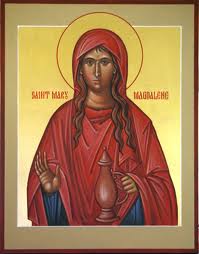
Feast of St. Mary Magdalene, the Apostle to the Apostles

Reblog from last year on the Feast of St. Mary Magdalen.

William Ockham's avatarTeilhard de Chardin

St. Mary Magdalene St. Mary Magdalene

Our July celebration of Hall of Fame of Saints continues today with the Feast of St. Mary Magdalene.  St. Mary Magdalene holds a special place both in Christian and world history. According to three of the four Gospels, she was the first eyewitness to the most important historical event in the history of the world; the Risen Christ first appeared to her.  Mary Magdalene then spread this news to the eleven apostles and other disciples of Jesus and is known as the “Apostle to the Apostles”.

While accurate historical information on Mary Magdalene is limited, we do know that she was a close disciple of Jesus.  In his apostolic letter Mulieris Dignitatem from August 1988, Blessed John Paul II praised Mary Magdalene’s special role as being the first witness to the Resurrection:

The women are the first at the tomb. They are the first to find it empty. They are…

View original post 491 more words

Posted in Uncategorized | 1 Comment

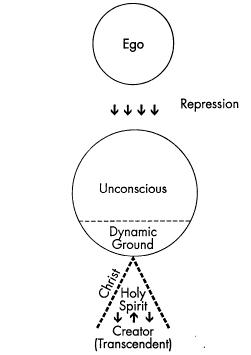
The Death of Egoism and Union With God

Stage 1. Ego separated from the Unconscious and from God. (c) Philip St. Romain

Stage 1. Ego separated from the Unconscious and from God.
(c) Philip St. Romain

“The death of egoism is to understand that one is an element in a universe that personalizes itself by [God uniting Himself with us and us responding to His call]. So it is no longer oneself that one loves in oneself. ” — Teilhard de Chardin, On Suffering, p. 55 (Harper Collins 1975) (courtesy of Yurii C. Ramos at The Teilhard Project) [editorial modifications in brackets]


ego_fire


Posted in Teilhard Quote of the Week | Tagged , , , , , , , , , , , , , | 3 Comments

Sunday Reflection, 16th Sunday of Ordinary Time (July 20, 2014): Wheat and Weeds

wheat

Am I living my life as a weed or a stalk of wheat ? (See Matthew 13:24-30).

This weekend is the 16th Sunday in Ordinary Time. The readings can be found here. The reflection comes from Living Space run by the Irish Jesuits and has a wonderful discussion of today’s Gospel and the meaning of the phrases “Kingdom of God” and “Kingdom of Heaven” and how it applies to our individual lives. I encourage you to read the entire reflection here but set forth below is an extended summary:

Nature of the ‘Kingdom’

“Kingdom” in the Gospel does not refer to a place, either here or hereafter. The Greek word basileia (basileia) is better translated as ‘kingship’, or ‘reign’, or ‘rule’, so some translations speak of the ‘Reign of God’. The Kingdom is primarily an environment, it is a set of relationships, it is a situation where God’s values prevail. And what are God’s values? In practice, they are the deepest human values and aspirations as mirrored in the life of Jesus, who is himself the revelation of God to us in accessible human form. These values include truth, love, compassion, justice, a sense of solidarity with all other human beings, a sense of trust in other, a deep respect for the dignity of every other human person, a holistic concept of human growth and development. And, of course, all these are seen in the light of God, who is their Ultimate Source. It is to be like him and with him that we live according to these values. They, with and through Jesus, are our link with Him.

People who, individually and collectively, try to live these values belong, with Jesus, to the Kingdom of God. They are united with the rule of God in trying to build a world we would all like to see happen. It is very much something for the here and now. It is basically the vocation of the Church, and therefore the vocation of every parish community and of every member of that community. At the same time, we need to recognise that the Kingdom and the Church are not co-terminous (cf. the parable below). The Kingdom extends beyond the Church. There certainly are people, who may not explicitly know Christ or express allegiance to Christ, who yet live the ideals and the values of the Kingdom in their lives. Prophetic characters like Mahatma Gandhi or the Dalai Lama must surely be such examples. On the other hand, we cannot say we belong to the Kingdom simply because we are baptised Church members but only in so far as the vision of the Kingdom is an effective factor of our daily living.

Weeds and wheat

In today’s Gospel reading we have three images or parables of the Kingdom at work among us. The first is the parable of the weeds among the wheat. The Kingdom of God clearly calls for people of the highest ideals and great generosity. It also calls for a great measure of tolerance, patience and understanding in seeing the Kingdom become a reality. The conversion of our societies into Kingdom-like communities is a very gradual process. There is always the danger that, when people try to take God or the good life seriously, they become elitist. We Christians, simply as Christians, can feel superior to people of other religions or none. As Catholics we can talk disparagingly of Anglicans, Protestants, Evangelicals. And even among Catholics, members of charismatic groups, Legionaries, Bible study groups, social action groups can see themselves as ‘superior’ to ‘ordinary’ Catholics who ‘only’ go to Mass on Sundays. And the Sunday mass-goers are a cut above those who only appear at the Christmas midnight Mass.

And, in general, we ‘decently moral people’ are ahead of the ‘thugs’, ‘louts’ and other ‘undesirables’ in our society. “Shoot the yobbos” screamed a headline on a newspaper front page some time ago. Both “shoot” and “yobbo” are words of violence and intolerance. We sanctimoniously set ourselves up as judges of others. It is a trend which is increasingly being found in our daily press and television, and they presumably reflect the interests and values of readers and viewers (among whom one can, alas, find “good” Catholics).

Living side by side

Hence, today’s parable far from being remote touches on deep areas in the lives of all of us. The parable is saying that people who are filled with the vision and values of God and Jesus must learn to live side by side with a whole spectrum of people who, in varying degrees, do not yet share or live this vision and these values. This applies to differences between Christians and non-Christians but also within Christian communities themselves. We are – and always will be – a sinful Church. To pretend that we are anything else is a lie. It is not the healthy who need the physician Jesus but the sinners and tax collectors. You and me.

We can go even further. Each one of us is a combination of wheat and weeds. In each one of us there are elements of the Kingdom and elements that are deeply opposed to it. Paul recognised that struggle within himself (cf. Romans 7:21-25). So we need to learn how to be tolerant with our own weaknesses. God told Paul that it was precisely through his weaknesses that he could reveal his glory. “My power is made perfect in [your] weakness” (2 Corinthians 12:9). The coming of the Kingdom then is not going to be a neat and tidy process. And experience again and again confirms that fact, whenever we try to bring out change and reforms in any community.

Read Full Reflection

Posted in Ignatian Spirituality, Sunday Reflections | Tagged , , , , , , , , , , , , , , , , , , , | 3 Comments

From The Teilhard Project: Teilhard de Chardin on Suffering

suffering

During his life, Teilhard de Chardin endured and witnessed a large amount of suffering from losing several siblings at a young age, to witnessing the physical suffering due to the carnage of World War I,to the mental anguish of having his visionary writings censored by his superiors.  And yet, Teilhard de Chardin is most known for his optimistic grand synthesis of traditional Christianity and modern science.

Recently, Yurii Ramos wrote an outstanding guest blogpost at The Teilhard Project quoting sum of Teilhard’s writings on suffering. I encourage you to read the entire blogpost here but set forth below is an excerpt:

“Suffering, although not a central theme in Teilhard de Chardin, is a very significant and effective one. It opens ones eyes toward one of the most beguiling of human mysteries. . . . Should those who suffer be jealous of those who are not suffering as they are? The obscure, the useless, the failures, should take joy in the superiority of the others whose triumph they lend support to or pay for.”

Read Entire Blogpost.


Posted in Uncategorized | Tagged , , , , , , , , , , , , , | 1 Comment