
“O God, if in my life I have not been wrong, allow me to die on Easter Sunday”.
— Pierre Teilhard de Chardin died of a heart attack on April 10, 1955: Easter Sunday

“O God, if in my life I have not been wrong, allow me to die on Easter Sunday”.
— Pierre Teilhard de Chardin died of a heart attack on April 10, 1955: Easter Sunday
All manner of thing shall be well
When the tongues of flame are in-folded
Into the crowned knot of fire
And the fire and the rose are one
TS Eliot
Any static theory of consciousness feels incomplete. Reality is much closer to a process than a material. Whitehead’s “Process and Reality”, is impenetrable, but so much is clear. Consciousness, our awareness of self and the universe, is transitory, fleeting for most of us. This is to be expected if reality is the intersection of process and the material. It takes intense meditation and study to be able to hold oneself within the stream of the process that is reality as it pours through us. (I am told).
To quote Max Tegmark (New Scientist “Solid, Liquid, Consciousness”) “consciousness is a process that can occur in certain physical systems”. Whilst he invents new language (consciousness is for instance renamed as perceptronium) –…
View original post 394 more words

This weekend is Palm Sunday, the beginning of Holy Week. The readings can be found here.
This week’s reflection is from James Predmore, S.J. who does an excellent job of highlighting some of the details from Passion narrative found in Matthew, which was written for a Jewish audience. You can find the full reflection and other resources here, but set forth below is an extended excerpt:
“Year after year we hear the Passion of the Lord proclaimed to us on Palm Sunday and again on Good Friday. The story is worth hearing repeatedly because we hear a different detail each time. It is good to pay attention to the small details because something larger is communicated. In this cycle, we get Matthew’s version of the Passion and he has included finer details than Mark’s original story. His Jewish-Christian audience want to hear of the cosmic details Matthew inserts, like the earthquakes, the angels, and the Temple’s torn veil. Dramatic events punctuate Matthew’s story to signify God’s involvement.
The story opens with Judas’ agreement to betray Jesus, which is set up in contrast to the woman’s loyal love at Bethany when she excessively anointed the feet of Jesus. Jesus is in charge of the details in Matthew’s story and the loyal disciples obediently follow his command. The meal as a whole is presented as a reinterpreted Passover supper. He stresses the covenant that links all of salvation history to this moment. In the Garden of Gethsemane, God has tested his Son to see what was in his heart. Matthew’s climax in the story is the arrest of Jesus for it is the hour of his tragic destiny. The Pharisees, who were a constant source of irritation for Jesus, are exonerated from his death. The temple authorities and the Romans bear the responsibility. At the arrest, a disciples cuts off the earlobe of the high priest’s servant. This was not a casual incident, but highly symbolic. The servant was a high ranking official and was the representative of the high priest. A mutilated ear disqualifies one in Jewish law from serving as high priest. Thus the one who arrested Jesus, God’s emissary, was spiritually bankrupt and unfit for office. Jesus is then brought before the Sanhedrin.
Peter is last mentioned in Matthew at the point of his betrayal. The death of Judas is fulfilled by linking him with the historical “field of blood.” It is the last of the fulfillment citations. Jesus appears before Pilate in a formal juridical Roman trial and he halfway confirms Pilate’s question, but if no one brings a specific charge, no trial can be conducted. In the customary amnesty, a prisoner at Passover is released. Barsabbas (son of the father) is released as a contrast to Jesus. A contrast is set up between Pilate’s claim to be innocent and the priests, lay elders, and crowds claim to be responsible for his death, but Pilate remains ultimately responsible by handing him over to the cross.
The soldiers mock Jesus as king as a gesture of momentary moral chaos associated with Roman Saturnalia festivals. Jesus goes to his death with a humiliating, inglorious excruciating death as he is derided by passers-by, the authorities, and robbers. His death is bitter, not mythic. Even the devil is brought in to deride Jesus. “If you are the Son of God,” elevates the theological level of the derision. At his death, Jesus feels abandoned, not despair. For Matthew, Jesus voluntarily went to his death, however ignoble. The burial of Jesus is dignified to underline the reality of death and guards are placed around the tomb to secure it by the legitimate, responsible authorities.
I suggest that you reflect upon the way you will listen to the story proclaimed this week. There’s a lot in the story so I further suggest that you give voice to your emotions as you hear it proclaimed. If you still have energy, pay great attention to the emotions of Jesus. When we do that, we naturally want to console him. This is a good instinct. Just be present to him as he relives his last moments on earth. Comfort him if you can.”
Resources:
James Predmore Site
Creighton Online Ministries
Living Space
Friar Musings Blog
Prepare for Mass

Impact of prayer and meditation on the brain: very interesting, but not the whole story.
In recent years, there has been a lot of scientific studies showing a positive correlation between prayer and meditation a person’s mental and psychological well-being. While this correlation has been known for thousands of years, advanced scientific techniques such as functional MRI have allowed people to see how the brain can change during prayer and meditation.
Some scientists attribute these changes in brain states to merely physical causes, including the experiences of mysticism that sometimes occur during meditation or in other contexts. For example, in last Sunday’s New York Times, Barbara Ehrenreich describes her own mystical experience and explores the possibility that someday science alone will be able to explain it. Ross Douthaut recently had an outstanding reply to Ms. Ehrenreich that identifies the limits of what science can tell us about metaphysics:
“[E]ven in contexts where it’s very easy to identify the physical correlative to a given mental state, and to get the kind of basic repeatability that the scientific method requires — show someone an apple, ask them to describe it; tell them to bite into it, ask them to describe the taste; etc. — there is no kind of scientific or philosophical agreement on what is actually happening to produce the conscious experience of the color “red,” the conscious experience of the crisp McIntosh taste, etc. So if we can’t say how this ”normal” conscious experience works, even when we can easily identify the physical stimulii that produce it, it seems exponentially harder to scientifically investigate the invisible, maybe-they-exist and maybe-they-don’t stimulii — be they divine, alien, or panpsychic — that Ehrenreich hypothesizes might produce more exotic forms of conscious experience.”
Mr. Douthat goes on to describe the current interest in neuroscience as an opportunity to reawaken the symbiotic relationship between physical sciences and the wisdom that philosophy and theology can provide:
“So by all means, neuroscientists should seek to understand mystical experiences, as they should seek to understand every other sort of experience … but absent a revolutionary breakthrough in the science of consciousness, for the foreseeable future the best way to actually penetrate any distance into mystical phenomena will probably continue to be the twofold path of direct investigation and secondhand encounter. By direct investigation, of course, I mean personal prayer and meditation, which is the major path to knowledge if the major religious traditions are right about what’s going on here, and probably a useful path to some sort of knowledge even if they’re not.
* * *
In the case of the numinous, this means reading actual mystics and religious texts, reading novelists and poets and essayists who take up these experiences and themes, exploring theology and philosophy, delving into the sociology and anthropology and psychology of religious experience, and so on. And it feels like an unfortunate symptom of our era’s scientism that when a writer like Ehrenreich, who has just made her own contribution to this literature and who’s clearly comfortable on both sides of the “two cultures” divide, wants to urge people to pay more intellectually-serious attention to the numinous, she (almost automatically, it seems) takes off her her humanist/essayist hat and puts her hopes in a “bold” new neuroscience — instead of calling for a renewed highbrow interest, in, say, comparative religion, or a 21st century answer to “The Varieties of Religious Experience” or “The Golden Bough.”
If our understanding of the mystical is impoverished today, perhaps it’s because we’ve put too much faith in brain scans, and allowed other forms of knowledge and investigation to ebb. Perhaps what we need is a revival of philosophically-informed psychology and anthropology, rather than a more ambitious spiritual phrenology. Perhaps, instead of a better fMRI machine, we’re waiting for a new (and doubtless very different) William James or James Frazer or Carl Jung.” (emphasis added)
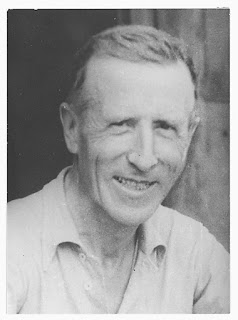
Today is the 59th anniversary of the death of Teilhard de Chardin. I hope to attend Mass today and prepare as we head towards Palm Sunday. However, I was also delighted to learn that the Lectionary for the Episcopal Church has special prayers and readings in honor of Teilhard de Chardin:
The Collect:
Eternal God, the whole cosmos sings of your glory, from the dividing of a single cell to the vast expanse of interstellar space: We bless you for your theologian and scientist Pierre Teilhard de Chardin, who perceived the divine in the evolving creation. Enable us to become faithful stewards of your divine works and heirs of your eternal kingdom; through Jesus Christ, the firstborn of all creation, who with you and the Holy Spirit lives and reigns, one God, for ever and ever. Amen.
Old Testament: Isaiah 55:6-11
Seek the LORD while he may be found, call upon him while he is near. Let the wicked forsake their way, and sinners their thoughts; Let them turn to the LORD to find mercy; to our God, who is generous in forgiving. For my thoughts are not your thoughts, nor are your ways my ways—oracle of the LORD. For as the heavens are higher than the earth, so are my ways higher than your ways, my thoughts higher than your thoughts. Yet just as from the heavens the rain and snow come down And do not return there till they have watered the earth, making it fertile and fruitful, Giving seed to the one who sows and bread to the one who eats, So shall my word be that goes forth from my mouth; It shall not return to me empty, but shall do what pleases me, achieving the end for which I sent it.
Psalm: Psalm 65
For the leader. A psalm of David. A song. To you we owe our hymn of praise, O God on Zion; To you our vows must be fulfilled, you who hear our prayers. To you all flesh must come with its burden of wicked deeds. We are overcome by our sins; only you can pardon them. Blessed the one whom you will choose and bring to dwell in your courts. May we be filled with the good things of your house, your holy temple!
You answer us with awesome deeds of justice, O God our savior, The hope of all the ends of the earth and of those far off across the sea. You are robed in power, you set up the mountains by your might.
You still the roaring of the seas, the roaring of their waves, the tumult of the peoples. Distant peoples stand in awe of your marvels; the places of morning and evening you make resound with joy.
You visit the earth and water it, make it abundantly fertile. God’s stream is filled with water; you supply their grain. Thus do you prepare it: you drench its plowed furrows, and level its ridges.
With showers you keep it soft, blessing its young sprouts. You adorn the year with your bounty; your paths drip with fruitful rain. The meadows of the wilderness also drip; the hills are robed with joy. The pastures are clothed with flocks, the valleys blanketed with grain; they cheer and sing for joy.
Second Reading: Revelation 21:1-6
Then I saw a new heaven and a new earth. The former heaven and the former earth had passed away, and the sea was no more. I also saw the holy city, a new Jerusalem, coming down out of heaven from God, prepared as a bride adorned for her husband. I heard a loud voice from the throne saying, “Behold, God’s dwelling is with the human race. He will dwell with them and they will be his people and God himself will always be with them [as their God]. He will wipe every tear from their eyes, and there shall be no more death or mourning, wailing or pain, [for] the old order has passed away.”
The one who sat on the throne said, “Behold, I make all things new.” Then he said, “Write these words down, for they are trustworthy and true.”
He said to me, “They are accomplished. I [am] the Alpha and the Omega, the beginning and the end. To the thirsty I will give a gift from the spring of life-giving water.
Gospel: John 3:31-35
The one who comes from above is above all. The one who is of the earth is earthly and speaks of earthly things. But the one who comes from heaven [is above all]. He testifies to what he has seen and heard, but no one accepts his testimony. Whoever does accept his testimony certifies that God is trustworthy. For the one whom God sent speaks the words of God. He does not ration his gift*of the Spirit. The Father loves the Son and has given everything over to him.

“Jesus Christ lived in the midst of his enemies. At the end all his disciples deserted him. On the Cross he was utterly alone, surrounded by evildoers and mockers. For this cause he had come, to bring peace to the enemies of God. So the Christian, too, belongs not in the seclusion of a cloistered life but in the thick of foes. There is his commission, his work. ‘The kingdom is to be in the midst of your enemies. And he who will not suffer this does not want to be of the Kingdom of Christ; he wants to be among friends, to sit among roses and lilies, not with the bad people but the devout people. O you blasphemers and betrayers of Christ! If Christ had done what you are doing who would ever have been spared’ (Luther).”
~ Dietrich Bonhoeffer
“When Christ calls a man, he bids him come and die.”…
View original post 38 more words

Flannery O’Connor
“In short we may say that faith in Man, by the combined effect of its universality and its elemental quality, shows itself upon examination to be the general atmosphere in which the higher, more elaborated forms of faith which we all hold in one way or another may best (indeed can only) grow and come together. It is not a formula, it is the environment of union.
No one can doubt that we are all more or less affected by this elementary, primordial faith. Should we otherwise truly belong to our time? And if, through the very force of our spiritual aspirations, we have been inclined to mistrust it, even to feel that we are immune from it, we must look more closely into our own hearts. I have said that the soul has only one summit. But it has also only one foundation. Let us look well and we shall find that our Faith in God, detached as it may be, sublimates in us a rising tide of human aspirations. It is to this original sap that we must return if we wish to communicate with the brothers and sister with whom we seek to be united.”
Pierre Teilhard de Chardin. The Future of Man (Kindle Locations 2905-2913).

This weekend is the Fifth Sunday of Lent. The readings can be found here. We read about the famous story of Jesus physical resuscitation of Lazarus from the dead. This event occurred shortly before His final entry into Jerusalem and His death and, as Pope Benedict XVI said, evolutionary resurrection into a higher dimension of existence (citing Teilhard de Chardin). The Gospel also witnesses the very human side of Jesus. When He saw the pain and suffering of Lazarus’ family and friends, Jesus shared that pain.
This week’s reflection comes from Living Space, run by the Irish Jesuits. You can find the full reflection here, but set forth below is an extended excerpt:
AS WE APPROACH HOLY WEEK, we see Jesus come closer to the climax of his life and mission. As he comes near to Jerusalem, the setting for the final drama of his life, the threats of his enemies increase by the day. They are rallying their forces to get rid of him once for all.
* * *
But Jesus goes on: “I AM the resurrection. If anyone believes in me, even though he dies, he will live and whoever lives and believes in me will never die. Do you believe this?” To which Martha replies magnificently, recognizing in Jesus the Messiah: “Lord, I believe that you are the Christ, the Son of God, the one who was to come into this world.” The profession of faith reserved in the Synoptic gospels for Peter are here heard on the lips of a woman. (We remember, too, that it was a woman, the Samaritan woman at the well, to whom Jesus first revealed his identity as the Christ.)
The words of Jesus say two things:
a. While physical death is the experience of all, Christians included, faith in Jesus brings promise of a life that never ends;
b. One who is totally united with Christ begins to enjoy right now true and never-ending life. It is not just something for the future.
The Master calls
Jesus is still outside the village as Martha goes to call her sister. “The Master is here and is calling you.” The Greek word for ‘is here’ is parestin, which corresponds to the noun parousia , the definitive appearance of Jesus in our lives. When Jesus comes – and he comes every day – he calls us and expects us to respond to his presence with the same eagerness that Mary did.
Grief at a friend’s death
In spite of the deeply symbolical and spiritual language that this passage contains, we come to the very human experience of people faced with death. Jesus himself is overcome with grief at the death of a close friend. The words indicate the intensity of his feelings: “in great distress”; “a sigh that came straight from the heart”; “Jesus wept”; and “still sighing”.
Just before giving life back to Lazarus, Jesus prays to his Father. Jesus is no mere wonder-worker. He is simply doing the work of God his Father, the Creator, Source and Giver of all life.
The “sign” about to take place is to lead people through Jesus to the Father who sent him. Union with our God is the one and only meaning of our living.
Many questions
The actual raising of Lazarus seems almost an anti-climax. It is expressed in the briefest language and there are many questions we might have (e.g. what did he look like? how did he walk? what did he say?…) which are simply not answered. The story wants to focus on the central ‘sign’ which only confirms what Jesus had said of himself: “I AM the resurrection and the life”.
It is the fulfillment of the prophecy from Ezekiel in the First Reading. This reading is part of the famous parable of the valley full of dead bones which are brought to life, a parable about Israel, dead in sin and idolatry, being brought back to life in God. In today’s gospel, Lazarus represents all those who are being brought back to life, life in God. He represents especially all those who are brought into new life by baptism, sharing the very life of God.
Like the gospels of the last two Sundays (the Samaritan Woman and the Man Born Blind), this reading is directed at those preparing for Baptism at Easter. Baptism, as Paul tells us, is both a dying to one’s past and an entry into new life. The newly baptised person is “a new person” with a new life.
For us already baptized, we can do well to reflect on how much we have continued to see that life growing in us. That is the theme of Paul in the Second Reading. Those whose lives are embedded in the “flesh”, that is, those whose lives are given over to their instincts of greed and self-indulgence, can never be close to God.
Those who are in the Spirit will want to give their whole selves to the higher instincts of truth, love, compassion, sharing and justice. When we are full of that Spirit then we have truly risen with Christ for his life is truly active in us. We are both alive and life-giving. “I live, no, it is not I, but Christ who lives in me.”
Additional Resources:
Living Space
Creighton Online Ministries
Fr. Robert Barron Homily
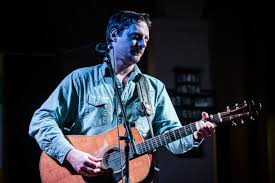
Sturgill Simpson singing about the Omega Point
I am not a huge country music fan but I found an article in yesterday’s Washington Post on Sturgill Simpson. I had never heard of any of Mr. Simpson’s music but I was intrigued by his interview in which he cites Teilhard de Chardin’s Omega Point as inspiration for his music. I especially enjoyed the following quote which blends strong idealism with a dose of healthy skepticism that I find charming:
“The overall theme is probably love, to be cheesy about it,” Simpson says. “You spend all this time reading or thinking or praying or searching or exploring. Maybe there’s an Omega Point of love.”
(Unlike just about every other country singer living on the physical plane, his music cites Pierre Teilhard de Chardin’s theory that our universe is evolving toward a supreme, unified consciousness — an Omega Point.)
“And if not, screw it,” Simpson says, rattling a dozen milky ice cubes around in his glass. “Just be nice to people.”
Postscript: I am flattered that Mr. Simpson retweeted a link to this post! As a result of that and the original article I bought his album “High Top Mountain” and am looking forward to the release of his new album “Metamodern Sounds In Country Music” next month. I am also hoping to view him on his upcoming tour through the Midwest 🙂


 Teilhard de Chardin