
Sunday Reflection, Feast of Dedication of the Basilica of St John Lateran (November 9, 2014)

St. John Lateran

“God is our refuge and our strength, an ever-present help in distress.” — Psalm 46:2

This Sunday is the Feast of Dedication of the Basilica of St. John Latern. The readings can be found here.

In the U.S., we just completed another divisive set of mid-term elections. Even within the Catholic Church should ideally would be a bastion of unity in Christ there are public criticism of Pope Francis.  This Feast provides an opportunity to reflect on the meaning of unity of both the whole Church as well as humankind as a whole.

This week’s reflection comes from Living Space (Irish Jesuits). You can find the entire reflection here but set forth below is an excerpt:

“The first church building on this site was built in the 4th century when the Emperor Constantine gave land he had received from the wealthy Lateran family. That church and others which replaced it suffered over the centuries from fire, earthquakes and war but it remained the church where popes were consecrated until they returned from exile in Avignon, in the south of France. When the Avignon papacy formally ended and the Pope could return to Rome, the Lateran Palace and the basilica were in a serious state of disrepair. The popes took up residency at the Basilica of St Mary in Trastevere and later at the Basilica of Saint Mary Major. Eventually, the Palace of the Vatican was constructed and has been the pope’s residence until now.

The present Lateran basilica was erected in 1646. It ranks first among the four major basilicas in Rome (with St Peter’s, St Mary Major’s and St Paul’s Outside the Walls) as the Ecumenical Mother Church. On top of its facade are 15 large statues representing Christ, John the Baptist, John the Evangelist and 12 Doctors of the Church. Underneath its high altar are the remains of a small wooden table on which tradition claims St Peter celebrated the Eucharist.

St. John Baptist and St. John the Evangelist are regarded as co-patrons of the cathedral, the chief patron being Christ the Saviour himself, as the inscription at the entrance of the Basilica indicates, and as is the tradition in the patriarchal cathedrals. The Basilica remains dedicated to the Saviour, and its titular feast is the Transfiguration. Its full title then is Archbasilica of the Most Holy Saviour and of Sts. John Baptist and John Evangelist in the Lateran.

Celebrating the dedication of the Pope’s cathedral today is a way of expressing the unity of the whole Church with the Pope, the Bishop of Rome. And the union of each local church with this church is an expression of the unity of all churches both with Rome and with each other.”

Read Full Reflection


Posted in Sunday Reflections | Tagged , , , , , , , , , , , , , , , , , , | 2 Comments

Why Un-God is Un-Likely (for me)

gigglinginthegutter's avatargigglinginthegutter

It is all, let’s admit, unprovable. All – reality, God, no-God, meaning, purpose etc. That’s because there is no independent starting point, no external (to the Universe) objective truth. That is, there may well be – but it isn’t available to us as humans and to our thinking minds. That being so – all is conjecture and belief. I have been irritated by the messaging from materialists and atheists that tries to claim that “science” dis-proves God. They are trying to manipulate, and they do – or should – know better. However, as atheists can’t prove Un-God, neither can other religions prove God.

However there is the small matter of probability, and it seems to me highly unlikely that there is no God. This does not speak to what God might be. Declaring my hand, I do believe in God as personal and loving – but that is belief. However…

View original post 711 more words

Posted in Uncategorized | 1 Comment

Towards an Ethics of Technology: Re-Exploring Teilhard de Chardin’s Theory of Technology and Evolution

I just came across this paper that looks very interesting. I have not read it yet but hope to do so in the next few weeks.

Scientific Research Publishing on WordPress (SCIRP)'s avatarScientific Research Publishing

Read  full  paper  at:

http://www.scirp.org/journal/PaperInformation.aspx?PaperID=51174#.VFgt0WfHRK0

ABSTRACT

Defining the mechanism of evolution is a controversial issue that, until now, divides the scientific community. Some have argued in the strictest Darwinian terms that evolution’s primary mechanism is necessity—“survival of the fittest”. Other evolutionists followed in the footsteps of Jacques Monod, the French biologist, who argued for a mixture of random chance and necessity. Teilhard de Chardin, it is widely believed, took Monod one step further by asserting that evolution is the fundamental motion of the entire universe, an ascent along a privileged and necessary pathway toward consciousness—thus, evolution was guided chance and necessity. However, if evolution is being guided, what is doing the guiding? And where, ultimately, is it going? His bold answers brought Teilhard to the heart of a widely perceived scientific, as well…

View original post 770 more words

Posted in Uncategorized | 3 Comments

Teilhard de Chardin Quote of the Week (November 3, 2014): Lose Yourself in God

stairs-to-heaven1“Don’t let yourself succumb, I beg you, to the perpetual fear that you’re doing nothing worthy of your life or commensurable with your wishes or God’s grace. I believe that you’re doing a great deal — much more than we can see. But is there any point in worrying about this? Isn’t it enough to foster large ambitions within ourselves and try loyally to achieve them, to have the right to rely on God to grant them ultimate success? In every context, you must try harder . . . to lose yourself in God — so completely that you no longer even want to know whether you are doing much or little in this world — your sole happiness being the feeling that He is within you, at the beginning and the end of every desire and every act.” 

– Pierre Teilhard de Chardin, The Making of a Mind; Letters from a Soldier-Priest (p. 198-99)

Posted in Teilhard Quote of the Week | Tagged , , , , , , , , , , , | 5 Comments

Sunday Reflection, All Souls Day (November 2, 2014): Remembrance and Unity

ALL-SOULS-DAY-facebook

This is a special year in as All Souls Day falls on a Sunday. There are a variety of readings that can be used this day but the primary ones can be found here.

This weekend will be a special weekend of commemoration for me.  We had the Trick-or-Treating in the Wisconsin cold last night and we will have an All Saints Day party in church this evening (my sons chose St. Ignatius of Loyola and St. Maximilian Kolbe). I will remember by grandparents and friends who passed away. I will also visit my parents who are both in good health, but still aging.  As it turns colder in the Upper Midwest the changing seasons provide an excellent backdrop for both the memories of those who have come before us and the reality of the end of this life and the preparation for the next. I am asking for the grace to be more loving and kind to those around me, especially my family.

This week’s reflection is from John Predmore, SJ. He provides an excellent analysis of how we need to keep our eyes focused on Christ and love. You can read the full reflection here but set forth below is a summary:

Unity within the church is a primary concern. You will find reference to unity in many liturgical prayers during mass because the early church members knew that we needed to encourage one another to understand the rich nuances of the faith. If we do not stand together, we are vulnerable to attacks from the evil spirits and from those who do not want to understand our majestic tradition. With this in mind, it is disturbing that there is pronounced dissension within the church among Traditionalists, Centrists, and Progressives. The tone and rhetoric is likened to a political campaigner whose goal is to destroy the opponent. This is not the way of Jesus Christ. This is the wrong way to go forward.

In light of this feast, we need to look upon one another to see that their journey to Christ might take a different path than our own. That is O.K. We need to respect where another person is and how it is they want to pursue holiness. In the mode of Pope Francis, we have to withhold judging and making sweeping statements about righteousness. What gives us the right to judge another person? That domain belongs to Christ. The better question to ask is, “Is the person becoming a more loving person?”

Inherent with the debate among the factions of the church is great pain. Traditionalists hold great pain amidst their hope for the church. So do Centrists, as well as Progressives. The tendency is to scold, correct, impose, and to exclude. That is not the way forward. The trick is to be able to touch the pain of others so that our comprehension increases. When we understand the suffering of another, we treat one another better and we refrain from hurting them more deeply. We respect where the “other” is and we are able to treat our brother or sister with due reverence because we who suffer stand in solidarity with other vulnerable sufferers.

The disappointment in these culture wars and church battles is that we focus upon one another’s political stance. We fail to see the Christian at the core. Our important issues become our significant focus and we simply fail to see or respect Christ. We no longer look to God because we are looking at our and our opponent’s positions. We need to raise our eyes and look for God as the first, middle, and last activities of our day. If we do this, then we will agree with Jesus as he speaks to the crowds in the Fourth Gospel when he says, “Everything that the Father gives me will come to me, and I will not reject anyone who comes to me, because I came down from heaven not to do my will but the will of the one who sent me.” God’s will, he continues, “is that I should not lose anything of what he gave me.”

We are Christians. Let us learn to no longer reject our brothers and sisters whose journey may take them on a path that is different from our own. Let us replace this rejection with welcome and acceptance, just as God will not reject anyone who comes to Jesus. We can learn from one another when we reach out to our brothers and sisters and say, “Tell me about your pain. Tell me about your struggle and chaos.” We begin to stand in solidarity with others who are different from us, and we find they are more similar than we imagined. Let us strive for unity that comes from a faith that seeks to understand and we will find great comfort that we are the communion of saints and that God truly is among us. Our souls are in the hand of God and no torment shall touch us. Let us be at peace.

Read Entire Reflection

Other Reflections:

Living Space
Creighton Online Ministries
Fr. Robert Barron Podcast

Posted in Sunday Reflections | Tagged , , , , , , , , , , , , , , , , , , , , , , | 6 Comments

The Power of the Desert

Holly Bird's avatarGod In All Things

Jesus-in-the-DesertI wonder what it would be like to get inside Jesus’ head when he was tempted in the desert (Mt 4:1-11; Mk 1:12-13; Lk 4:1-13). Did he recognize right away that he was dealing with a sinister force? How long did he grapple with how to respond—or did he resist temptation as effortlessly as the gospels make it appear?
These questions resound most when I’m facing temptation myself. The tempter finds me when I’m fragile and teetering on insecurities, and says, “This thing you think you’re called to—you’re not good enough for it. Others are much more talented and qualified than you. Forget about this ‘vocation’ you think you have; it won’t do anyone any good in the long run.” He signals with his finger toward the long road before me, and I gaze warily ahead, dreading the challenges to come. Then he points to a safer, smoother road, coaxing me…

View original post 511 more words

Posted in Uncategorized | Leave a comment

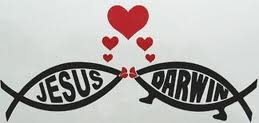
Pope Reaffirms Church Teaching on Evolution; In Other News: Dog Bites Man


God loves good science

God loves good science

The media coverage of the Catholic (both the mainstream media and unfortunately many Catholic outlets) is often superficial if not downright inaccurate. Even more recent than the synod has been the reporting of Pope Francis’ remarks supporting evolution this week to the Pontifical Academy of Sciences. Pope Francis made his speech during a ceremony honoring Pope Benedict XVI for continuing to promote the harmony of science and faith. The remarks made by Pope Francis were consistent with statements made by his predecessors and Catholic theologians.

In other words, there was nothing new, but the media reported it as a significant event.  Lazer Berman of The Times of Israel has one of the better articles on the subject. I encourage you to read the entire article here but set forth below is an excerpt:

Francis’s remarks were covered breathlessly in the media, but the coverage has not reflected that they are solidly consistent with previous Church teachings.

* * *

“We run the risk of imagining God was a magician, with a magic wand able to do everything,” he said, arguing against young earth creationism. “But that is not so.”

But Francis emphasized that the world was not created from chaos by chance, but “derives directly from a Supreme Principle who creates out of love.”

“The Big Bang, which nowadays is posited as the origin of the world, does not contradict the divine act of creating, but rather requires it. The evolution of nature does not contrast with the notion of creation, as evolution presupposes the creation of beings that evolve.”

Francis emphasized the potential scientific inquiry holds to discover God and his plan: “Therefore the scientist, and above all the Christian scientist, must adopt the approach of posing questions regarding the future of humanity and of the Earth, and of being free and responsible, helping to prepare it and preserve it, to eliminate risks to the environment of both a natural and human nature. But, at the same time, the scientist must be motivated by the confidence that nature hides, in her evolutionary mechanisms, potentialities for intelligence and freedom to discover and realize, to achieve the development that is in the plan of the creator.”

* * *

Jesuit priest scientist Pierre Teilhard de Chardin, who was influential in opening Catholic thinking to natural sciences, wrote extensively on the theology of evolution, Staron pointed out, speculating that spiritual development could be as much a part of human evolution as the development of the human mind — in other words, evolution consciously reflecting upon itself, moving the world into union with God.

The official position of the Catholic Church has been very clear, emphasized Murray Watson, cofounder of the Center for Jewish-Catholic-Muslim learning at Ontario’s Western University: Catholicism does not see an inherent contradiction between faith and any of the several leading theories of evolution, as long as those theories can allow room for a number of beliefs. First, that God is the ultimate source of evolution. Second, that God is ultimately guiding the process, even if indirectly through the laws of nature. And finally, that the human soul is God’s direct creation, not a random result of evolution.

“In that sense, all that the Catholic Church asks is that science limit itself to answer questions within its own purview, and not venture into the areas of philosophy and theology,” said Watson. “It isn’t the role of religion to pass judgement on scientific theories, but the Church wants to ensure that scientists don’t — accidentally or otherwise — stray into territory which is beyond the ability of the scientific paradigm to investigate, such as the existence of God, and/or the possibility of God’s having created the cosmos.”

Read Entire Article

Posted in Reason and Faith | Tagged , , , , , , , , , , , , , , , , , | 5 Comments

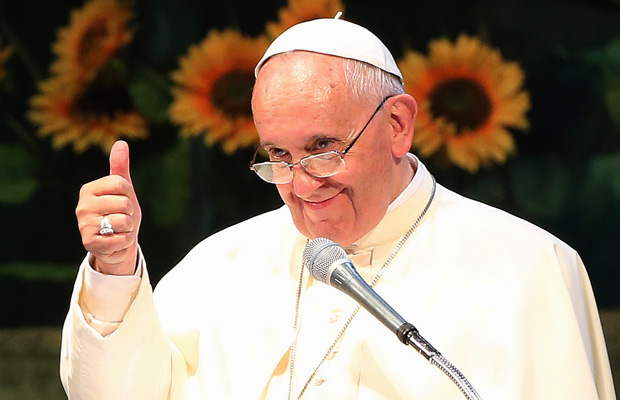
Pope Francis and Moving to a More Unified and Less Polarized Church

Pope Francis

The Gospel can sometimes be challenging but should always be joyful.

For a variety of reasons, the primary one being the inaccurate hyperbole being written from all quarters, I have avoided discussing the recently concluded Special Synod on the Family. However, John Gehring had a good article in Crux that went beyond the specifics of the Synod to how Pope Francis is trying to move beyond the toxic polarization that is the result of contemporary politics and get back to the heart of the Gospel message of a Church unified in the heart of Christ. I encourage you to read the full article here but set forth below is an excerpt:

“To really understand why this papacy is so revolutionary, you have to recognize that Francis is playing the long game. He is setting his vision on a different horizon than those who are stuck fighting trench warfare over a narrow set of hot-button issues.

While Catholics check off boxes on our ideological scorecards, Pope Francis is calling the Church to a profound spiritual conversion. His foes are clericalism, legalism, and anything that gets in the way of the joy of the Gospel. This is not a flashy corporate re-branding or a mere tinkering with tone. It’s a return to the radical values at the root of Christian faith.

When Francis of Assisi came along in the 12th century, his embrace of poverty, personal holiness, and peacemaking were a walking rebuke to an institutional Church mired in worldly corruption. The Franciscans, and later religious orders like Pope Francis’ own Jesuit order, inspired spiritual movements that still inspire people in ways that the fine print of the Church’s Catechism never will.

The pope’s closing address at the synod offered sober words that should caution against triumphalism on the left or right. Speaking to those he called “traditionalists,” Francis warned of a tendency toward “hostile inflexibility,” and of being “closed” in the letter of the law. Turning his attention to “so-called progressives and liberals,” the pope warned of a “deceptive mercy” that “binds wounds without first curing them and treating them.”

This is not the first time the pope has offered a challenge that cuts across ideologies. When he warns about an “economy of exclusion and inequality,” or questions the “crude and naive” trust some leaders place in “trickle-down” economics, surely Republicans who genuflect at the altar of Ronald Reagan are not getting a free pass. Democrats who cheer the pope for his progressive views on labor and the economy can’t ignore his description of abortion as part of a “throw-away culture.”

For Catholics, our Church should make us all a little uncomfortable. Otherwise, we simply use faith to baptize our own political agendas.”

Read Full Article

Posted in Uncategorized | Tagged , , , , , , | 5 Comments

Teilhard de Chardin Quote of the Week (October 27, 2014): Human Work in the Glory of God

Sistine_chapel

The Sistine Chapel


“One by one, through human effort aided by God, souls are distilled, precious drops, — and the nectar which comes at the end has not the same savour as that which flowed first. Each has its own exquisite value. In that lies the meaning of human work, of the desperate search to master the secrets and energies (good and bad) of the world: to perfect, to purify, psychic life (individual and collective) so that types of perfection [in God’s image] may ultimately be seen. . . “

– Pierre Teilhard de Chardin, The Making of a Mind; Letters from a Soldier-Priest (p. 180)

Posted in Teilhard Quote of the Week | Tagged , , , , , , , , , , | 2 Comments

Sunday Reflection, 30th Sunday in Ordinary Time (October 26, 2014): Responding to God’s Love

homelessPhoto Courtesy of www.madison.com 
“Love, and do what you like” — statement attributed to St. Augustine.

This Sunday is the 30th Sunday in Ordinary Time. The readings can be found here. The Gospel reading is the Great Commandment, which consists of two parts: loving God and loving neighbor.  As the Gospel clearly indicates, these two parts are inseparable. One cannot love God without loving a neighbor and loving a neighbor without love of God risks devolving into another form of ego gratification: if we give a token amount of money to the homeless, our friends will think better of us or we will alleviate some of our guilt.

This week’s reflection comes from Pope Benedict’s XVI’s first encyclical, Deus Caritas Est (God is Love), which was issued on Christmas Day in 2005. This beautiful encyclical captures the essence of the Christian message. God, the Creator and Source of all things is pure love. If we are to be united with God, we must demonstrate and share that love with others. I encourage you to read the entire encyclical here (lengthy but well well worth the effort) but set forth below is an excerpt:

“‘God is love, and he who abides in love abides in God, and God abides in him’. These words from the First Letter of John express with remarkable clarity the heart of the Christian faith: the Christian image of God and the resulting image of mankind and its destiny. In the same verse, Saint John also offers a kind of summary of the Christian life: “We have come to know and to believe in the love God has for us”.

We have come to believe in God’s love: in these words the Christian can express the fundamental decision of his life. Being Christian is not the result of an ethical choice or a lofty idea, but the encounter with an event, a person, which gives life a new horizon and a decisive direction. Saint John’s Gospel describes that event in these words: “God so loved the world that he gave his only Son, that whoever believes in him should … have eternal life” (3:16). In acknowledging the centrality of love, Christian faith has retained the core of Israel’s faith, while at the same time giving it new depth and breadth. The pious Jew prayed daily the words of the Book of Deuteronomy which expressed the heart of his existence: “Hear, O Israel: the Lord our God is one Lord, and you shall love the Lord your God with all your heart, and with all your soul and with all your might” (6:4-5). Jesus united into a single precept this commandment of love for God and the commandment of love for neighbour found in the Book of Leviticus: “You shall love your neighbour as yourself” (19:18; cf. Mk12:29-31). Since God has first loved us (cf. 1 Jn 4:10), love is now no longer a mere “command”; it is the response to the gift of love with which God draws near to us.

In a world where the name of God is sometimes associated with vengeance or even a duty of hatred and violence, this message is both timely and significant. For this reason, I wish in my first Encyclical to speak of the love which God lavishes upon us and which we in turn must share with others. That, in essence, is what the two main parts of this Letter are about, and they are profoundly interconnected. The first part is more speculative, since I wanted here—at the beginning of my Pontificate—to clarify some essential facts concerning the love which God mysteriously and gratuitously offers to man, together with the intrinsic link between that Love and the reality of human love. The second part is more concrete, since it treats the ecclesial exercise of the commandment of love of neighbour.”

* * *

Love of neighbour, grounded in the love of God, is first and foremost a responsibility for each individual member of the faithful, but it is also a responsibility for the entire ecclesial community at every level: from the local community to the particular Church and to the Church universal in its entirety. As a community, the Church must practise love. Love thus needs to be organized if it is to be an ordered service to the community. The awareness of this responsibility has had a constitutive relevance in the Church from the beginning: “All who believed were together and had all things in common; and they sold their possessions and goods and distributed them to all, as any had need” (Acts 2:44-5). In these words, Saint Luke provides a kind of definition of the Church, whose constitutive elements include fidelity to the “teaching of the Apostles”, “communion” (koinonia), “the breaking of the bread” and “prayer” (cf. Acts 2:42). The element of “communion” (koinonia) is not initially defined, but appears concretely in the verses quoted above: it consists in the fact that believers hold all things in common and that among them, there is no longer any distinction between rich and poor (cf. also Acts 4:32-37). As the Church grew, this radical form of material communion could not in fact be preserved. But its essential core remained: within the community of believers there can never be room for a poverty that denies anyone what is needed for a dignified life.

Read Deus Caritas Est

Other Resources:

Living Space
Creighton Online Ministries
John Predmore Reflection
Fr. Robert Barron Podcast


Posted in Sunday Reflections | Tagged , , , , , , , , , , , , , , , , | 2 Comments