Third Sunday of Advent (December 15, 2013): Expectant Waiting and Dynamic Faith

gaudete

“Be patient, brothers and sisters” — James (5:7)

This Sunday is the Third Sunday of Advent, or Gaudete Sunday (Rejoice!).  The readings can be found here. We continue the Advent theme of hopeful anticipation.  Today’s reflection, courtesy of Rev. Eric K. Hinds of St. Matthew’s Episcopal Church in California, focuses on the patience and hope of Teilhard de Chardin as an example of Christian faith. You can find the full reflection here but set forth below is an extended summary:

“We all wait. It is a common experience, and yet there are differences in waiting. There is a difference between expectant, on the edge of your seat, waiting; and the waiting of futility, tedium and despair.

In the year 1922, Teilhard de Chardin, a Jesuit priest at age 40, anxiously waited to defend his thesis in the field of paleontology, before a team of established scientists. Since boyhood Teilhard de Chardin had a passion for both science and religion. He was raised in a wealthy French family with a distinguished lineage, and received an excellent education–sharing an interest in science with his father, and encouraged to embrace a life of faith by his mother.

At age 16, Pierre Teilhard de Chardin, knew that he wanted to become a Jesuit priest. His studies and teaching took him to Cairo and eventually to Hastings, England. It was in Hastings that Teilhard began to read a book titled Creative Evolution, written by the French Philosopher, Henri Bergson. It was a book that the Vatican soon placed on its list of Forbidden books, yet it was a book that inspired Teilhard to learn more about the theory of evolution–and in his new work and study in this field he discovered a scientific justification for the unity that he felt he shared as a human being with the entire world of living creatures.

* * *

[W]hile Teilhard waited to defend his thesis, some of the gathered scientists pondered–because he was such a visibly religious man–whether a man of faith could be open-minded and objective about matters of science. The questions that he faced were at times pointed, yet at the end of his examination Teilhard was commended by the head of the jury for his “clarity of spirit and professional gifts” and his degree was awarded “with highest honors.”

* * *

If we were to apply some of Tielhard’s insights to the season of Advent we might have a deeper appreciation for the amount of time that God waited simply for the emergence of life on the planet earth–let alone the emergence of humankind. In the Hebrew scripture, it is the prophet Isaiah who has a vision of hope and a vision for the distant future: “where the desert shall rejoice and blossom…The lame shall leap like a deer…And the tongue of the speechless sing for joy.” But even Isaiah’s far off vision pales by comparison to the eons of time needed for life on the planet to evolve–let alone for humans to have the capacity to reason and contemplate the coming of a savior. Teilhard de Chardin was fascinated by the complexity of life, believed deeply in God, and was never afraid that his faith would unravel, simply because he asked tough questions, or had to rethink something that he once was taught or believed. In fact, embraced the notion that one’s faith actually grows and matures as a result of vigorous testing and examination.

I would argue that the whole point of good teaching, of bible study, of reflecting upon one’s faith is to some extent challenge what we believe—to incorporate new knowledge and differing perspectives—so that a new synthesis can be born. It’s exciting when we gain a fresh insight and learn something new about our faith. This type of waiting, of waiting for something new to be born has an active component. It is more like the pressing and urgent message of John the Baptist. An Advent that is striving towards a new beginning with the full creative force of God who is the creator of the cosmos behind it.

* * * 

During this season of Advent, as we anticipate the birth of a messiah, a savior–we might ask our selves “what new things is God preparing for birth in our very midst?” “Where will our church grow in the upcoming year?” . . .  “What new thing will emerge in your life? In our common life?” “Where is there tension or energy or even anxiety?”

We all wait, but perhaps our best waiting, our waiting worth cultivating during this season of Advent—is expectant waiting. Waiting on the edge of our seats to discern where and how God will be with us. This season especially–we anticipate and watch, and wait to see how the God of creation–the God of the cosmos–ventures to come to us and lead us to a new place. A place of activity, fulfillment, and peace just waiting to be born in our midst.”

Posted in Sunday Reflections | Tagged , , , , , , , , , , , , , , , , , , , , , | 2 Comments

An Introvert in Church

gtrudelle's avatarSmallest of Seeds

Image

This is the last thing I see of the outside world on the mornings I attend mass. Its size and detail are so overwhelming as to fill my entire gaze. And when I leave all I see is the city stretched out before me. An expansive view, high on the hill -it feels a bit like hovering over the streets.

To be honest, I am surprised at how much I am enjoying this morning ritual. But maybe what surprises me more is how each time I go, I expect to receive some kind of affirmation. To hear my thoughts or beliefs echoed back to me in the homily. Every. Time. And still, it has yet to happen.


Like today.

It was a clumsy homily based on today’s reading of Matthew 11:16-19. There were a few starts and stops, a bit of tripping over words, and it all ended rather…

View original post 452 more words

Posted in Uncategorized | 2 Comments

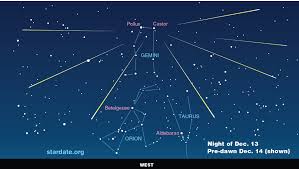
Vatican Astonomers Contemplate God and Science in Geminid Meteor Shower

geminid

Because one can not have too much of Brother Guy Consolmagno, S.J.

Set forth below is an excerpt from the Detroit Free Press on the Geminid Meteor Shower that is expected to peak Saturday morning and the role that Detroit native Brother Consolmagno will have in observing it from the roof of the Vatican. You can find the entire article here but set forth below is an excerpt:

Men of faith have always looked to the heavens.

Tonight, a metro Detroit-bred Vatican astronomer, on the roof of the pope’s summer residence, Castel Gandolfo, will gaze up at the sky to contemplate God — and science.

Jesuit Brother Guy Consolmagno, a self-professed meteorite nerd, is one of 12 astronomers for the Vatican who will join stargazers around the world hoping to witness the annual Geminids meteor shower.

It’s a job that’s heaven-sent, said Consolmagno, who graduated from Birmingham Our Lady Queen of Martyrs grade school and University of Detroit Jesuit High School.

“Today, I would say that one of our most important missions … is to reassure religious people that science is not a threat to their faith, but rather a great support,” Consolmagno said. “That by appreciating God’s creation, we come closer to the Creator.”

Consolmagno, 61, spends his time “working in the laboratory, playing with rocks that fall from outer space, giving talks around the world. I’ve even had a chance to go to Antarctica and look for meteorites.”

“It’s been a fantastic life.”

He works in Italy about eight months and travels four months every year to give lectures and do research at a Vatican observatory based in Arizona.

Astronomers say the Geminid meteor showers can be the most vivid of meteor showers, with as many as 100 to 120 bright, blazing balls visible from any point on Earth. The Geminids, which continue through the middle of next week, peak tonight into Saturday morning.

Consolmagno said Jesuits have been studying the stars in the service of popes dating to the 1500s, charting the skies to help create an accurate calendar. But the Vatican also has been at war with astronomers, and Pope John Paul II apologized in 1992 for the centuries-old condemnation and imprisonment of Galileo for arguing that the Earth orbits the sun.

“Too many people with their own agendas want to build a wall between science and faith and demonize the one or the other,” Consolmagno said, “but that is bad for both science and faith.”

Continued Reading

Posted in Reason and Faith | Tagged , , , , , , , , , , | 3 Comments

Exorcizing the God of the Gaps

I have written extensively on the intersection of Science and Faith and the reasons why it is important for Christians to have an understanding of basic science so they can help correct the many misconceptions that non-Christians (and unfortunately many fundamentalist Christians) have about the symbiotic relationship between faith and science. This article by Fr. Aidan (Alvin) Kimel, an Orthodox priest, is excellent.

Fr Aidan Kimel's avatarEclectic Orthodoxy

saat-makinası-yapımı.jpg

The rise of modern science created a problem for Christian theology. If God is not scientifically needed to explain why water freezes at 32°F or why the stars come out at night, if the universe is just a self-powered machine that can be intelligibly apprehended as a nexus of causes and effects, then does that not mean that God is utterly unnecessary? Perhaps the deistic deity of Voltaire, who creates the universe and sets everything in motion, is all that is required—and even he may seem superfluous.

Yet why did the practical atheism of modern science (i.e., the methodological exclusion of divinity from scientific hypothesis and investigation) generate such concern and upset? It’s almost as if the catholic doctrines of divine transcendence and creation got forgotten somewhere along the way. The Church should have taken the lead in telling the scientists of the world “Don’t treat Almighty God as a…

View original post 826 more words

Posted in Reason and Faith | Tagged , , , , , , , | 1 Comment

Congratulations to Pope Francis, the First Jesuit Named as Time Person of the Year

Cardinal Jorge Mario Bergoglio; he has not changed since he became Pope Francis

Cardinal Jorge Mario Bergoglio; he has not changed since he became Pope Francis

Pope Francis is thoroughly Ignatian in his outlook

Ad maiorem Dei gloriam


Posted in Uncategorized | Tagged , , , | 6 Comments

Lost sheep

Beautiful reflection on today’s Gospel. We are all lost sheep and if we can reach out to other lost sheep we will work to bridge the gaps that divide us.

Fran Rossi Szpylczyn's avatarThere Will Be Bread

The conversation so often begins this way:

I was Catholic, but the Church hates me now.” Or perhaps, “I can’t come to Church any longer, I am divorced.” It might be, “Once I realized that I was gay, I knew that the Church would not accept me.”

These are variations on things that I have heard over the years, no more so than when I began to work as the parish secretary. People come in for mass cards, or to drop off religious items that they came across when cleaning out their parents’ old house.

You see, people come in for a simple transaction – our culture is transaction based. Yet, don’t we all long in some way for encounter? Relationship? Connection? I could quietly prepare their mass card or take the box of rosaries and statues, but I usually try to initiate some…

View original post 175 more words

Posted in Uncategorized | Tagged , , | 4 Comments

Teilhard de Chardin Quote of the Week (December 9, 2013)

seeing_Unity

One could say that the whole of life lies in seeing — if not ultimately, at least essentially. To be more is to be more united — and this sums up and is the very conclusion of the work to follow. But unity grows, and we will affirm this again, only if it is supported by an increase of consciousness, of vision. That is probably why the history of the living world can be reduced to the elaboration of ever more perfect eyes at the heart of a cosmos where it is always possible to discern more. Are not the perfection of an animal and the supremacy of the thinking being measured by the penetration and power of synthesis of their glance? To try to see more and to see better is not, therefore, just a fantasy, curiosity, or a luxury. See or perish. This is the situation imposed on every element of the universe by the mysterious gift of existence. And thus, to a higher degree, this is the human condition.”

(Pierre Teilhard de Chardin: The Human Phenomenon, trans. Sarah Appleton-Weber, p. 3)
Posted in Teilhard Quote of the Week | Tagged , , , , , , , , , , | 1 Comment

Second Sunday of Advent (December 8, 2013): Burning Away What Divides Us

second_sunday_advent
I am baptizing you with water, for repentance, but the one who is coming after me is mightier than I. I am not worthy to carry his sandals. He will baptize you with the Holy Spirit and fire. — Matthew 3:11

This Sunday is the Second Sunday of Advent. The readings can be found here. The beautiful first reading is from Isiah and talks about the vision where the things that divide us are eliminated and all of Creation is brought together in Unity. The Gospel includes a speech from St. John the Baptist that talks about the need for God’s purifying fire to break down our divisions before this Unity can occur.

Christ: “I have come to set the earth on fire, and how I wish it were already blazing!"

A Purifying Fire

This week’s reflection comes from Fr. Ron Rolheiser and St. Louis University reflections. I encourage you to read the entire reflection here but set forth below is an extended excerpt:

“Pierre Teilhard de Chardin once suggested that peace and justice will come to us when we reach a high enough psychic temperature so as to burn away the things that still hold us apart. In saying this, he was drawing upon a principle in chemistry: Sometimes two elements will simply lie side by side inside a test-tube and not unite until sufficient heat is applied so as to bring them to a high enough temperature where unity can take place.That’s wonderful metaphor for advent. What is advent?Advent is about getting in touch with our longing. It’s about letting our yearnings raise our psychic temperatures so that we are pushed to eventually let down our guard, hope in new ways, and risk intimacy.

St. John of the Cross has a similar image: Intimacy with God and with each other will only take place, he says, when we reach a certain kindling temperature. For too much of our lives, he suggests, we lie around as damp, green logs inside the fire of love, waiting to come to flame but never bursting into flame because of our dampness. Before we can burst into flame, we must first dry out and come to kindling temperature. We do that, as does a damp log inside a fire, by first sizzling for a long time in the flames so as to dry out.

How do we sizzle psychologically and spiritually? For St. John of the Cross, we do that through the pain of loneliness, restlessness, disquiet, anxiety, frustration, and unrequited desire. In the torment of incompleteness our psychic temperature rises so that eventually we come to kindling temperature and, there, we finally open ourselves to union in new ways. That too is an image for advent.

* * *

And what’s the lesson in this? What we learn from loneliness is that we are more than any moment in our lives, more than any situation we are in, more than any humiliation we have experienced, more than any rejection we have endured, and more than all the limits within which we find ourselves. Loneliness and longing take us beyond ourselves. How?

Thomas Aquinas once taught that we can attain something in one of two ways: through possession or through desire. We like to possess what we love, but that isn’t often possible and it has an underside.

Possession is limited, desire is infinite. Possession sets up fences, desire takes down fences. To quote Karl Rahner, only in the torment of the insufficiency of everything attainable do we know that we are more than the limits of our bodies, our present relationships, our jobs, our achievements, and the concrete situations within which we live, work, and die.

Loneliness and longing let us touch, through desire, God’s ultimate design for us. In our longing, the mystics tell us, we intuit the kingdom of God. What that means is that in our desires we sense the deeper blueprint for things. And what is that?

Scripture tells us that the kingdom of God is not a matter of eating and drinking, of simple bodily pleasure, but a coming together in justice, peace, and joy in the Holy Spirit. Ultimately, that is what we ache for in our loneliness and longing: consummation, oneness, intimacy, completeness, harmony, peace, and justice. Sometimes, of course, in our fantasies and daydreams that isn’t so evident. God’s kingdom seems something much loftier and more holy than what we often long for – sex, revenge, fame, power, glory, pleasure. However even in these fantasies, be they ever so crass, there is present always a deeper desire, for justice, for peace, for joy, for oneness in Christ.

Our loneliness and longing are a hunger and an energy that drive us, always, beyond the present moment. In them we do intuit the kingdom of God.

Advent is about longing, about getting in touch with it, about heightening it, about letting it raise our psychic temperatures, about sizzling as damp, green logs inside the fires of intimacy, about intuiting the kingdom of God by seeing, through desire, what the world might look like if a Messiah were to come and, with us, establish justice, peace, and unity on this earth.”

Posted in Sunday Reflections | Tagged , , , , , , , , , , , , , , , , , | 9 Comments

Patience and God

patience_god

I thought this article by Fr. Ron Rolheiser in the Scottish Catholic Observer was very good, and not only because of the Teilhard de Chardin reference :-).  I encourage you to read the article here but set forth below is an excerpt:

“People are always impatient, but God is never in a hurry!”  Nikos Kazantzakis wrote those words and they highlight an important truth: We need to be patient, infinitely patient, with God. We need to let things unfold in their proper time, God’s time.

Looking at religious history through the centuries, we cannot help but be struck by the fact that God seemingly takes his time in the face of our impatience. Our scriptures are often a record of frustrated desire, of non-fulfillment, and of human impatience. It’s more the exception when God intervenes directly and decisively to resolve a particular human tension. We are always longing for a messiah to take away our pain and to avenge oppression, but mostly those prayers seem to fall on deaf ears.

And so we see in scripture the constant, painful cry: Come, Lord, come! Save us! How much longer must we wait? When, Lord, when? Why not now? We are forever impatient, but God refuses to be hurried. Why? Why is God, seemingly, so slow to act? Is God callous to our suffering? Why is God so patient, so plodding in his plan, when we’re suffering so deeply? Why is God so excruciatingly slow to act in the face of human impatience?

* * *

Pierre Teilhard de Chardin offers a second metaphor here when he speaks of something he calls “the raising of our psychic temperature.” In a chemistry laboratory it’s possible to place two elements in the same test tube and not get fusion. The elements remain separate, refusing to unite.  It is only after they are heated to a higher temperature that they unite. We’re no different. Often it’s only when our psychic temperature is raised sufficiently that there’s fusion, that is, it’s only when unrequited longing has raised our psychic temperature sufficiently that we can move towards reconciliation and union. Simply put, sometimes we have to be brought to a high fever through frustration and pain before we are willing to let go of our selfishness and let ourselves be drawn into community.

Posted in Uncategorized | Tagged , , , , , , | 12 Comments

Saint Francis Xavier: A Digital Pilgrimage

Great interactive digital map of the travels of St. Francis Xavier, S.J.

inourcompany's avatarIn Our Company

Screen Shot 2013-12-02 at 11.28.07 AMGenesis 12:1 “Leave your country, your people and your father’s household and go to the land I will show you.” 

The map below details the journeys of Saint Francis Xavier from Europe to different parts of the East. Francis was tasked with preaching the Gospel in far-off places and is remembered as a patron saint of missions.  The map below details his journeys from Europe to different parts of Asia. Click on the numbered markers to learn more about the locations, which follow his life from birth to death.

It is our hope that by using this map you can get a sense of the overall distance and the number of places Francis visited after leaving his homeland of Navarre. The biography highlights important points of his life. For a more thorough biography you can read the entry about him on the Catholic Encyclopedia here.

1. Castle Xavier Francis was born on April…

View original post 504 more words

Posted in Uncategorized | Leave a comment