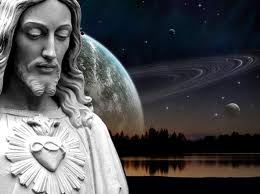
Teilhard de Chardin Quote of the Week (January 6, 2014): Transformation

creation-or-evolution-science-evidence-jesus-christ

“Nothing can any longer find place in our constructions which does not first satisfy the conditions of a universe in process of transformation. A Christ whose features do not adapt themselves to the requirements of a world that is evolutive in structure will tend more and more to be eliminated out of hand.”

Teilhard de Chardin, Pierre (2002-11-18). Christianity and Evolution (Harvest Book, Hb 276) (Kindle Locations 980-983). Houghton Mifflin Harcourt. Kindle Edition.

Posted in Teilhard Quote of the Week | Tagged , , , , , , , , , , | 6 Comments

God is Agapē

Agape

“Beloved, let us love one another, because love is of God; everyone who loves is begotten by God and knows God. Whoever is without love does not know God, for God is love.”  — 1 John 4:7-8

Today’s readings (in the U.S.) from the First Letter of John summarize the core of Christian faith.  As Pope Benedict said in his wonderful first encyclical Deus Caritas Est:

“These words from the First Letter of John express with remarkable clarity the heart of the Christian faith: the Christian image of God and the resulting image of mankind and its destiny. In the same verse, Saint John also offers a kind of summary of the Christian life: “We have come to know and to believe in the love God has for us”.

We have come to believe in God’s love: in these words the Christian can express the fundamental decision of his life. Being Christian is not the result of an ethical choice or a lofty idea, but the encounter with an event, a person, which gives life a new horizon and a decisive direction.” (emphasis in original)

In the Greek language of the New Testament had four words that all get translated into the English word “love”.  St. John uses the term “agapē” which is kenotic unconditional love that God consists of and is the core of reality, both the material and spiritual realms. As the Irish Jesuit site Living Space says:

This is the love that God unconditionally extends to all his creatures without exception. It is the love that each of us, too, is to extend to every one of our brothers and sisters – again, without a single exception. It is an outreaching love; it is an unconditional love; it does not depend on mood, liking or disliking. It is based purely and simply on the need and on the good of the other. It may or may not be expressed sexually but it is definitely not the love that most of the pop songs are talking about.

No matter what we do, no matter how evil or vicious we are, God’s love for us remains unchanging and unchangeable. “Love it was that made us and Love it was that saved us…” as the hymn says. The reason is simple: ‘God IS love’. Love enters into his very being. God cannot not love – if he did, he would no longer be God.

It is strange to say (and for some it may be shocking) but God loves the most depraved person we could imagine and Our Lady or one of the saints in exactly the same way. He cannot do otherwise. Is there no difference then? The difference between Our Lady and the evil person is not in God’s love for them but in their response to the love offered to them. One person has a closed heart; Our Lady from the moment of the Annunciation gave an unconditional ‘Yes’ which she never withdrew.

All our loving then is simply an opening of our heart, a return of the love that God has first shown us. When we reveal ourselves as loving persons it is because God’s love is working in us and through us. The sign that we are loving him is also that we are filled with love ourselves, love which originally came from him.

As someone once said, God’s love is like electricity. God’s love is only in us when it is passing through us. It can never stop with ourselves. When we keep that love to ourselves, it dies.

Too often I fall down in reciprocating God’s love to others. I get petty, jealous, calculating and want to love someone only if they will love me back. That is not the way of God or the natural order of things.  Today’s readings are a good reminder to focus my actions on the core of Christian faith.

Resources:

Deus Caritas Est (Full)
Deus Caritas Est (Wikipedia Summary)
C.S. Lewis, The Four Loves
Living Space Reflection (Part I)
Living Space Reflection (Part II)

Posted in Uncategorized | Tagged , , , , , , , , , , , , , , , , , , , , | 11 Comments

The Problem of Defining God: Finding Unity with Atheists in Wonder and Community

I don't believe in this god either.

I don’t believe in this god either.

Part of the problem of the public discourse on religion is that, like so many other issues, the discussion gets framed by the radical fringes.  On one side, you have the fundamentalist theists (mostly Christians in the US) who have a literal interpretation of the Bible and a narrow vision of God and religion.  On the other side, you have the fundamentalist atheists (led by Dawkins, Harris, et. al.) who likewise adhere to a literal interpretation of the Bible and a narrow vision of God and religion.  While these extreme positions sell most of the books and soak up most of the media oxygen, the vast majority of people (both believers and non-believers) view this discussion in much the same way as they would view a food fight between two-year olds: there is some nominal entertainment value but the level of intellectual discourse is nonexistent and there is a huge mess that needs to be cleaned up. 

Fortunately, the silent majority on both sides is starting to make their voices heard. Thanks to Debilis of Fide Dubitandum for pointing to an interesting article at National Review by Nicholas Frankovich.  The title of the article is “Do Atheists Exist?”.

The backdrop of the article is the atheistic “church” of the Sunday Assembly.  Per the website, their Public Charter is as follows:

“The Sunday Assembly is a godless congregation that celebrate life. Our motto: live better, help often, wonder more.”

While the Sunday Assembly professes to be “godless” their website portrays a vision very different than the fundamentalist New Atheists.  They speak of wonder, purpose, connection, service and community; the same things that most religions emphasize.  While the Sunday Assembly may not believe in an Abrahamic God, as Frankovich points out, they certainly do believe in a higher power, even if they avoid that term.  While Christians and other theists may disagree with the Sunday Assembly on ultimate reality, we have much in common through the elements of wonder and service that unite us and distancing ourselves from the fundamentalists, whether they be theists or atheists.

I encourage you to read Frankovich’s entire article here, but set forth below is an extended summary:

In embracing altruism, the Assembly touches on moral theology, as do Habermas and Pera, but unlike them it does so from a position it has staked out on the near outskirts of metaphysics, which lends the godless church much of its warmth. The third part of the Assembly’s motto, “Live better, help often, wonder more,” reflects a value attractive to souls seeking relief from the cool, or chill, as they experience it, of the secular climate in which they live. “Our modern culture is restless at the barriers of the human sphere,” Charles Taylor writes in A Secular Age. “The sense that there is something more presses in.”

Wonder more: No one disputes that atheism is compatible with wonder at the physical universe and how it works. Wonder at how it came to be just so, however, soon leads to wonder at how it came to be at all, a question that atheists typically sidestep. The pleasure of contemplating it is forbidden fruit to which the Sunday Assembly approaches nearer than a good atheist ought.

Philosophically if not historically, the theism of Judaism and Christianity, as well as of Islam and major religious currents outside the Western tradition, begins with the observation that the mystery of being is irreducibly mysterious, absolutely immune to attempts at demystifying it. The articulation of thought about what that mystery is — “Not how the world is, is the mystical, but that it is,” in Wittgenstein’s succinct rendition of the matter — has been so honed by succeeding generations of thinkers descended from the union of Greek philosophy and Jewish, Christian, and Islamic theology that it’s now difficult for anyone, whether theist or atheist, to improve on their exact formulations. So the atheist seeking to communicate an accurate answer to the question “Why is there not nothing?” will find himself borrowing theologically inflected terminology. Inescapably, he affirms the most fundamental of theological precepts. He agrees with it implicitly. He asserts that he doesn’t. His disagreement is first of all with himself.

A dramatic declaration of atheism is usually an assertion of disbelief in a god no one else believes in either. Judging the shadowy masculine presence at the center of the Hebrew Bible to be a tyrannical father figure and a lie — Richard Dawkins calls him “the most unpleasant character in all fiction” — atheists who cross over into militant antitheism make quite the show of manfully defying the Lord’s authority to command them. They plant their flag in the ground. There they stand, they can do no other.

They lose their footing when they recoil as they do, reflexively, from classical theism as well. They don’t trust it. If it’s related to Him, they’re not interested; they won’t be seduced. They plug their ears to keep from hearing too distinctly the siren song of sweet reason, which they dodge, rather than confront. Either they see plainly or they intuit that God in his aspect as God of the philosophers is ground on which reason offers no apparent means of escape or resistance. We might as well try to refute the multiplication tables. They are what they are.

* * *

So now we know that something of what Moses experienced when God visited him on Mount Horeb is available to anyone who will only take enough thought. The mystery of being induces wonder, or awe, commensurate with our willingness to engage it. It’s astonishing, when you think about it, that anything exists.

Q: Why is there something rather than nothing?

A: God, although maybe we need a new name for him

* * *

To define “nothing” is to say what it is, when what it’s intended to convey is an absence of being. You can’t talk about nothing without treating it as something. And so, on close inspection, the question “Why is there not nothing?” turns out to be paradoxical — as we should expect, given that “when the answer cannot be put into words, neither can the question,” as Wittgenstein observed. Still, it’s hard to let the question go; we intuit the intended meaning even as it eludes our ability to capture it in precise language. While the word “nothing” is self-contradictory and irrational when strictly interpreted, it does, like the number zero in mathematics, serve a purpose when used gingerly or with enough qualification.

* * *

It’s become too familiar, this ordinary English word for what we tend to talk around rather than talk about. So forget “God.” Call him “Nothing,” if you prefer:

“In the beginning was the Word, and the Word was with Nothing, and the Word was Nothing.” The key to understanding John 1:1 turns on the verbs, not the nouns. Dawkins in his awe before the Nothing sounds like Heidegger but without Heidegger’s awareness of the unfathomable profundity of what it means “to be.”

Notice how “nothing” can function for the atheist as “God” does for the theist. Are the two only using different linguistic tokens in parallel efforts to express the same ineffable thought? Their fear and trembling at the prospect of the “eternal nada,” Jones and Evans explain, moves them to cultivate their appreciation for the physical world (Christians call it “Creation”) that tickles our sense organs in the here and now: “Transcendence can be found in a breath of wind on your face or in a mouthful of custard tart,” they write. They pronounce nature “awesome,” a word whose recently acquired colloquial sense still shades into its older, literal sense. Open the door to just that much transcendence, however, and all of it comes rushing in, like a strong wind. Atheists instinctively try to resist it, while those of us who have been blown away by it recommend the experience.

“Wonder more,” the Sunday Assembly urges, and adherents of monotheistic religions echo the advice back to them. No, following wonder to its logical conclusion does not by itself make an atheist suddenly Jewish, Christian, or Muslim. It only means he’s not an atheist. Someone should tell him.

Posted in Reason and Faith | Tagged , , , , , , , , , , , , , , , , , , , , , , , , | 8 Comments

Sunday Reflection on Epiphany (January 5, 2014): A Real Truth That May or May Not Have Been Historical

A powerful truth, which may or may not have been a historical event.

A powerful truth, which may or may not have been a historical event.

This weekend is the celebration of the Epiphany. The readings can be found here.

The journey of the Magi is one of the most beautiful stories in the Bible.  Mysterious foreigners receive a cosmic sign to leave their home and pay homage to the newborn son of God.  The imagery describes the mystery of the cosmos and the message that Christ has come for all people.  It is a fitting end to the “twelve days of Christmas”. In the Eastern Orthodox Church the Epiphany is a bigger celebration than the Feast of the Nativity on December 25.

I recall a few years ago when the American Atheists spent money on a billboard with the tagline “You Know It’s a Myth” with the picture of the wise men traveling to visit the infant Jesus. I found this very odd on a number levels. I believe the point they were trying to make is that if the story of the Magi found in Chapter 2 of Matthew is not a historical event, then it is not true. In that sense American Atheists are showing their epistemological kinship with Christian fundamentalists in that both groups believe in biblical literalism.

Catholics believe the Word of God is much richer than the literalists do.  Catholic teaching states that the Bible conveys eternal truths through a variety of literary genres.  These truths can be in the form of describing historical events (such as the Resurrection) or theological reflections (such as many of the parables that Jesus told).

The infancy narratives in Matthew and Luke, while they may contain historical elements, are primarily designed to be theological reflections on the meaning of the Incarnation. As preeminent Catholic biblical scholar Raymond Brown says:

“[T]here is no way we can know for certain how historical many details in the infancy narratives are; or where Matthew and Luke obtained their divergent information. In making judgments we should be careful to avoid both naive fundamentalism and destructive skepticism. To take every word of these accounts as literal history does not deal realistically with the problems. Yet the accounts should not be dismissed as mere fiction or myths. Between precise history and purely imaginative creation there is a whole range of ways to convey a religious message.”

Pope Benedict addresses the same issue in his outstanding book Jesus of Nazareth: The Infancy Narratives.  Pope Benedict, while stating his belief is the substantial historicity of the infancy narratives, emphasizes that the focus on the historicity of the infancy narratives misses the point. Indeed he does not even get to the question of historicity until the end of his beautiful discussion on the theology of the Magi:

At the end of this lengthy chapter, the question arises: how are we to understand all this? Are we dealing with history that actually took place, or is it . . . a theological meditation, presented under the guise of stories? In this regard, Jean Daniélou rightly observes: “The adoration of the Magi, unlike the story of the annunciation [to Mary], does not touch upon any essential aspect of our faith. No foundations would be shaken if it were simply an invention of Matthew’s based on a theological idea” (The Infancy Narratives, p. 95).

Pope Benedict XVI (2012-11-21). Jesus of Nazareth: The Infancy Narratives (p. 118). The Doubleday Religious Publishing Group. Kindle Edition.

Pope Benedict describes the primary message of the Magi in powerfully cosmic terms that echo the thoughts of Teilhard de Chardin:

“If these wise men, led by the star to search for the king of the Jews, represent the movement of the Gentiles toward Christ, this implies that the cosmos speaks of Christ, even though its language is not yet fully intelligible to man in his present state. The language of creation provides a great many pointers. It gives man an intuition of the Creator. Moreover, it arouses the expectation, indeed the hope, that this God will one day reveal himself. And at the same time it elicits an awareness that man can and should approach him. But the knowledge that emerges from creation, and acquires concrete form in the religions, can also become disoriented, so that it no longer prompts man to transcend himself, but induces him to lock himself into systems with which he believes he can, in some way, oppose the hidden powers of the world.”

Pope Benedict XVI (2012-11-21). Jesus of Nazareth: The Infancy Narratives (Kindle Locations 1165-1170). The Doubleday Religious Publishing Group. Kindle Edition.

This theme of Pope Benedict is expanded upon by the Lutheran minister Rev. Dawn Hutchings of Holy Cross Lutheran Church north of Toronto Canada.  I encourage you to read the full homily here but set forth below is an extended excerpt:

“This wonderful tale of three astrologers scouring the heavens for signs of new happenings on the planet captures the imagination of every generation. You see, we humans are meaning-making creatures eternally searching for the Mystery at the heart of the universe that dignifies and enchants our lives. Human beings just can’t help trying to understanding the meaning of it all. We are constantly trying to understand the how and the why of existence.

But alas the indignity of our modern times lies precisely in our being told that the cosmos—this universe in which we live and move and have our being—is essentially purposeless, without meaning or direction.

There’s this thing that some people call Scientism afoot that threatens our ability to see beyond our noses. Scientism is the religion of those scientists who refuse to concede that the phrase, “I don’t know” is sometimes the only answer that we have. Scientism is science that slips into an ideology of materialism—an ideology of materialism is the idea that every thing and every body is nothing more than the random collision of atoms and molecules. Scientism is the assertion that we and the universe are nothing more than  a cosmic fluke of enormous proportions going nowhere in particular. According to the dictates of scientism: any meaning that we might attribute to our existence is therefore just that—our own arbitrarily generated attributions of purpose to a journey to what is at the end of the day nothing more than the purposeless march of time. Unlike science, that provides for the possibility of a creator, scientism would have us believe, that there is no meaning behind our existence, we simply randomly evolved and we will someday randomly devolve, or dissolve into a pile of dust. 

That’s why I love the parable of the magi’s visit! For these ancient astrologers had their own ways of determining meaning,“the heavens are telling the glory of God, and the earth proclaims God’s handiwork”. A new star appears in the heavens and for those with enchanted hearts, it means that God is on the move—something new is about to happen.  So they chased down the star, to see this thing that God had done.

Unlike our ancestors, we live in a culture in desperate need of enchantment and awe. We are so meaning-starved as citizens of the Western world in the 21st century that we chase after almost any kind of novel spiritual movement. The pendulum swings from scientific materialism to the latest cult so starved are we for spiritual re-enchantment. In our state of spiritual hunger we’ll accept any morsel from the smorgasbord of new age spirituality.

* * *  

The sages of our age, the astronomers who seek meaning from the skies are not all so quick to subscribe to the big bang theory of randomness. For they have seen great things in the sky and there are many among this wise folks who insist that the cosmos is infused with meaning and purpose—Indeed, they tell us that  stars and the planetary bodies participate in this journey of cosmic meaning.

Those sages who are engaged in scientific study are not all followers of scientism. The notion of a creator, a first cause, or a driving force, dare we say God, as the power that drives all of existence is seriously explored by the wise folks of academia and science has refused to exclude the possibility. And yet there is the illusion afoot that the followers of science find faith incompatible with the pursuit of meaning. When the truth is that scientism seems to be the choice of those who have given up or forsaken the pursuit of meaning. Science itself would seem to deny scientism!

More and more, scientists, are beginning to speak out and more and more academics are joining the chorus of those who insist that there is indeed a power at work in the large-scale structures of the universe, in the evolutionary unfolding of the planet, and in our own personal and collective lives. To pursue knowledge is to continue the journey of the magi who pursued light, the timeless symbol of knowledge. To follow the light, to go where wisdom and knowledge lead, is to seek the answer to the age old questions: Where do we come from and where are we going?  Why are we here?. You don’t need to be a scientist or an academic to ponder the secrets of existence. Like the magi, we too can seek the light. Just as the magi gazed up at the light in the heavens and followed it to the place where it lead—and found the Christ-child—we too can follow the light in our own lives.

* * * 

The theory of allurement isn’t confined to astronomy, it dips into to theology and from the priest come palaeontologist, Pierre Teilhard de Chardin, it borrows the notion of the Omega Point. The Omega Point is the completion and perfection of all creation to which we are being drawn, no-coercively, gently, and in a way that respects our freedom.

How do we find our way to the Omega Point?  Well that’s the real beauty of this theory, you see it’s described as a completely natural process that kicks in the moment we decide to trust this Power—this power that goes by many names, you and I are bold enough to call this power God, some call it Wisdom, but there are other names.

The point of the Omega Point, is that all we must do is to follow the way of the Magi and look for the light. Physicists call this quest for the light, “attending to our allurement”. The dynamic of allurement is a powerful force in the psychological make-up of the human being.

* * * 

Christ is the ever-present light of our lives, beckoning from the many stars that allure us, calling us toward our own divine image and inspiring us to give our lives as an offering so that all of creation may continue to evolve. Evolution is not random; each of us has a unique role to play. But let’s not be naïve. Each of us possesses an inner Herod who doesn’t like that we’re paying homage to any king other than our self. The story of the Magi got this detail exactly correct. Something within us resists God—call it ego if you will—but there is something within us that thinks that it alone deserves gifts of gold, frankincense and myrrh. It does not want to worship or pay homage; it wants to be on the receiving end of both and will go to great lengths to make it happen. It wants to know where the light is leading, not to submit to it, not to give thanks, not to sing praise and be in awe, but rather to scope out it’s rival, in a vain attempt to outshine it, or even destroy it.

Herod is also found in our families, and in our social, political, economic and religious systems. Herod is present as the power of domination. Herod hates the fascination of others unless it is directed toward him. Herod—within and without—refuses to serve any higher power; Herod refuses to fit in, to take his place in grace. Herod will try to rule the show.

Resources:

Pastor Hutchings Homily
Rev. Robert Barron Reflections on Epiphany
Rev. Raymond Brown, The Christmas Stories: Exploring the Gospel Infancy Narratives

Pope Benedict, Jesus of Nazareth: The Infancy Narratives

Raymond Brown, The Birth of the Messiah: A Commentary on The Infancy Narratives in the Gospels of Matthew and Luke

Posted in Sunday Reflections | Tagged , , , , , , , , , , , , , , , , , , , , , , , , , , , , , , , | 7 Comments

Pierre Teilhard de Chardin: The Holy Name of Jesus

I was going to do a brief post on Teilhard de Chardin and the Holy Name of Jesus but Michael Kenny at the outstanding blog “Journey Towards Easter” did a far better reflection that I could have.

Posted in Uncategorized | 2 Comments

Will the real Catholic Church please stand up?

Good article on the inherit tension of the Catholic Church. It is a part and parcel of being human and part of being a large organization. As Stephen from the blog “The Domestic Monk” says: “The church will always be more traditional than the traditionalist, and more modern than the modernist.”

Posted in Uncategorized | Tagged , , , | 1 Comment

Teilhard de Chardin’s New Year’s Message (courtesy of The Teilhard Project)


Set forth below is a New Year’s Message from The Teilhard Project with a great quote from Teilhard de Chardin:

HAPPY NEW YEAR!  As we launch into 2014 we at the Teilhard de Chardin Project are reminded of the New Year’s prayer Teilhard once offered:

“At the beginning of this new year, what we ask of that universal presence which envelops us all, is first to reunite us, as in a shared, living center with those whom we love, those who, so far away from us here, are themselves beginning this same new year.

On January 1, 1932, Teilhard de Chardin found himself in Central China with some 40 other men  engaged in Citroën’s Croisiére Jaune, an event described this way by a New York Time movie review of a documentary made about it.

La Croisière Jaune (The Yellow Journey) is the record of an astonishing motor trip from Beirut, Syria, across Afghanistan, the Himalaya Mountains, the Gobi Desert and the rest of Asia to Peiping.”  It follows “the itinerary of the two heroic little groups who drove in [all-terrain vehicles] along the fabled [Silk Road] where six centuries ago Marco Polo crept along by foot and caravan. The main group started from Beirut going east, while a smaller group worked westward from Peiping, later falling into the hands of the war lord of Sinkiang, who commandeered the autos and imprisoned the men.”

Teilhard was traveling with the westward group, which had left Tientsin on April 6, 1931.  Having successfully joined forces with the eastward group in Sianking Province, they were now working their way back to Peking.  Thus, on this New Year’s Day, after 8 months of sharing rigorous hardships on the road, the 40 members of the Citroën Expedition gathered shortly after dawn at a small mission church to attend a Mass celebrated by their colleague Pere Teilhard de Chardin.  In addressing them Teilhard acknowledges the fact that most of them are unbelievers.

The leader of the expedition, Audouin-Dubreil, kept a copy of his address:

My dear friends, we have met this morning, in this little church, in the heart of China, in order to come before God at the beginning of this new year.  Of course, probably for not one of us here does God mean, or seem, the same thing as for any other of us.  And yet, because we are all intelligent beings, not one of us can escape the feeling, or reflection, that above and beyond ourselves there exists some superior force, and that, since it is superior to ourselves, it must possess some superior form of our own intelligence and our own will.

It is in this mighty presence that we should recollect ourselves for a moment at the beginning of this new year.  What we ask of that universal presence which envelops us all, is first to reunite us, as in a shared, living center with those whom we love, those who, so far away from us here, are themselves beginning this same new year.

Then, considering what must be the boundless power of this force, we beseech it to take a favorable hand for us and for our friends and families in the tangled and seemingly uncontrollable web of events that await us in the months ahead.  So may success crown our enterprises.  So may joy dwell in our hearts and all around us.  So may what sorrow cannot be spared us be transfigured into a finer joy, the joy of know that we have occupied each his own station in the universe, and that, in that station, we have done as we ought. 

Around us and in us, God, through his deep-reaching power, can bring all this about.  And it is in order that he may indeed do so that, for all of you, I am about to offer him this Mass, the highest form of Christian prayer.

We wish you and all those you love, wherever they may be, a joyful new year with a renewed zest for life!

Posted in Uncategorized | Tagged , , , , , , , , , | 2 Comments

2013 Reflections on Blogging (Part II): Eight Favorite Posts

Happy New Year

Yesterday, I had listed the most popular posts on my blog during 2013.  Today, I am linking to eight of my favorite posts (in no particular order) which did not make the Top 20 views.

John Haught and Why Ultimate Reality is a Personal God
Sean Carroll and the Fallacy of Scientism
The Higgs Boson and The Divine Milieu
Are Christian Believers Encouraging Mockery of Their Own Beliefs?
Feast of St. Ignatius of Loyola, Ignatian Spirituality and the Controversial Jesuits
Christians Must Confront Scientific Illiteracy
Quantum Physics, Relationality and the Triune God
The Noosphere (Part II): Christian Concepts of the Noosphere

Happy New Year Everyone!

Posted in Uncategorized | Tagged , , , , , , , , , , , , , , , , , , | 1 Comment

2013 Reflections on Blogging (Part I): Country Data and Top Posts

cosmic_1

When I started blogging in April, I had no idea what I was getting into.  I could not have been more thrilled with the community that I have found and the interesting ideas and persons that I have “met” online.  I have had viewers from 136 countries (or other political unit that WordPress designates with a flag).

There were a few interesting items:

1.  I am surprised that people found my site from so many countries.  While the U.S. is by far the most views at approximately 65%, I was pleasantly surprised by the number of viewers from other countries, especially Canada, Philippines and UK.   The Philippines number is skewed due to views on Sunday reflections.  The UK has been increasing in recent weeks.

2.  Views are a combination of established readers and search engines.  Google is a dominant player in the latter, much to my chagrin.  One of the reasons I choose the domain http://www.teilhard.com was to establish the SEO territory for Teilhard de Chardin.  It has been a mixed success.  I am still on Page 2 for a Google search on “Teilhard de Chardin” despite being at the top of the first page for Bing/Yahoo! search engines for many months.

3.  The SEO gateway is especially skewed with my “Sunday Reflections” posts.  There are some that have been very popular due to new viewers finding the site through SEO.  Four of the Top Ten views were Sunday Reflections (see below).  That is one of the reasons why I am going to keep doing them in 2014.  Most importantly than the “hits”, I find them to be a good discipline to help me focus on the Sunday readings and themes.

Here are some high-level data on the site from the past year:

Top Countries:

1 United States………64.8%
2 Canada………………… 9.8%
3 Philippines…………… 4.9% (big surprise; largely due to Sunday Reflections)
4 United Kingdom….. 4.3%
5 Australia……………… 2.0%
6 France………………….. 1.4%
7 Ireland………………….. 1.3%
8 Italy……………………… 1.2%
9 India……………………… 1.1%
10 New Zealand……….. 0.5%
Other……………………….. 8.8%

Here are the Top Five BlogPosts (other than Sunday Reflections):

Brené Brown: The Power of Vulnerability
Laura Keynes and Why New Atheists are Good for Christianity
Orthodoxy of Teilhard de Chardin (Part I): Pope Benedict and Spirit of the Liturgy
Theology of the Movie Gravity: Evolution, Death and Teilhard de Chardin
The Noosphere (Part I): Teilhard de Chardin’s Vision

Sunday Reflections That Made Top Ten Posts (Advent Has Been Popular :-):

First Sunday of Advent (December 1, 2013): Preparing for Christ (Top Post of 2013)
Second Sunday of Advent (December 8, 2013): Burning Away What Divides Us
Third Sunday of Advent (December 15, 2013): Expectant Waiting and Dynamic Faith
Sunday Reflection, 18th Sunday in Ordinary Time (August 4, 2013): What Possesses Us?

Tomorrow, I will share my top seven eight posts that did not make the Top 20 most viewed posts.

Posted in Uncategorized | Tagged , , , , , , , , , , , , , , , | 9 Comments

Teilhard de Chardin Quote of the Week (December 30, 2013): Christ Unifying the Universe

cosmic_christ10

“When the Cross is projected upon [a universe in evolution], in which struggle against evil is the sine qua non of existence, it takes on new importance and beauty—such, moreover, as are just the most capable of appealing to us. Christ, it is true, is still he who bears the sins of the world; moral evil is in some mysterious way paid for by suffering. But, even more essentially, Christ is he who structurally in himself, and for all of us, overcomes the resistance to unification offered by the multiple, resistance to the rise of spirit inherent in matter. Christ is he who bears the burden, constructionally inevitable, of every sort of creation. He is the symbol and the sign-in-action of progress. The complete and definitive meaning of redemption is no longer only to expiate: it is to surmount and conquer. The full mystery of baptism is no longer to cleanse but (as the Greek Fathers fully realized) to plunge into the fire of the purifying battle ‘for being’—no longer the shadow, but the sweat and toil, of the Cross.”

Teilhard de Chardin, Pierre (2002-11-18). Christianity and Evolution (Harvest Book, Hb 276) (Kindle Locations 1079-1086). Houghton Mifflin Harcourt. Kindle Edition.


Posted in Teilhard Quote of the Week, Uncategorized | Tagged , , , , , , , , , | 2 Comments