The Incarnation and Evolution

alpha_omega

Last Friday the London, Ontario Free Press had a good article by Bruce Tallman on the meaning of the Incarnation in an evolutionary world. These ideas are consistent with those of Teilhard de Chardin although Teilhard would also emphasize that the Risen Christ (or the Omega Point) is continuing to attract each one of us and all of creation towards greater Unity with Him. You can find the entire article here but set forth below is an excerpt:

How does one integrate the theory of evolution with Christmas and with the apostle Paul writing that “In Christ all things were created, both in the heavens and on earth, all things have been created through him and for him” (Colossians 1: 16-17)?

* * *

When Paul refers to “Christ Jesus,” it is not a case of dyslexia in the Bible. Paul is simply putting things in the right order, that is, the “Cosmic Christ” came first, and then Jesus of Nazareth. By the Cosmic Christ, I mean the one Christians traditionally think of as God before God took on human form.

* * *

There is . . . a clear direction to evolution: through natural selection, evolution creates beings of greater and greater consciousness and excellence, and therefore more capable of love. Animals are obviously more capable of love than plants, and humans are far more capable of love than animals. A dog might love its master and puppies, but humans can love God, others, themselves, and everything in the universe.

The same Cosmic Christ who created the universe also inhabited it. The Christ who was incarnate in the universe was constantly working through the evolutionary process, directing it by his love, and waiting for the perfect time to be born as a human being.

Thus, the whole direction of evolution found its fulfilment in the birth of Jesus of Nazareth, the most conscious, excellent, and loving being of all. The entire purpose of the universe came together in Jesus the Christ, or Messiah, which means the Anointed One, that is, God in human form.

Read Entire Article

Posted in Uncategorized | Tagged , , , , , , , , , , , , , , , , , | Leave a comment

Teilhard de Chardin Quote of the Week (December 15, 2014): Suffering as a Means to Union with God

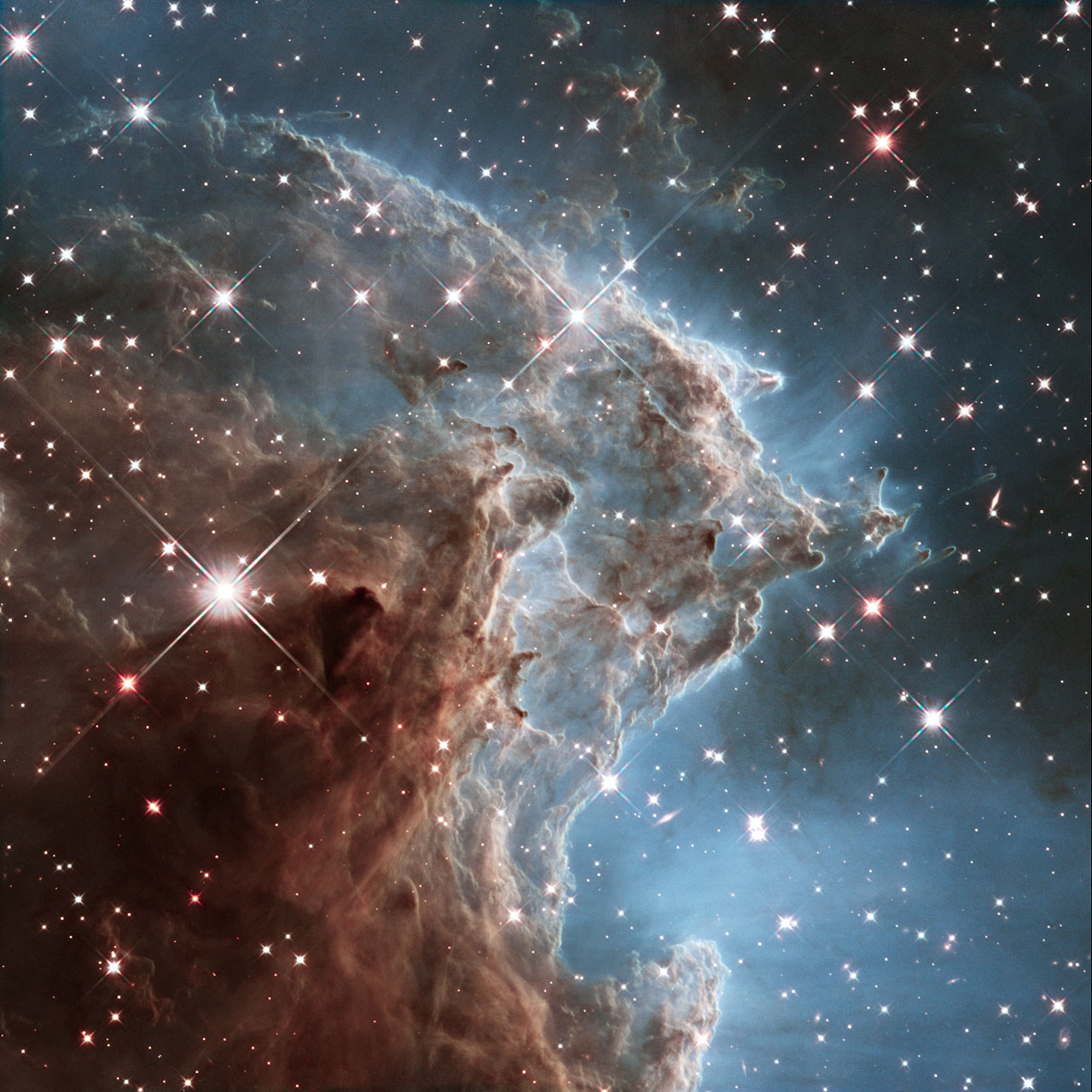
Monkey Head Nebula

“I like to think that gradually, instead of being weighted down by your external cares, you’ll find yourself to some extent carried by them towards God, by the need you feel, in your love, to do something for him and your inability to do anything worth while except in close union with Him. Prayer and action should nourish one another — that goes without saying.” (emphasis in original)

–– Pierre Teilhard de Chardin, The Making of a Mind; Letters from a Soldier-Priest (p. 206)

Posted in Teilhard Quote of the Week | Tagged , , , , , , , , , , , , , , , , , , , , | 3 Comments

Sunday Reflection, Third Sunday of Advent (December 14, 2014): Rejoice!

advent-wreath-3

“Joy is the infallible sign of the presence of God.” — Pierre Teilhard de Chardin

This Sunday is the Third Sunday of Advent, or Gaudete Sunday (Rejoice!).  The readings can be found here. The theme a call to rejoice and celebrate God’s presence even in this Advent Season of waiting.  As Pope Francis said in his encyclical Evangelii Gaudium (The Joy of the Gospel):

“The great danger in today’s world, pervaded as it is by consumerism, is the desolation and anguish born of a complacent yet covetous heart, the feverish pursuit of frivolous pleasures, and a blunted conscience. Whenever our interior life becomes caught up in its own interests and concerns, there is no longer room for others, no place for the poor. God’s voice is no longer heard, the quiet joy of his love is no longer felt, and the desire to do good fades. This is a very real danger for believers too. Many fall prey to it, and end up resentful, angry and listless. That is no way to live a dignified and fulfilled life; it is not God’s will for us, nor is it the life in the Spirit which has its source in the heart of the risen Christ.”

This week’s reflection comes from Sacred Space 102fm in West Limerick, Ireland (and is attributable to St. Louis University).  The reflection is short but powerful as it captures the essence of being joyful in the presence of God even a bad situation. You can read the full reflection here but set forth below is a summary:

“Henri Nouwen was once asked: “Are you an optimist?” His reply: “No, not naturally, but that isn’t important. I live in hope, not optimism.”

Teilhard de Chardin once said the same thing in different words when he was accused of being overly-idealistic and unrealistic in the face all the negative things one sees in the world. A critic had challenged him: “Suppose we blow up the world with a nuclear bomb, what then happens to your vision of a world coming together in peace?” Teilhard’s response lays bare the anatomy of hope: “If we blow up the world by nuclear bombs, that will set things back some millions of years, but eventually what Christ promised will come about, not because I wish it, but because God has promised it and, in the resurrection, God has shown that God is powerful enough to deliver on that promise.”

Hope is precisely that, a vision of life that guides itself by God’s promise, irrespective of whether the situation looks optimistic or pessimistic at any given time.”

Read Full Reflection

Other Resources:

Reflection for Gaudette Sunday Last Year
Living Space
Creighton Online Ministries


Posted in Sunday Reflections | Tagged , , , , , , , , , , , , , , , , , | 8 Comments

Teilhard de Chardin Quote of the Week (December 8, 2014): Origins of The Divine Milieu

collective_consciousness

“Yesterday, with the same pleasure as I always have, I received your letter of the 22nd. You are perfectly right, I think, in what you say about the necessity and difficulty in influencing souls from within. What gives me great satisfaction in this, so far as it affects you, is to see that you are being led by the necessities inherent in your life and the duties of your position to fall back on the Milieu divine, and to seek union with God as the first, and almost consciously experienced, condition for action.

It is thus, through a sort of deep rift, that God enters into the tangible reality of all that is most human in your life;—and once He has made his way in, he will never cease, you’ll find, gradually to extend His dominion until He invades anything.”

–– Pierre Teilhard de Chardin, The Making of a Mind; Letters from a Soldier-Priest (p. 204)

Posted in Teilhard Quote of the Week | Tagged , , , , , , , , , , , , , , | 6 Comments

Sunday Reflection, Second Sunday of Advent (December 7, 2014): Burning Away What Divides Us

advent-02-candles

“One mightier than I is coming after me. I am not worthy to stoop and loosen the thongs of his sandals. I have baptized you with water; he will baptize you with the Holy Spirit.” — Mark: 1:7-8

This Sunday is the Second Sunday of Advent. The readings can be found here.

The beautiful first reading is from Isaiah and talks about the vision where the things that divide us are eliminated and all of Creation is brought together in Unity. The Gospel includes a speech from St. John the Baptist that talks about the need for God’s purifying fire to break down our divisions before this Unity can occur.

word_incarnate

This week’s reflection comes from Fr. Roger LeDuc, retired past at St. Malachy Catholic Church in Tehachapi, California, USA. The full reflection can be found here, but set forth below is an excerpt:

“Pierre Teilhard de Chardin once suggested that peace and justice will come to us when we reach a high enough psychic temperature so as to burn away the things that still hold us apart. In saying this, he was drawing upon a principle in chemistry: Sometimes two elements will simply lie side by side inside a test-tube and not unite until sufficient heat is applied so as to bring them to a high enough temperature where unity can take place.

John of the Cross follows this theory when he reflects on the soul that cannot reach God until it has learned to burn with love. We too must allow ourselves to burn with love. It is only in this way that we who walk the path of life together can eventually fuse into the Body of Christ. It is only our love for God and our love for each other that will allow us to become one in the person of the one whom we await.

Many may long for gifts, parties, and varied ways of expressing our ability to walk together as families and friends. But the one who comes bringing the Good News of new life is the one whose heart is aflame for the power of God to burn away that which divides us and to fuse us into the power Jesus, a name which reminds us that God saves.

Paul affirms that God will come at a most unexpected time, like a thief, to dissolve all that is useless by fire. From this the new makeover of humanity will be fulfilled and the new earth and the new heavens will speak only of the glory of God.

To prepare the way of the Lord, John echoes, we must allow all that is not of God to burn away by the power of rekindled love. Purifying our desire and love for God over all the other passions of mankind, purifying our longing to be at peace with each other by renewed care and concern for the needs of each, this is how the Good News will be fulfilled.”

Read Full Reflection

Other Reflections:

Living Space
Creighton Online Ministries
Fr. Robert Barron Podcast


Posted in Sunday Reflections | Tagged , , , , , , , , , , , , , , , , , , , , , , , , , , | 5 Comments

Feast of St. Francis Xavier, S.J. (December 3)

William Ockham's avatarTeilhard de Chardin

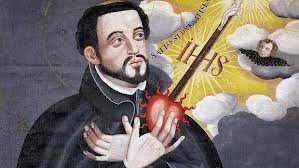
St. Francis Xavier, S.J. St. Francis Xavier, S.J.

Today is the Feast Day of St. Francis Xavier, S.J., one of the most famous early Jesuits. He was a close companion of St. Ignatius of Loyola and one of the first seven Jesuits. Francis Xavier led an extensive mission into Asia, mainly in the Portuguese Empire of the time. He was influential in the spreading and upkeep of Catholicism most notably in India, but also ventured into Japan, Borneo, the Maluku Islands, and other areas which had thus far not been visited by Christian missionaries. It was a goal of Xavier to one day reach China, but he died just before reaching the mainland.

Francis Xavier was born on April 7, 1506 in his family’s small castle in Navarre, a Basque area in the Pyrenees. In September 1525 he went to begin studies at the College of Sainte-Barbe in the University of Paris. His roommate was the soon-to-be Saint Peter Faber (Pierre Favre) from…

View original post 1,209 more words

Posted in Uncategorized | 4 Comments

Teilhard de Chardin Quote of the Week (December 1, 2014): Hope for the Future

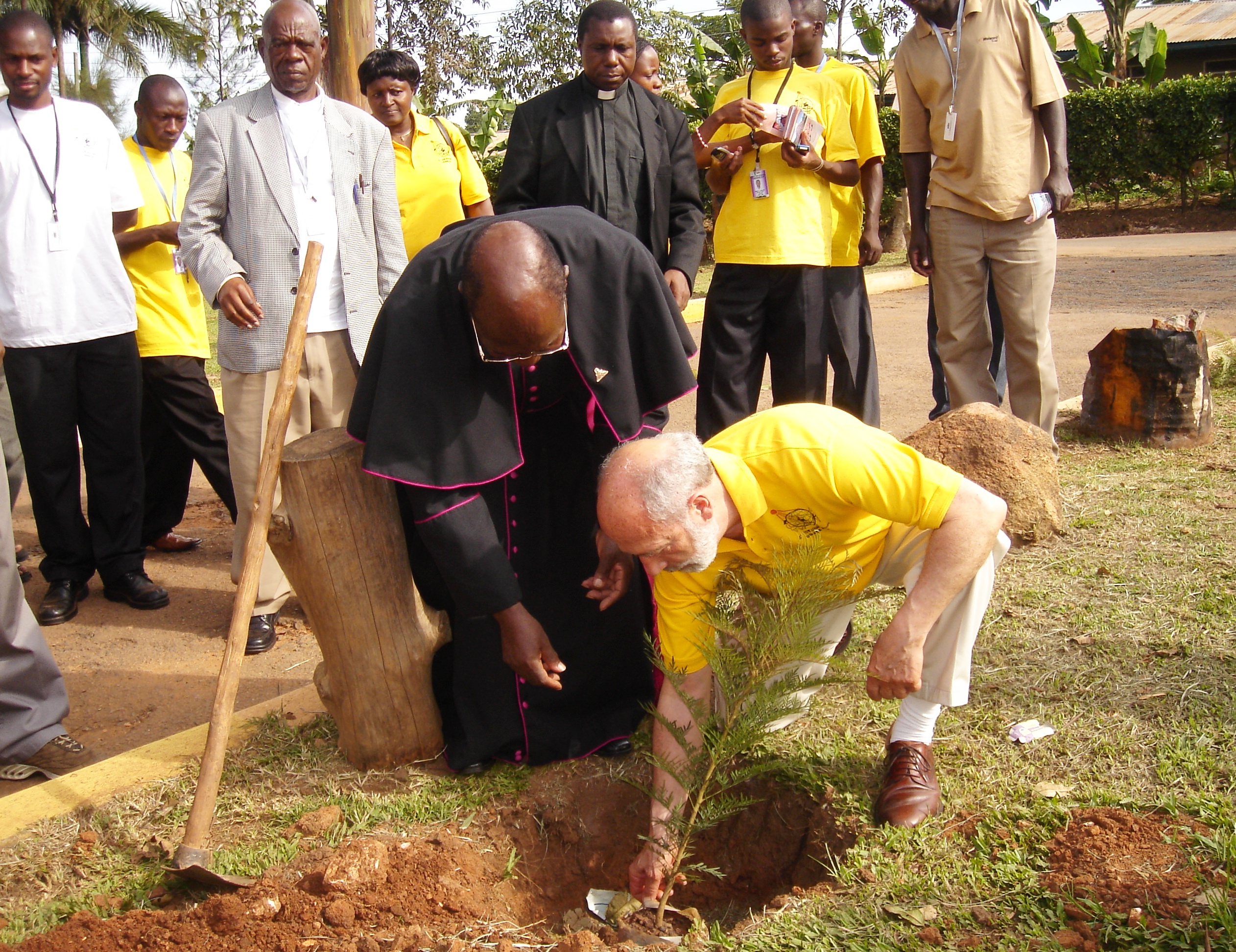
IIPT Kampala peace park

IIPT President Louis D’Amore planting the first peace tree at Uganda Martyr’s Trail Peace Park


“The future belongs to those who give the next generation reasons to hope.”

 Pierre Teilhard de Chardin, S.J. (courtesy of Global Peace Parks Project)

Posted in Teilhard Quote of the Week | Tagged , , , , , , , , , , | Leave a comment

Discerning Advent – Darkness

Andy Otto's avatarGod In All Things

“Lord, it is nearly midnight and I am waiting for You
in the darkness and the great silence.” – Thomas Merton

Incarnation happens all around us. It happens when we see a rainbow; when we receive communion; when we make a decision. Incarnation is always evolving: God being made present in new ways. The divine permeates all things and even comes to expression in our choices. But it’s often far from easy. We may feel we’re in the dark like Thomas Merton, waiting for a sign or a flicker of light. We may, on the other hand, feel like we’re in a whirl of confusion, feelings, emotions, and choices. These things are the raw material of discernment. Advent is a time of patient waiting and pondering. Perhaps this prayer of Thomas Merton describes your feelings:

My God, I frankly do not understand Your ways with me. You fill me with…

View original post 515 more words

Posted in Uncategorized | 2 Comments

Sunday Reflection, First Sunday of Advent (November 30, 2014): Being with God in the Waiting

First-Advent-cropped

This weekend is the First Sunday of Advent. The readings can be found here. Advent is often thought of as a time of watching and waiting. That is true and the readings the next four weeks highlight themes from the Hebrew Bible where God’s chosen people waited many centuries for a savior (and the savior was very different than they imagined!). However, another theme throughout the Hebrew Bible is that God was always with his people. He never abandoned them despite their turning away from him time and time again.

These themes give me comfort. In my own life, I have turned away from God many times. Ultimately “God’s wrath” (perhaps better described as the karmic justice of my turning away from ultimate love and beauty) reminds me that I have strayed. It is comforting to know that God is patiently there waiting for me with open arms, healing my wounds and asking me to help him build his Kingdom.

This week’s reflection is from Joan Blandin Howard of Creighton University Online Ministries.  Ms. Howard talks about how Advent is an opportunity to not wait for God but an opportunity to find God in every moment. You can find the full reflection here but set forth below is an excerpt:Jo

The Church teaches that Advent is a time of waiting, anticipation, expectation, joy and preparation for the coming of Jesus, the promised messiah.  A season of looking forward to something wonderful – the promise of the ages. And so it is.

But, is there something missing in this picture?

There is a lovely book written specifically for pregnant women.  Fathers also can’t put it down. It is captivating and fascinating.  It is a day-by-day description, verbal and pictorial, of the physical development of a human fetus in utero. Today, the fetus has a heart.  Today, the fetus has a stomach.  Today, she has fingernails.  Today, he has teeth buds.  Today, my child has a nose.  Today, our child has eyes. I wonder what color they are. Then ears, and a mouth.  Hair! Hope ours has lots of it!  Second by second, minute by minute, hour by hour, day by day, month by month these two are coming to be whom God from all time has desired them to be.  He, she, they are slowly coming – to be.   With the company of this book, the mother, the parents can live in the moment with their coming to be child, the child they co-created with God.  The can hardly wait.  They are invited, called to be present in the wait. Invited to live life, to experience God in every moment of the wait. There is no waiting for something better.

I know Christmas is coming, but not today. Today offers (at least here in North America) snowmen, snowballs and hot chocolate with marsh-mellows.  Today offers Christmas tree decorating, cookie baking, maybe gift-wrapping.  Today, I am invited to bake for the homeless shelter.  Today, I am invited to decorate a tree in the nursing home, to visit the children’s hospital.  Today, I’m invited to play with our grandchildren, sit with a dying friend. Today, I am invited to be, to live in the wait.  To live in this moment.  Not to wait for something better.

In every line extending from every checkout counter, every bus stop, every waiting room, every restroom there is Presences in the wait.  There is a gift, an invitation, a moment to behold – God is.  God is intimately present in every second of the wait.  There is nothing better.

To wait is to stand in reverence and awe of the present, of the Presence. God lives only in the present.  God knows no time. It is I who live in the confines of time, not God. It is I who am bound by the past and lured by the future.  God is and gives only in the present. There is nothing better.

The good-news: there is nothing better than to live in God, in the present!  There is no waiting here.  Maybe I could say Advent is a season of Awareness.  A season to practice awareness, noticing and being present to God. God is present to me and among us now.   How could I better spend my time in this season of Advent?

Read Full Reflection

Other Reflections:

Living Space
John Predmore, S.J. Blog
Fr. Robert Barron Podcast

Posted in Ignatian Spirituality, Sunday Reflections | Tagged , , , , , , , , , , , , , , , , , , , , , , , , , , , , , , , | 4 Comments

Teilhard de Chardin Quote of the Week (November 24, 2014): The Divine Milieu at the End Times


The Divine Milieu

The Divine Milieu

“Our individual mystical effort awaits an essential completion in its union with the mystical effort of all other men. The divine milieu which will ultimately be one in the Pleroma, must begin to become one during the earthly phase of our existence . . .To what force is it given to merge and exalt our partial rays into the principal radiance of Christ? To charity, the beginning and the end of all spiritual relationships . . . It is impossible to love Christ without loving others . . . And it is impossible to love others (in a spirit of broad human communion) without moving nearer to Christ.” — Pierre Teilhard de Chardin

Posted in Teilhard Quote of the Week | Tagged , , , , , , , , , | 4 Comments